
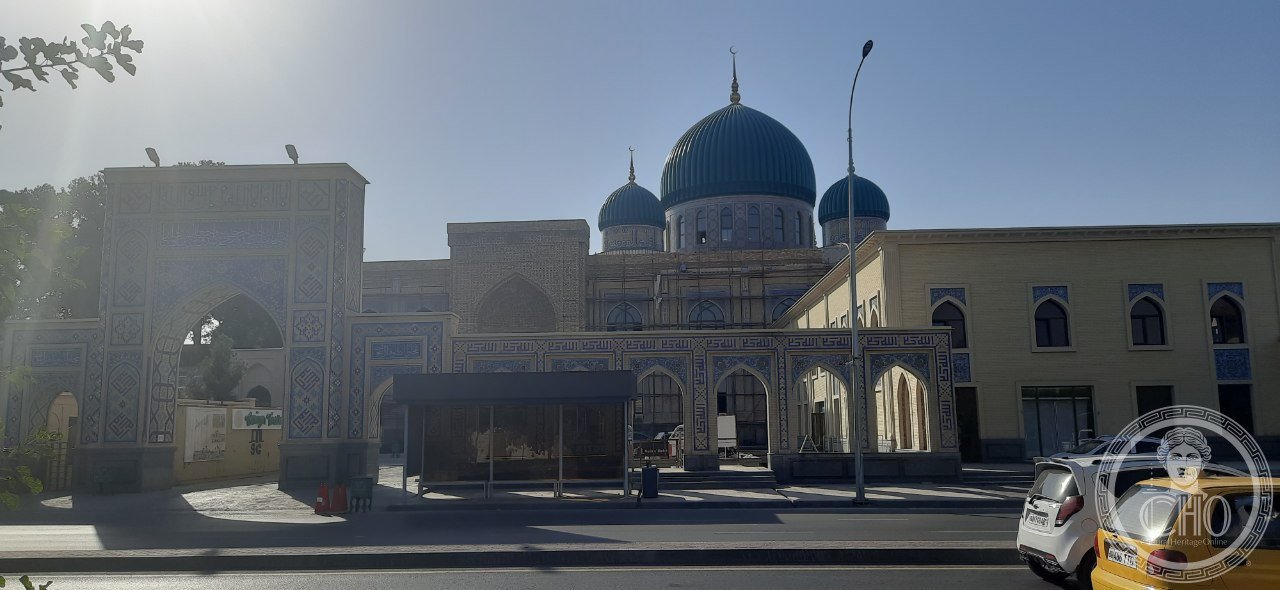
Abdidarun Complex
A sacred shrine built around the tomb of the 9th-century scholar Allama Abd Maziddin, where a spring-fed pond was believed to possess healing properties.
At a glance
The Abdidarun Complex occupies the eastern side of Samarkand’s fortress wall, its name deriving from the Persian word darun, meaning “inside.” The shrine centers on a monumental hall from the 15th century, which served as both mosque and public sanctuary, with the saint’s mausoleum contained within.
History
The complex grew organically around the burial place of Allama Abd Maziddin, a scholar of the 9th century. Successive centuries saw buildings added and integrated into the shrine’s design. The finest architectural phase occurred during the Ulug Beg period, when the central hall was constructed in the 15th century. Later expansions, including courtyard rooms and a western mosque, were added in the 19th century. Renovations over time have altered the mausoleum’s original appearance.
What you see
The 15th-century hall dominates the complex, its facade, dome, and wall decorations exemplifying Timurid craftsmanship under Ulug Beg. The mausoleum of the saint stands within this central building. Surrounding the courtyard are auxiliary rooms added later, while a mosque occupies the western side. A spring-fed pond in the courtyard maintains constant water levels year-round—an engineering feat that sustained the shrine’s reputation for healing properties.
Cultural significance
Abdidarun represents a synthesis of spiritual devotion and architectural ambition in medieval Samarkand. The shrine functioned as a center of public gathering and religious practice, its waters credited with curative powers that drew pilgrims and visitors. The preservation of craftsmen’s names among the mosque’s decorations offers rare documentation of Timurid artisans.
Key facts
- Location: Samarkand, Uzbekistan
- Coordinates: 39.64183°N, 66.99149°E
- Central hall: 15th century (Ulug Beg period)
- Earlier buildings and mausoleum: 9th century onwards
- Surrounding rooms and western mosque: 19th century
Practical information & getting there
The complex is situated on the eastern interior of Samarkand’s fortress wall, making it accessible from within the old city. Visitors should allow time to appreciate both the main hall and courtyard. Local guides can provide context on the shrine’s sacred significance and the spring’s historical reputation.
Sources & resources
Find it on the map
See this place and what’s around it →📷 Diventa un fotografo di Cultural Heritage Online
Condividi le tue foto dei luoghi: restano pubblicate con la tua firma come autore. Più vengono viste, più ti fai conoscere — e presto un concorso premierà le foto più apprezzate.
Accedi o registrati gratis per aggiungere una fotoDo you manage this place?
This page is read by travellers and heritage enthusiasts who find it on Google. Keep it accurate — and make it work for you. Free for non-profit heritage institutions.