
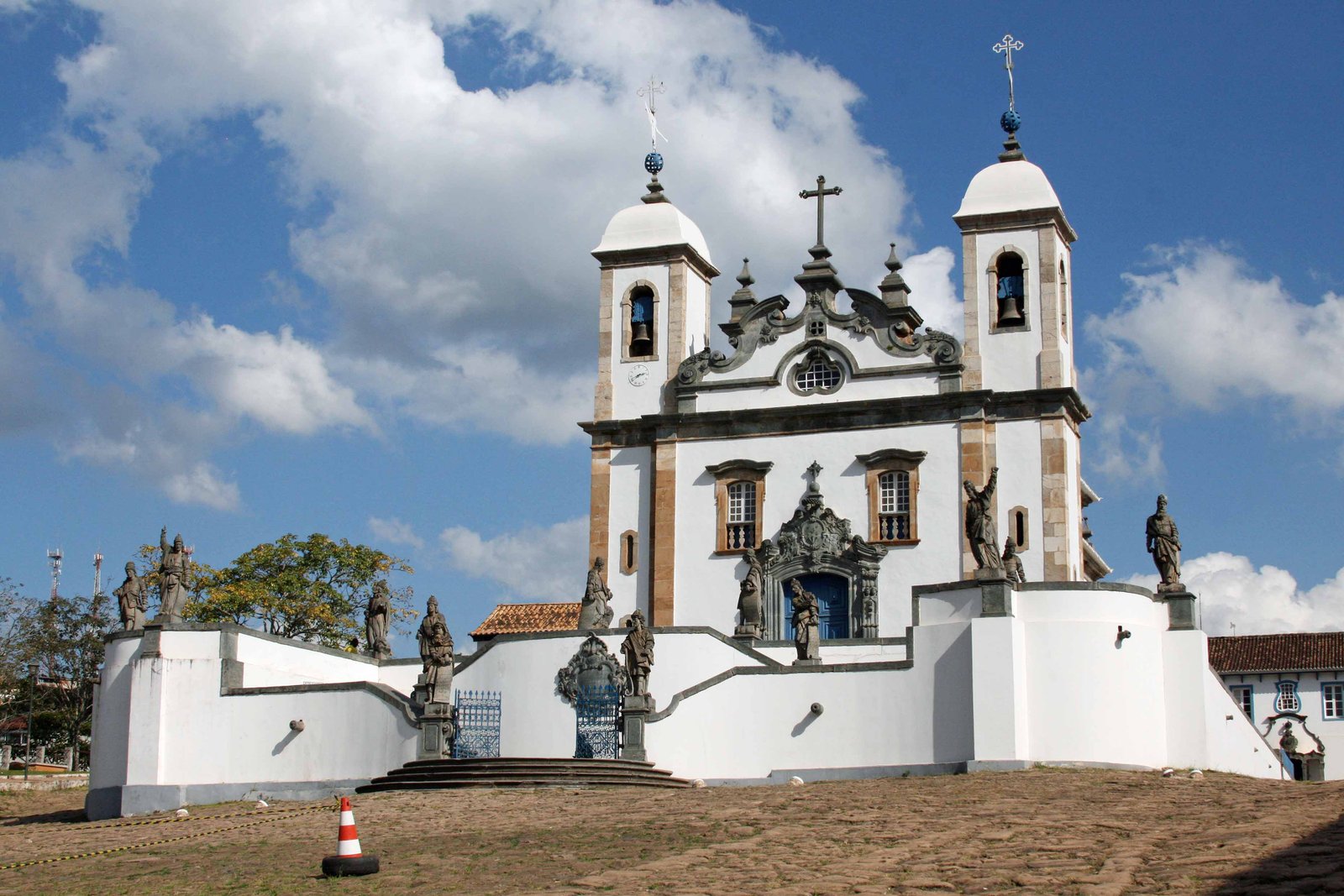
A Baroque masterpiece in Minas Gerais, this basilica showcases an iconic outdoor stairway lined with prophetic statues and an interior animated by the sculptural genius of Aleijadinho.
At a glance
The Sanctuary of Bom Jesus de Matosinhos stands as one of Brazil’s finest examples of 18th-century religious architecture. Its Baroque exterior gives way to an Italian-inspired Rococo interior—a striking fusion of European aesthetics adapted to local artistic sensibilities. The basilica earned UNESCO recognition in 1985 for its cultural importance.
History
Built during the height of colonial Brazil’s gold boom, the sanctuary became a major pilgrimage destination for the faithful seeking divine intercession. The National Institute of Historic and Artistic Heritage (IPHAN) recognized its significance early, listing it as a historic structure in 1939—nearly half a century before its World Heritage designation.
What you see
The basilica’s defining feature is its monumental outdoor stairway, adorned with life-size statues of Old Testament prophets that guide pilgrims toward the entrance. Within, seven side chapels line the nave, each dedicated to a Station of the Cross. The interiors of these chapels contain polychrome wooden sculptures—intricate, emotionally charged figures that seem to pulse with spiritual urgency.
Every sculpture was created by Aleijadinho (1730 or 1738–1814) and his workshop assistants, representing the culmination of his artistic career and the height of colonial Brazilian Baroque craftsmanship.
Cultural significance
Aleijadinho’s sculptural cycle ranks among the most profound achievements in Baroque art. His work transcends European precedent: the figures convey raw human emotion—suffering, faith, redemption—with a directness and originality that distinguishes Brazilian colonial art. The Stations of the Cross here function as a visual theology, accessible to pilgrims of all literacy levels, making spiritual truths tangible through wood and pigment.
Key facts
- Location: Congonhas, Minas Gerais, Brazil (coordinates: -20.5082, -43.8608)
- Period: 18th century
- Architectural style: Baroque exterior with Rococo interior
- Sculptor: Aleijadinho and workshop
- Listed by IPHAN: 1939
- UNESCO World Heritage Site: 1985
Practical information & getting there
The sanctuary is located in Congonhas, a town in the historic mining region of Minas Gerais. It remains an active pilgrimage site and open to visitors. For specific opening hours and current visiting conditions, consult local tourism resources or the sanctuary directly.
Sources & resources
Find it on the map
See this place and what’s around it →📷 Become a Cultural Heritage Online photographer
Share your photos of places: they stay published under your name as the author. The more they're seen, the more you get noticed — and soon a contest will reward the most appreciated photos.
Log in or sign up free to add a photo