
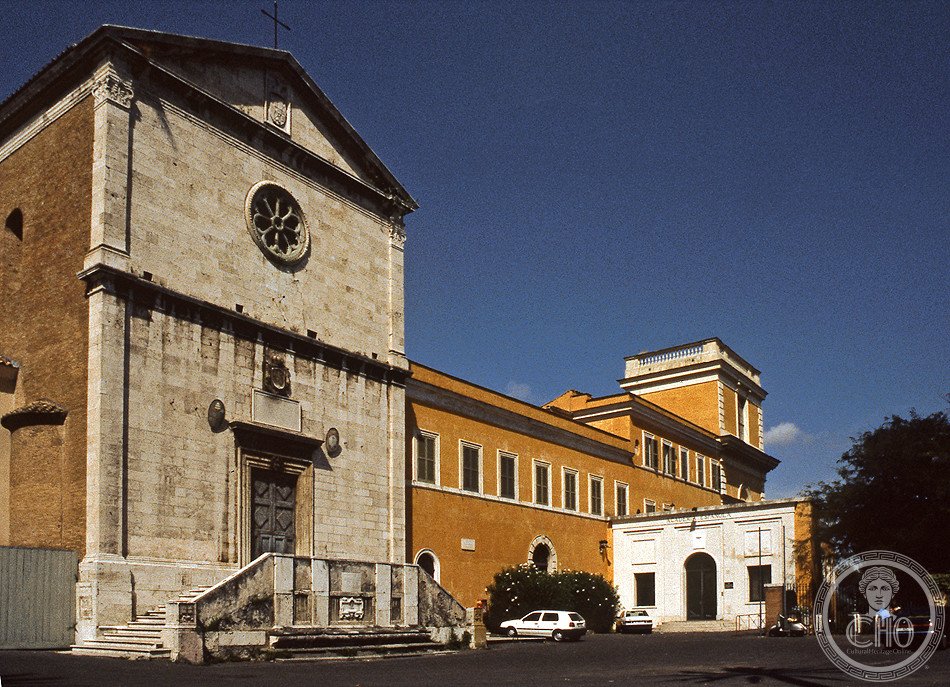
The Real Academia de España en Roma is Spain’s national academy in the Italian capital, founded in 1873 to provide fellowship residencies for Spanish artists, architects, and other creative professionals. Housed in the historic Palazzo Corsini on the Janiculum Hill, the academy operates one of the most coveted cultural grants in Spain, allowing its fellows to live and work in Rome for periods of up to three years amid one of the world’s richest concentrations of art and architecture.
At a glance
- Type
- National cultural academy and artist residency
- Period
- Founded 1873; occupies a historic palace with Renaissance and Baroque phases
- Style
- Renaissance and Baroque palazzo on the Janiculum Hill
- Location
- Via di San Pietro in Montorio 3, 00153 Rome — Trastevere / Janiculum
- Coordinates
- 41.8887° N, 12.4669° E
Overview
The Real Academia de España occupies a commanding position on the Janiculum Hill overlooking Trastevere and the Tiber bend, affording panoramic views of the Roman skyline. The institution provides approximately fifteen annual fellowships to Spanish nationals working in visual arts, architecture, music composition, conservation, and humanities research. Fellows benefit from studio space, library access, and the stimulus of the Roman artistic environment during their residency.
History
Spain’s interest in maintaining an artistic presence in Rome dates to the 16th century, when the Spanish crown supported artists studying the classical legacy. The present academy was formally constituted in 1873 under royal decree, absorbing earlier initiatives that had existed in various forms. The Janiculum site became the academy’s permanent home in the late 19th century; the palazzo complex was subsequently restored and adapted to serve as a modern residency. Today the academy is funded by the Spanish Ministry of Culture and coordinates closely with Spanish cultural institutes across Europe.
What you see
The academy complex centres on a historic palazzo with courtyards, gardens, and terraces planted with cypresses and laurel overlooking Rome. Interior spaces include studios of varying scales — from painters’ ateliers to sculptors’ workshops — alongside seminar rooms, a specialist library, and a concert hall used for public events. The gardens offer one of the finest elevated viewpoints over the city, a vantage point long favoured by landscape artists painting the Roman panorama. A small exhibition gallery presents work by current and former fellows on a rotating basis.
Cultural significance
The Real Academia de España in Rome belongs to the tradition of European academies abroad that have shaped national artistic identities through encounter with Rome’s classical and Renaissance heritage. Many of Spain’s leading 20th-century artists — painters, architects, and composers — held fellowships here early in their careers. The academy continues to play a formative role in Spanish cultural life, serving as a bridge between Spanish creativity and the broader European artistic conversation.
Practical information
The academy hosts periodic exhibitions, concerts, and open events accessible to the public. Visiting the grounds and gardens is generally possible during scheduled events; contact the academy directly for current programming. The adjacent church of San Pietro in Montorio and the Tempietto by Bramante are open to visitors independently.
Getting there
The academy stands on the Janiculum Hill in Trastevere. Take bus line 115 from Largo Argentina or bus 870 from Piazza Risorgimento, alighting near San Pietro in Montorio. On foot from Trastevere it is a steep 15-minute climb via Via Garibaldi. By car, limited parking is available on Passeggiata del Gianicolo.
Sources & resources
Find it on the map
See this place and what’s around it →📷 Become a Cultural Heritage Online photographer
Share your photos of places: they stay published under your name as the author. The more they're seen, the more you get noticed — and soon a contest will reward the most appreciated photos.
Log in or sign up free to add a photo