
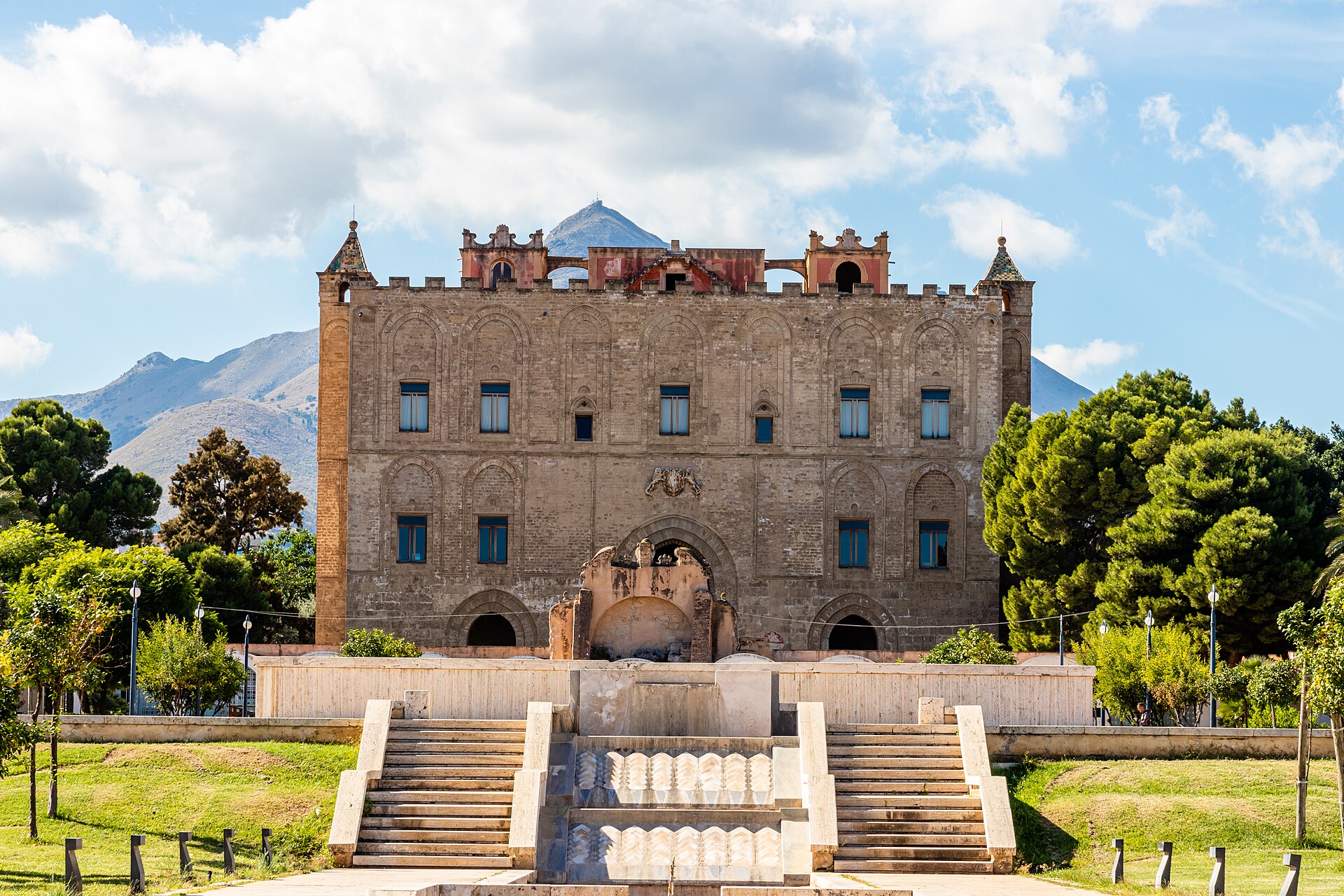
The Zisa is a grand 12th-century Norman palace in the western part of Palermo, Sicily. Begun around 1165 by Arab craftsmen under the Norman king William I and completed in 1189 under William II, it was conceived as a summer residence and hunting lodge. Its name derives from the Arabic al-ʿAzīza, “the Splendid one,” and it stands today as one of the finest expressions of Arab-Norman architecture. Since 2015 the Zisa has been part of the UNESCO World Heritage Site of Arab-Norman Palermo.
At a glance
- Type
- Royal palace / hunting lodge
- Period
- 1165–1189 (Norman)
- Style
- Arab-Norman
- Location
- Western Palermo, Sicily
Overview
The Zisa was built as a summer palace for the Norman kings of Sicily, set within the vast royal hunting park known as the Genoardo — from the Arabic Jannat al-Arḍ, “Earthly Paradise.” This pleasure ground once also included the Cuba Sottana, Cuba Soprana and Uscibene palaces, together with extensive gardens. The building is now open to the public for tours.
History
Construction began around 1165 under William I and was finished by 1189 under William II, carried out by Arab craftsmen in the service of the Norman crown. The Arabic name al-ʿAzīza was inscribed in Naskh script at the entrance, in the manner of major Islamic buildings of the period. After centuries of changing ownership the palace fell into disrepair; it was acquired by Giovanni de Sandoval in 1635 and held by his family until 1808, then used as a residence by the Notarbartolo di Sciara princes into the 1950s. In the 1990s the Region of Sicily undertook its restoration.
What you see
The Zisa presents a compact, fortress-like rectangular block whose austere exterior conceals a sophisticated interior of fountains, vaulted halls and cooling passages designed for the Sicilian summer. Its decorative programme blends Islamic, Byzantine and Norman elements, and the building today also serves as the Museum of Islamic Art, displaying objects from the medieval Mediterranean world.
Cultural significance
The Zisa is a landmark of the unique Arab-Norman culture that flourished in 12th-century Sicily, where Islamic craftsmanship served Christian Norman rulers. In July 2015 it was inscribed, together with other monuments of Palermo, Cefalù and Monreale, on the UNESCO World Heritage List as part of “Arab-Norman Palermo.”
Practical information
The Zisa is open to the public for visits and houses the Museum of Islamic Art. For current opening hours and admission, check the official website before your visit.
Getting there
The Zisa stands in the western districts of Palermo and is easily reached from the city centre by local bus or taxi. Palermo is served by Falcone-Borsellino Airport and by national rail connections to the central station.
Sources & resources
See the place
Find it on the map
See this place and what’s around it →📷 Become a Cultural Heritage Online photographer
Share your photos of places: they stay published under your name as the author. The more they're seen, the more you get noticed — and soon a contest will reward the most appreciated photos.
Log in or sign up free to add a photo