
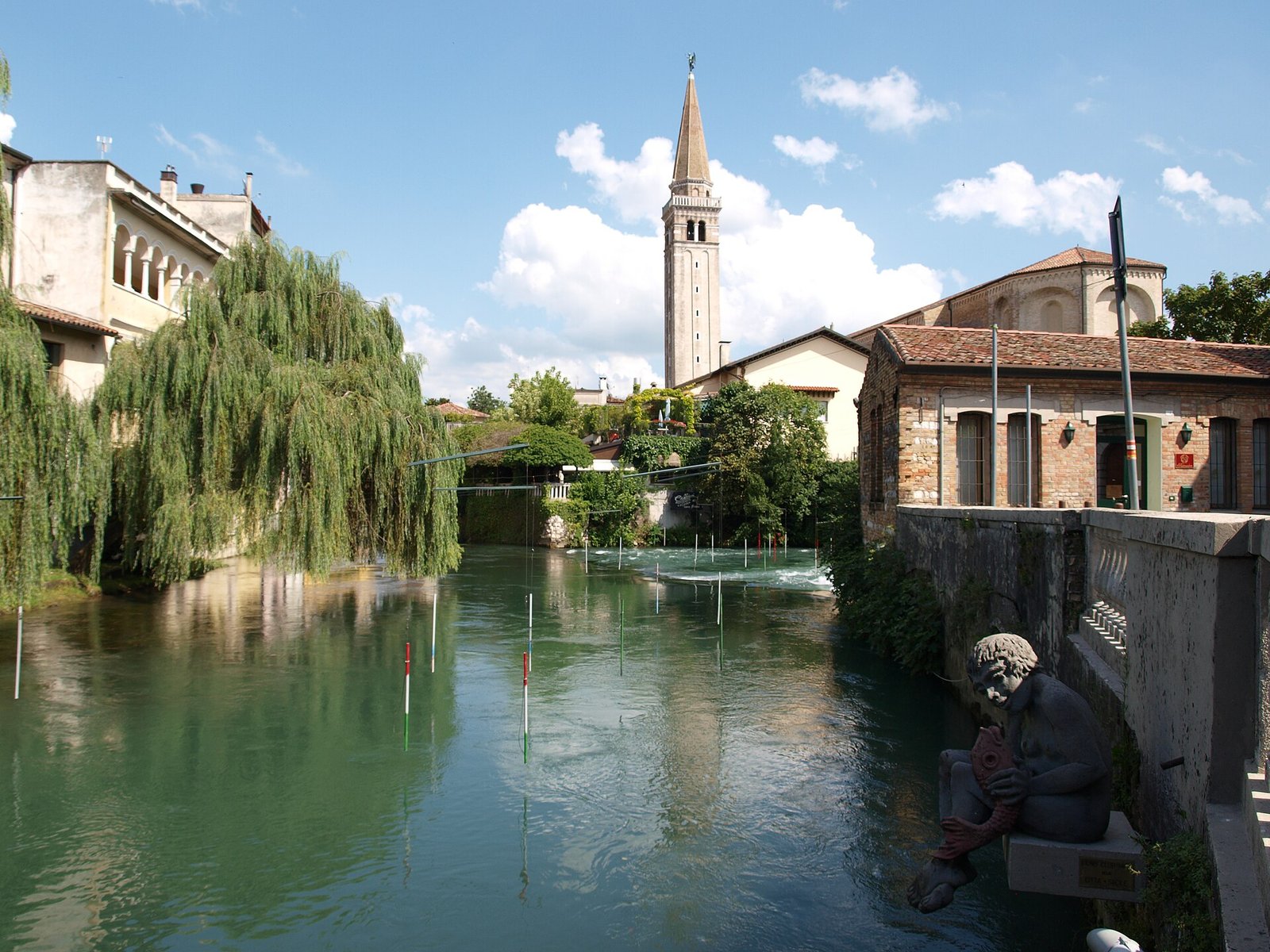
Sacile is a comune in the Pordenone area of Friuli-Venezia Giulia, in north-eastern Italy. It is celebrated as the “Garden of the Serenissima” for the many palaces built along the river Livenza by the nobility of the Republic of Venice. The town’s elegant riverside architecture reflects centuries of Venetian patronage.
At a glance
- Type
- Comune (municipality)
- Period
- Medieval origins; Venetian-era expansion
- Style
- Venetian riverside palaces
- Location
- Pordenone area, Friuli-Venezia Giulia, Italy
Overview
Sacile is a municipality in the regional decentralization entity of Pordenone, in Friuli-Venezia Giulia. It is known as the “Garden of the Serenissima” because of the many palaces constructed along the river Livenza for Venetian nobility. The river runs through the historic centre, giving the town its distinctive waterside character.
History
Sacile grew up along the Livenza, a position that made it an important crossing and trading point. Under the long rule of the Republic of Venice it flourished, attracting noble families who built residences along the riverbanks. This Venetian patronage gave the town the refined urban appearance for which it is still admired.
What you see
Visitors find an historic centre threaded by the Livenza, lined with Venetian-style palaces and reflected facades. Bridges, porticoes and waterside frontages create the garden-like scenery that earned the town its nickname. The setting on the river remains the defining feature of the townscape.
Cultural significance
As the “Garden of the Serenissima”, Sacile preserves a notable concentration of Venetian-era residential architecture in Friuli-Venezia Giulia. It stands as a testament to the cultural and economic reach of the Venetian Republic into the Friulian plain.
Practical information
The historic centre is freely accessible. For opening hours of churches, civic buildings or seasonal events, check the official municipal website.
Getting there
Sacile lies on the western edge of Friuli-Venezia Giulia, well connected by road and rail. It is reached easily from Pordenone and sits on routes linking the Veneto and Friulian plains.
Sources & resources
See the place
Find it on the map
See this place and what’s around it →📷 Become a Cultural Heritage Online photographer
Share your photos of places: they stay published under your name as the author. The more they're seen, the more you get noticed — and soon a contest will reward the most appreciated photos.
Log in or sign up free to add a photo