
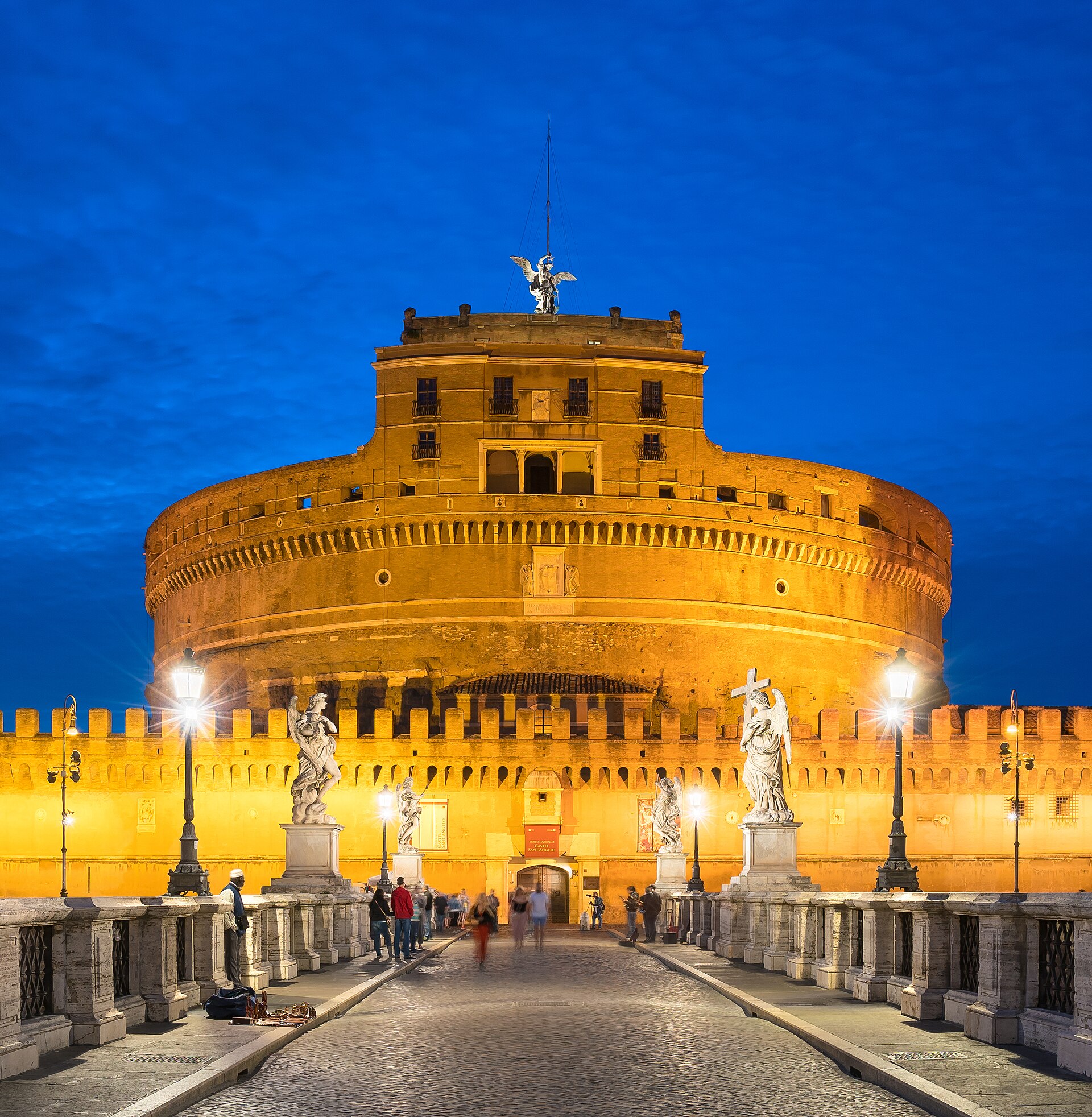
Castel Sant’Angelo, also known as the Mausoleum of Hadrian, is a towering rotunda in Parco Adriano, Rome. It was initially commissioned by the Roman Emperor Hadrian as a mausoleum for himself and his family. The popes later used the building as a fortress and castle dedicated to Saint Michael the Archangel, and it now houses a national museum.
At a glance
- Type
- Monument and national museum (former mausoleum and fortress)
- Period
- Roman imperial origins; later papal fortress and castle
- Style
- Roman rotunda with later medieval and Renaissance fortification
- Location
- Parco Adriano, Rome, Italy
Overview
Castel Sant’Angelo is a towering cylindrical structure on the banks of the Tiber in Rome. It began as the Mausoleum of Hadrian and was, at one point, the tallest building in Rome. Today it is a national museum open to visitors.
History
The structure was initially commissioned by the Roman Emperor Hadrian as a mausoleum for himself and his family. Over the following centuries the popes adapted the building, using it as a fortress and castle. It came to be dedicated to Saint Michael the Archangel, which gives the monument its name.
What you see
The monument takes the form of a massive rotunda rising above Parco Adriano beside the Tiber. Its imperial Roman core is wrapped in later fortifications added during its long use as a papal stronghold. The building was once the tallest in Rome, and its silhouette remains a landmark on the river.
Cultural significance
Castel Sant’Angelo embodies nearly two millennia of Roman history, evolving from imperial mausoleum to papal fortress and finally to museum. Its layered identity makes it one of the most significant monuments in Rome, bridging the ancient, medieval and Renaissance city.
Practical information
The monument operates as a national museum with regular visiting hours and admission. For current opening times, ticketing and temporary exhibitions, check the official website.
Getting there
Castel Sant’Angelo stands in Parco Adriano on the right bank of the Tiber in central Rome, near Vatican City. It is within walking distance of St Peter’s and is reached on foot across the Sant’Angelo bridge or by Rome’s public transport network.
Sources & resources
See the place
Find it on the map
See this place and what’s around it →Historical events at this place (1)
📷 Become a Cultural Heritage Online photographer
Share your photos of places: they stay published under your name as the author. The more they're seen, the more you get noticed — and soon a contest will reward the most appreciated photos.
Log in or sign up free to add a photoIs this page about you?
This page is read by travellers and heritage enthusiasts who find it on Google. Tell us how you are connected to this place and we will take it from there.