
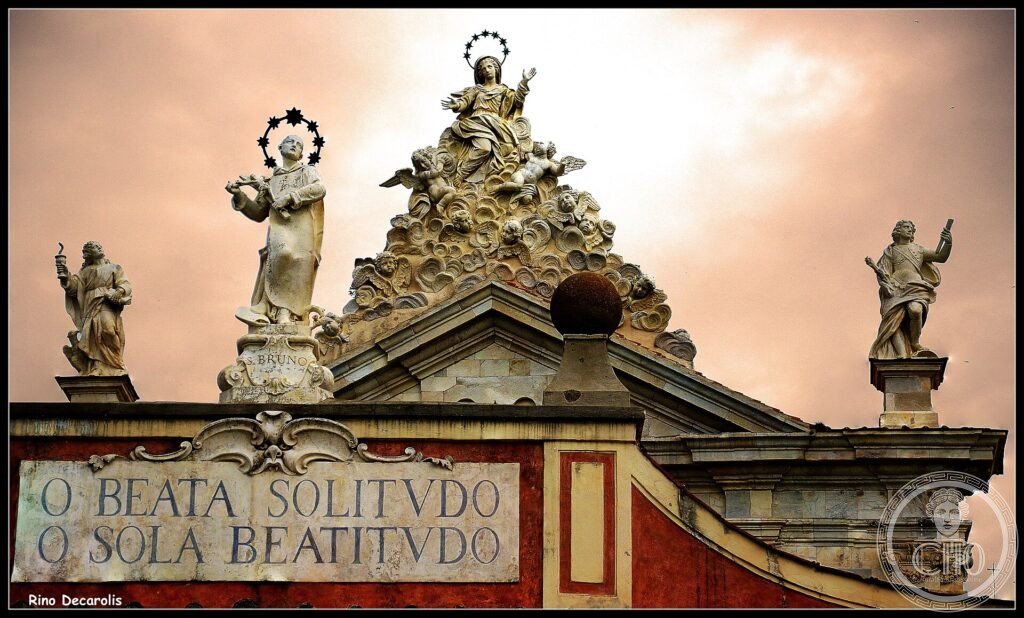
The Certosa di Pisa, also known as the Calci Charterhouse or Charterhouse of Val Graziosa, is a former Carthusian monastery about ten kilometres outside Pisa, in the comune of Calci in Tuscany. Set in a green valley at the foot of the Pisan hills, the vast monastic complex is celebrated for its grand Baroque architecture, frescoed cloisters and church. Today it houses the Pisa Museum of Natural History, giving the historic charterhouse a new public life.
At a glance
- Type
- Former Carthusian monastery, now a museum
- Period
- Founded in the 14th century; rebuilt in Baroque form
- Style
- Baroque, on a medieval monastic plan
- Location
- Calci, near Pisa, Tuscany, Italy
Overview
The charterhouse lies in the Val Graziosa, a wooded valley in the comune of Calci, a short distance from Pisa. It was home to a community of Carthusian monks, whose silent, semi-eremitical life shaped the layout of cells, cloisters and church. The monastery now serves as the seat of the University of Pisa’s Museum of Natural History.
History
The Carthusians founded the charterhouse in the fourteenth century in this secluded Tuscan valley, far from the bustle of the city. Over the following centuries the complex was greatly enlarged and remodelled, acquiring its sumptuous Baroque appearance with richly decorated interiors. With the suppression of the religious orders the monks departed, and the buildings passed to public ownership and eventually to use as a museum.
What you see
Visitors find an immense monastic complex of courtyards, cloisters and a richly frescoed church. The Carthusian cells, each with its own small garden, line the great cloister in the order’s characteristic plan. Frescoes, stuccoes and marbles decorate the public rooms, while part of the complex now displays the natural history collections, including a notable gallery of whale skeletons.
Cultural significance
The Certosa di Pisa is one of the most important Carthusian monuments in Tuscany, a remarkable ensemble of Baroque art and monastic architecture. Its reuse as the Pisa Museum of Natural History combines heritage conservation with public education and research.
Practical information
The monastery can be visited both as a historic monument and as the Museum of Natural History, which occupies part of the complex. Opening hours, guided tours and admission vary between the monumental and museum sections. Check the official websites before planning a visit.
Getting there
The charterhouse is about ten kilometres from Pisa, in the village of Calci, reached by road through the Val Graziosa. Local buses connect Pisa with Calci, and there is parking near the monastery for those arriving by car.
Sources & resources
Find it on the map
See this place and what’s around it →📷 Diventa un fotografo di Cultural Heritage Online
Condividi le tue foto dei luoghi: restano pubblicate con la tua firma come autore. Più vengono viste, più ti fai conoscere — e presto un concorso premierà le foto più apprezzate.
Accedi o registrati gratis per aggiungere una foto