Moldova has one UNESCO World Heritage Site — a single inscription that stretches from the Black Sea coast to the Norwegian Arctic and places a landlocked country of 2.6 million people within a continent-spanning scientific achievement. That ratio of one entry to centuries of layered history feels surprising until you look more closely at what the list contains and what is still waiting to join it. From Cultural Heritage Online.
Why Moldova’s list looks the way it does
Moldova became an independent state in 1991, and its engagement with UNESCO’s World Heritage Convention accelerated through the 1990s and 2000s as the country worked to situate its patrimony within European frameworks. The single inscribed site reflects a deliberate choice to participate in a transnational nomination rather than pursue a solo entry — a pragmatic approach that placed Moldova within a shared European story of scientific exploration.
The country’s tentative list, however, signals a more ambitious agenda. Four sites currently under consideration range from Chalcolithic mega-settlements to subterranean wine infrastructure. Inscription timelines depend on dossier preparation and UNESCO review cycles, so the list as of 2026 may look substantially different within a decade.
The first inscriptions
Moldova’s only UNESCO World Heritage inscription to date is:
- Struve Geodetic Arc (inscribed 2005) — a transnational cultural site shared with nine other countries: Belarus, Estonia, Finland, Latvia, Lithuania, Norway, Russia, Sweden, and Ukraine.
The Arc takes its name from the Baltic-German astronomer Friedrich Georg Wilhelm von Struve, who led the survey between 1816 and 1855. The chain of 265 triangulation points spans 2,820 kilometres from Hammerfest in Norway to Izmail on the Danube delta, measuring a meridian arc to calculate the precise shape and size of the Earth. Two of those triangulation stations fall within what is today Moldovan territory, linking the country to one of the foundational achievements of nineteenth-century geodesy.
The most visited — and the alternatives
Because Moldova’s inscribed UNESCO list contains a single scientific monument rather than a readily photographed architectural landmark, visitors with a heritage focus tend to organise their itineraries around the country’s tentative and nationally protected sites instead. The Orheiul Vechi Archaeological Landscape, perched above the Răut River, draws the most consistent international attention: the gorge shelters cave monasteries, a medieval Moldavian town, and Paleolithic through Golden Horde-period occupation layers within a single river-bend setting.
Less frequently discussed but worth seeking out are the underground wine galleries that run beneath the Codru Hills. Repurposed from Soviet-era limestone mines, the tunnels at Cricova and Mileștii Mici together exceed 320 kilometres in length — enough to constitute, by some measures, the largest wine storage infrastructure in the world. The Cucuteni-Trypillia sites scattered across the country’s north, meanwhile, preserve traces of a Chalcolithic civilisation that built planned settlements of several thousand inhabitants as far back as 5500 BCE, predating the pyramids by millennia.
Natural and shared sites
Moldova currently has no inscribed natural or mixed UNESCO World Heritage Sites. The country’s terrain — predominantly agricultural plateau with river-valley forests — lacks the dramatic wilderness features that tend to anchor natural nominations, and no natural site appears on the current tentative list either. That said, the Cucuteni-Trypillia Civilization nomination is transnational, shared with Romania and Ukraine, and covers a landscape that encompasses both archaeological and environmental significance across three national territories.
The Struve Geodetic Arc itself models what transnational nominations can achieve: by pooling triangulation points across ten countries, the nomination assembled a heritage argument that no single state could have made alone. Moldova’s participation connects the country to a chain that spans Baltic forests, Arctic fjords, and Central European plains — a reminder that heritage boundaries do not follow political maps.
How to find them
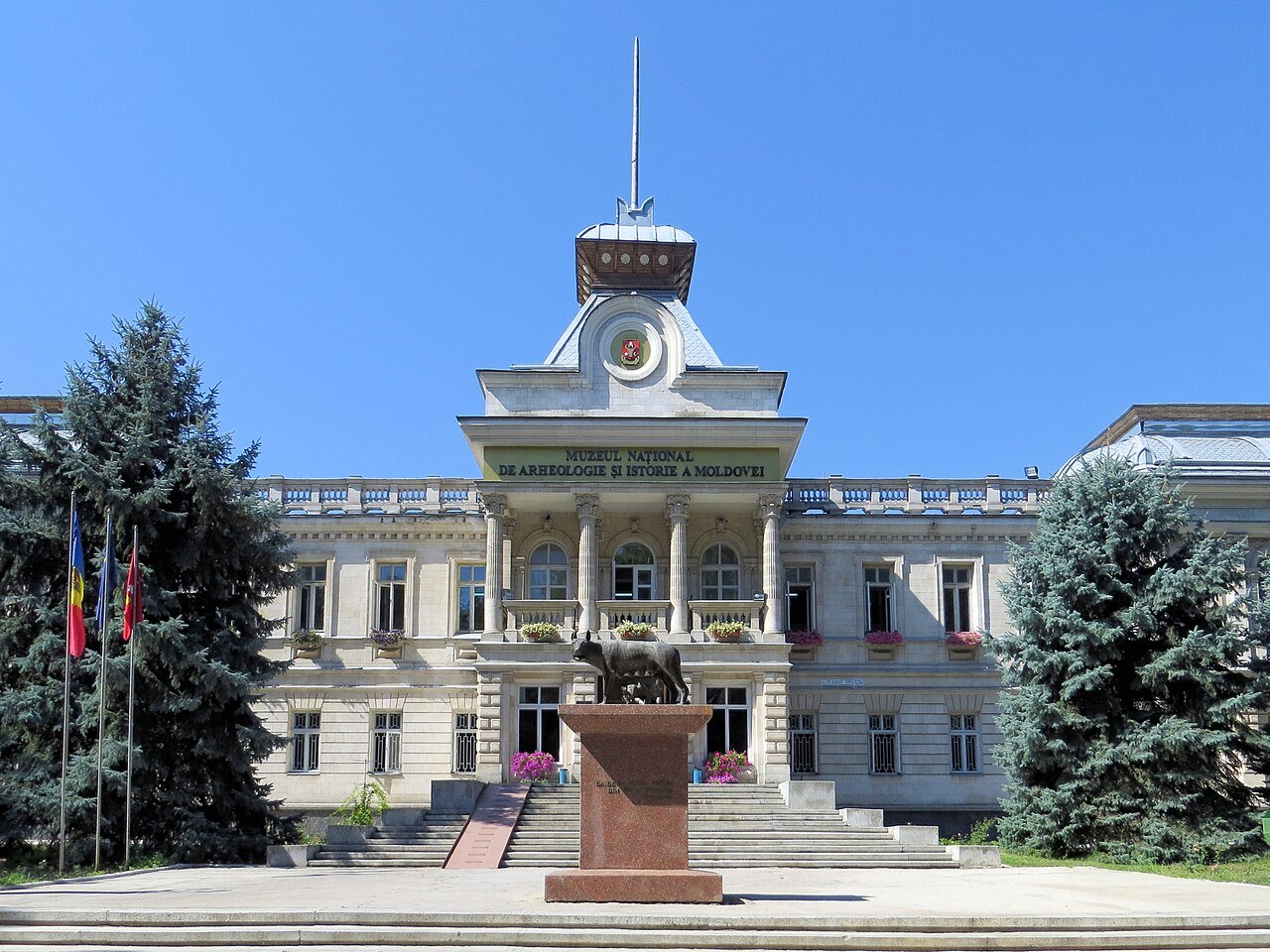
The Moldovan stations of the Struve Geodetic Arc are not mass-tourism destinations; reaching them requires some research and, often, local guidance. Orheiul Vechi sits roughly 60 kilometres north of Chișinău and is reachable by marshrutka from the capital’s central bus station. The wine galleries at Cricova and Mileștii Mici both operate organised tours bookable in advance. For the Cucuteni-Trypillia sites, the most accessible museum context is across the border in Romania, though Moldovan archaeological museums in Chișinău hold significant collections from the culture.
Moldova’s World Heritage sites sit alongside thousands of other places on CHO’s interactive map, with GPS and sourced editorial history for each. See also our guides to Italy’s and France’s UNESCO sites, and our piece on cultural travel beyond mass tourism.
Frequently Asked Questions
How many UNESCO World Heritage Sites does Moldova have?
As of 2026, Moldova has one inscribed UNESCO World Heritage Site: the Struve Geodetic Arc, a transnational cultural property shared with nine other European countries. The country also maintains four sites on its UNESCO tentative list, including the Orheiul Vechi Archaeological Landscape and the Underground Wineries of Moldova.
What was Moldova’s first UNESCO World Heritage Site?
Moldova’s first and, to date, only UNESCO World Heritage inscription is the Struve Geodetic Arc, added to the list in 2005. The site recognises a chain of nineteenth-century triangulation points used to measure the Earth’s shape, with two stations located within present-day Moldovan territory.
Is the Struve Geodetic Arc shared with other countries?
Yes. The Struve Geodetic Arc is a transnational serial property spanning ten countries: Belarus, Estonia, Finland, Latvia, Lithuania, Moldova, Norway, Russia, Sweden, and Ukraine. The full arc runs 2,820 kilometres from Hammerfest in Norway to the Danube delta, linking 265 original triangulation stations established between 1816 and 1855.
What sites in Moldova could receive UNESCO status in the future?
Moldova’s tentative list currently includes the Orheiul Vechi Archaeological Landscape, the Underground Wineries of Moldova, and the transnational Cucuteni-Trypillia Civilization nomination shared with Romania and Ukraine. Tentative listing is a prerequisite for inscription, though it does not guarantee or predict a specific timeline for formal UNESCO recognition.
Sources used in this article
- UNESCO — State Party Moldova — World Heritage list.
- UNESCO — Moldova: World Heritage Sites.
- CHO magazine — What is a World Heritage Site?
- CHO — Interactive map of heritage sites.
Sources
- S1 — King, Charles. The Moldovans: Romania, Russia, and the Politics of Culture. Hoover Institution Press, 2000. ISBN 978-0-8179-9792-2.
- S2 — Brezianu, Andrei, and Vlad Spânu. Historical Dictionary of Moldova. Scarecrow Press, 2007. ISBN 978-0-8108-5607-3.
Spotted an error? Write to editorial@culturalheritageonline.com and we correct it the same day.