Malta has 3 UNESCO World Heritage Sites — a compact count for a country of this antiquity, yet one that punches well above its weight per square kilometre. These three designations span an underground necropolis, a Renaissance fortress city, and a scattered constellation of prehistoric temples among the oldest free-standing stone structures on Earth. Each inscription tells a different chapter of the same long story: an archipelago at the crossroads of Mediterranean civilisations, layered with occupation, devotion, and stone. From Cultural Heritage Online.
Why Malta’s list looks the way it does
With a land area of roughly 316 square kilometres, Malta has no wilderness to inscribe. Every site on its World Heritage list is cultural, and all three were recognised in 1980 at the fourth session of the World Heritage Committee in Paris — a single sweeping gesture that acknowledged the archipelago’s extraordinary density of heritage in one stroke. No natural sites have been inscribed since, though several coastal and marine features appear on Malta’s tentative list submitted in 1998.
The character of the list reflects the island’s geological and historical logic. Malta is built almost entirely from soft limestone, which prehistoric communities carved and stacked into temples and tombs, and which later inhabitants — Phoenicians, Romans, Arabs, Normans, Knights of St John, and the British — quarried and fortified into successive layers of settlement. What survives is almost uniformly constructed: no old-growth forests, no river valleys, only stone.
The first inscriptions
All three of Malta’s World Heritage Sites were inscribed simultaneously in 1980, making that year the foundation of the country’s entire UNESCO portfolio. The sites recognised at that session were:
- Ħal Saflieni Hypogeum — an underground necropolis in Paola, carved into limestone across three superimposed levels and used as a burial site from approximately 4000 to 2500 BC.
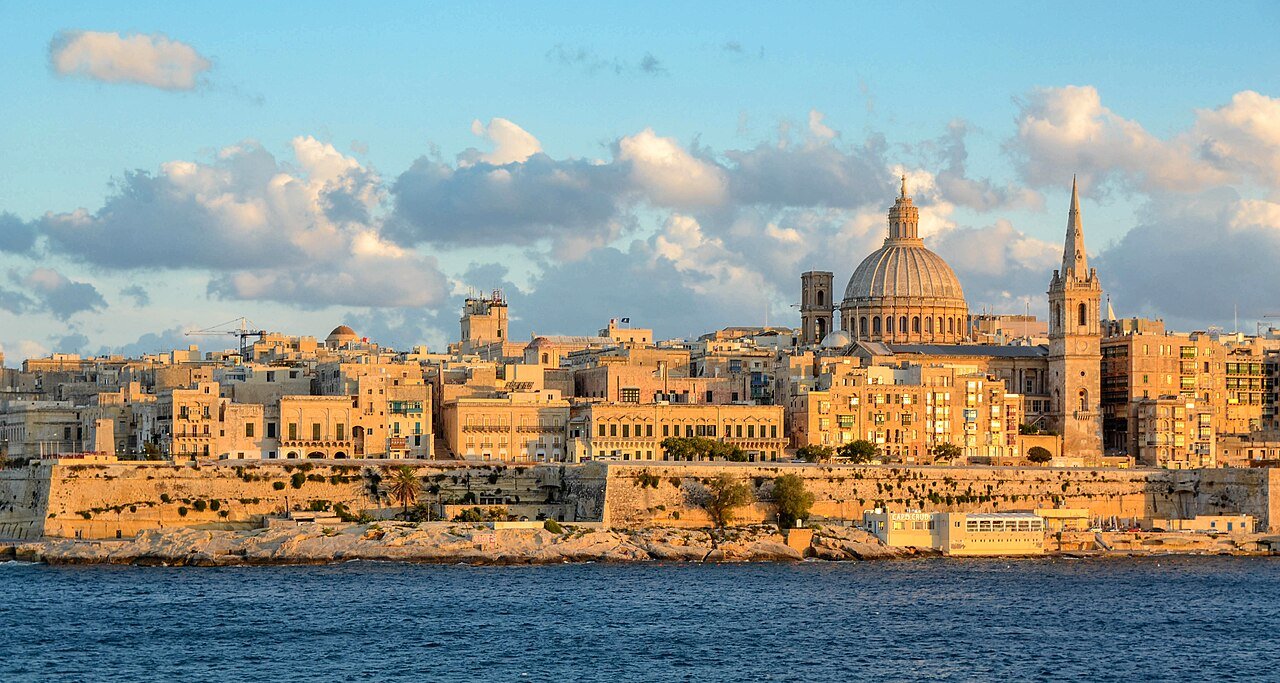
- City of Valletta — a Renaissance city founded in 1566 by the Knights of St John, planned on a uniform grid within massive fortified walls and containing around 320 monuments in less than 0.8 square kilometres.
- Ġgantija Temples — two megalithic temples on the island of Gozo, later expanded under the designation Megalithic Temples of Malta in 1992 to encompass seven temples across six sites.
The 1992 extension of the Megalithic Temples inscription is the only modification Malta’s list has seen in over four decades. That serial expansion added five further temple complexes — Ħaġar Qim, Mnajdra, Skorba, Tarxien, and Ta’ Ħaġrat — to the original Ġgantija pair, creating a group designation that treats the temples as a single, distributed phenomenon rather than isolated monuments.
The most visited — and the alternatives
Valletta draws the largest share of visitors: the capital’s Baroque churches, palace interiors, and sea-view bastions are the face of Maltese heritage tourism. The Tarxien Temples, part of the Megalithic Temples serial site and located in a residential suburb of the same name south of Valletta, receive steady traffic but are rarely the primary reason for a visit — most travellers encounter them as an addition to a Valletta day rather than a destination in their own right.
For those willing to step away from the capital, the alternatives within the same inscriptions offer a markedly different experience. The Ħaġar Qim and Mnajdra temple complexes stand on the southern cliffs of Malta’s main island, exposed to wind and sea, their megaliths aligned with the rising sun at the solstices and equinoxes. Ġgantija on Gozo requires a short ferry crossing and rewards the effort with two of the best-preserved Neolithic structures in the Mediterranean. The Ħal Saflieni Hypogeum — perhaps the most singular of all — admits only a limited number of visitors per day by timed booking, its preservation dependent on controlling humidity and breath. Access is not guaranteed without advance planning, which keeps crowds low and the experience genuinely uncommon.
Natural and shared sites
Malta has no inscribed natural World Heritage Sites. The country’s 1998 tentative list includes several natural features — among them the coastal cliffs of Dingli and the marine environment of the Maltese Channel — but none has been formally nominated. The inscribed portfolio remains entirely cultural in character.
None of Malta’s three designations form part of a transnational serial inscription. The Megalithic Temples are a serial site wholly within Maltese territory, and neither Valletta nor the Hypogeum has cross-border components. This is consistent with the island’s heritage profile: the civilisations that built here did so in relative geographic isolation, producing a body of architecture and archaeology that is distinctly local in form even when it reflects broader Mediterranean currents.
How to find them
All of Malta’s World Heritage Sites are compact and accessible by public transport from Valletta. The Hypogeum at Paola is a short bus ride from the capital; Ħaġar Qim and Mnajdra are reachable by bus from Valletta or Żurrieq; Ġgantija on Gozo requires the Ċirkewwa ferry and onward transport to Victoria. Advance booking for the Hypogeum is strongly recommended — capacity is capped at around 80 visitors per day to protect the microclimate of the underground chambers.
Malta’s World Heritage sites sit alongside thousands of other places on CHO’s interactive map, with GPS and sourced editorial history for each. See also our guides to Italy’s and France’s UNESCO sites, and our piece on cultural travel beyond mass tourism.
Frequently Asked Questions
How many UNESCO World Heritage Sites does Malta have?
Malta has 3 UNESCO World Heritage Sites, all of them cultural. They were all inscribed in 1980, with the Megalithic Temples designation subsequently extended in 1992 to cover a total of seven prehistoric temple structures across six locations on the Maltese islands.
What was Malta’s first UNESCO World Heritage Site?
Malta’s first inscriptions — all three of them — were made simultaneously in 1980: the Ħal Saflieni Hypogeum, the City of Valletta, and the Ġgantija Temples. No single site precedes the others; the country’s entire World Heritage portfolio was established in a single session of the World Heritage Committee.
Does Malta have any natural UNESCO World Heritage Sites?
No. All three of Malta’s inscribed sites are classified as cultural. Several natural features, including coastal cliff formations and marine environments, appear on Malta’s tentative list submitted to UNESCO in 1998, but none has been formally nominated for inscription.
What is the Megalithic Temples of Malta inscription?
The Megalithic Temples of Malta is a serial cultural inscription encompassing seven prehistoric temples at six separate locations: Ġgantija (Gozo), Ħaġar Qim, Mnajdra, Skorba, Tarxien, and Ta’ Ħaġrat. Originally inscribed as Ġgantija Temples in 1980, the designation was expanded in 1992 to include the additional sites, recognising the temples collectively as among the oldest free-standing stone structures in the world.
Sources used in this article
- UNESCO — State Party Malta — World Heritage list.
- UNESCO — Malta: World Heritage Sites.
- CHO magazine — What is a World Heritage Site?
- CHO — Interactive map of heritage sites.