Fiji has one UNESCO World Heritage Site: the former colonial capital of Levuka, inscribed in 2013 for its exceptional integrity as a late Pacific port town shaped by both European traders and the indigenous Fijian communities who surrounded them. Small in number, the list points toward a broader archipelago whose heritage — reef ecosystems, ancient dune landscapes, crested iguana sanctuaries — remains largely unrecognised at the international level. From Cultural Heritage Online.
Why Fiji’s list looks the way it does
Fiji ratified the UNESCO World Heritage Convention on 21 November 1990, making its properties eligible for nomination more than three decades ago. Yet only one site has crossed the threshold to inscription. This is partly a question of nomination resources: the process of preparing a nomination dossier — with its detailed comparative analyses, management plans, and buffer zone delineations — demands sustained technical and financial capacity that many Pacific Island states find difficult to sustain alongside competing conservation priorities.
It is also a reflection of how UNESCO’s evaluation bodies weigh Pacific heritage against globally dominant narratives. Three properties sit on Fiji’s tentative list, submitted in 1999: the Sovi Basin rainforest, the Sigatoka Sand Dunes, and the Yaduataba Crested Iguana Sanctuary. Each has genuine outstanding universal value arguments to make. None has yet advanced to a full nomination file, leaving Fiji’s formal UNESCO footprint concentrated on a single coastal town.
The first inscription
Fiji’s first — and to date only — inscribed World Heritage Site arrived in 2013, more than two decades after the country joined the Convention. The site is:
- Levuka Historical Port Town (2013) — inscribed under criteria ii and v as a rare, intact example of a late colonial Pacific port settlement.
Levuka, on the island of Ovalau, served as Fiji’s first colonial capital before the seat of government moved to Suva in 1882. What makes the 2013 inscription notable is the reason UNESCO cited: not simply colonial architecture, but the layered social history of a town where indigenous Fijians consistently outnumbered European and other migrant settlers, producing a cultural landscape that belongs to multiple communities simultaneously.
The most visited — and the alternatives
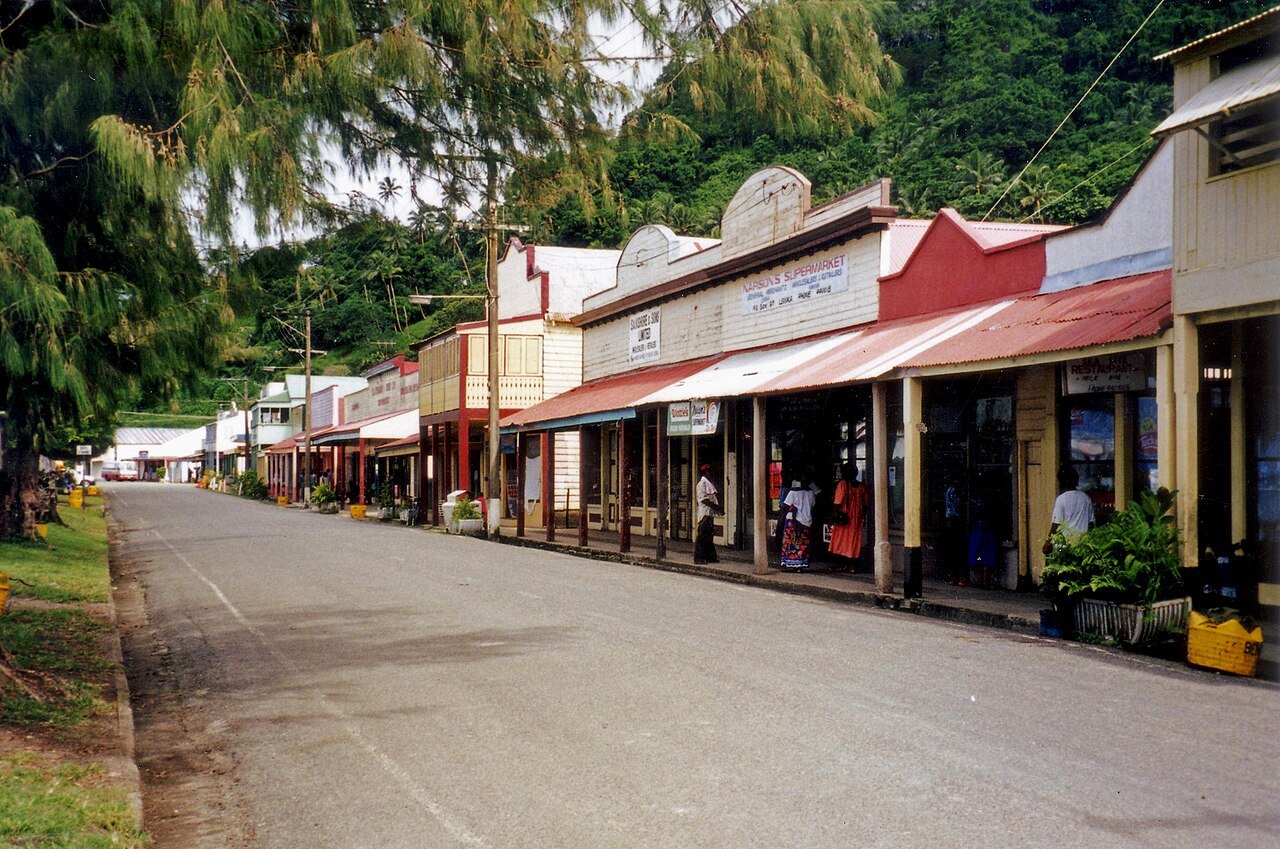
Levuka is inevitably the centrepiece of any discussion of Fijian World Heritage. Its waterfront strip of Victorian-era buildings, set between a coral reef and a volcanic ridge that prevented the town from ever expanding laterally, survives with a coherence rare among Pacific colonial settlements. The restriction imposed by geography — there was simply nowhere to grow — inadvertently preserved the urban fabric that makes Levuka legible as a heritage site today.
For travellers looking beyond Levuka, Fiji’s tentative list offers a sense of what might eventually reach the international stage. The Sigatoka Sand Dunes on Viti Levu’s Coral Coast are among the largest dune systems in the Pacific and have yielded significant archaeological evidence of early Fijian settlement. The Sovi Basin shelters one of the largest remaining areas of undisturbed lowland rainforest in Fiji. The Yaduataba Crested Iguana Sanctuary protects a critically endangered species found only on a small group of Fijian islands — a natural heritage argument with few parallels in the Pacific.
Natural and shared sites
Fiji’s single inscribed site is cultural. The country has no inscribed natural World Heritage properties and no transnational or serial inscriptions. This stands in contrast to some Pacific neighbours — Australia’s Great Barrier Reef, for instance, or the collective East Rennell inscription in the Solomon Islands — and underlines how unevenly the Pacific’s extraordinary natural wealth is currently represented within the World Heritage system.
The Yaduataba Crested Iguana Sanctuary, on Fiji’s tentative list since 1999, represents the most developed natural candidacy. The sanctuary covers rocky dry forest habitat on Yadua Taba island and is home to the Fiji crested iguana (Brachylophus vitiensis), a species listed as critically endangered by the IUCN. Whether a formal nomination advances depends on political will, sustained management documentation, and engagement with the UNESCO advisory bodies — a sequence that has stalled for more than two decades.
How to find them
Levuka is accessible by ferry from Natovi Landing on Viti Levu, or by light aircraft to Ovalau’s Bureta airstrip. The heritage town is compact and walkable: the main street, Beach Street, runs the length of the inscribed zone. Visitors should seek out the Sacred Heart Church (1858), the Morris Hedstrom store building, and the Cession Site at Nasova — where Fiji formally became a British Crown Colony in 1874 — each of which adds a layer to Levuka’s dense, multi-authored history.
Fiji’s World Heritage sites sit alongside thousands of other places on CHO’s interactive map, with GPS and sourced editorial history for each. See also our guides to Italy’s and France’s UNESCO sites, and our piece on cultural travel beyond mass tourism.
Frequently Asked Questions
How many UNESCO World Heritage Sites does Fiji have?
As of 2023, Fiji has one inscribed UNESCO World Heritage Site: Levuka Historical Port Town, recognised in 2013. Three further properties — the Sovi Basin, the Sigatoka Sand Dunes, and the Yaduataba Crested Iguana Sanctuary — remain on Fiji’s tentative list, submitted in 1999 but not yet advanced to formal nomination.
What was Fiji’s first UNESCO World Heritage Site?
Levuka Historical Port Town, inscribed in 2013, is both Fiji’s first and only World Heritage Site. Located on the island of Ovalau, it was recognised under criteria ii and v for its outstanding integrity as a late colonial Pacific port settlement shaped by European, indigenous Fijian, and migrant communities.
What makes Levuka historically significant?
Levuka served as Fiji’s first colonial capital and the site where Fiji became a British Crown Colony in 1874. Unlike most colonial port towns, Levuka’s growth was constrained by a volcanic ridge immediately behind the waterfront, which prevented lateral expansion and preserved the town’s Victorian-era urban fabric in unusually complete form.
Does Fiji have any natural UNESCO World Heritage Sites?
Fiji currently has no inscribed natural World Heritage Sites. The Yaduataba Crested Iguana Sanctuary, which protects the critically endangered Fiji crested iguana on a small island in the Yasawa group, has been on Fiji’s tentative list since 1999 but has not yet been submitted as a formal nomination to UNESCO.
Sources used in this article
- UNESCO — State Party Fiji — World Heritage list.
- UNESCO — Fiji: World Heritage Sites.
- CHO magazine — What is a World Heritage Site?
- CHO — Interactive map of heritage sites.