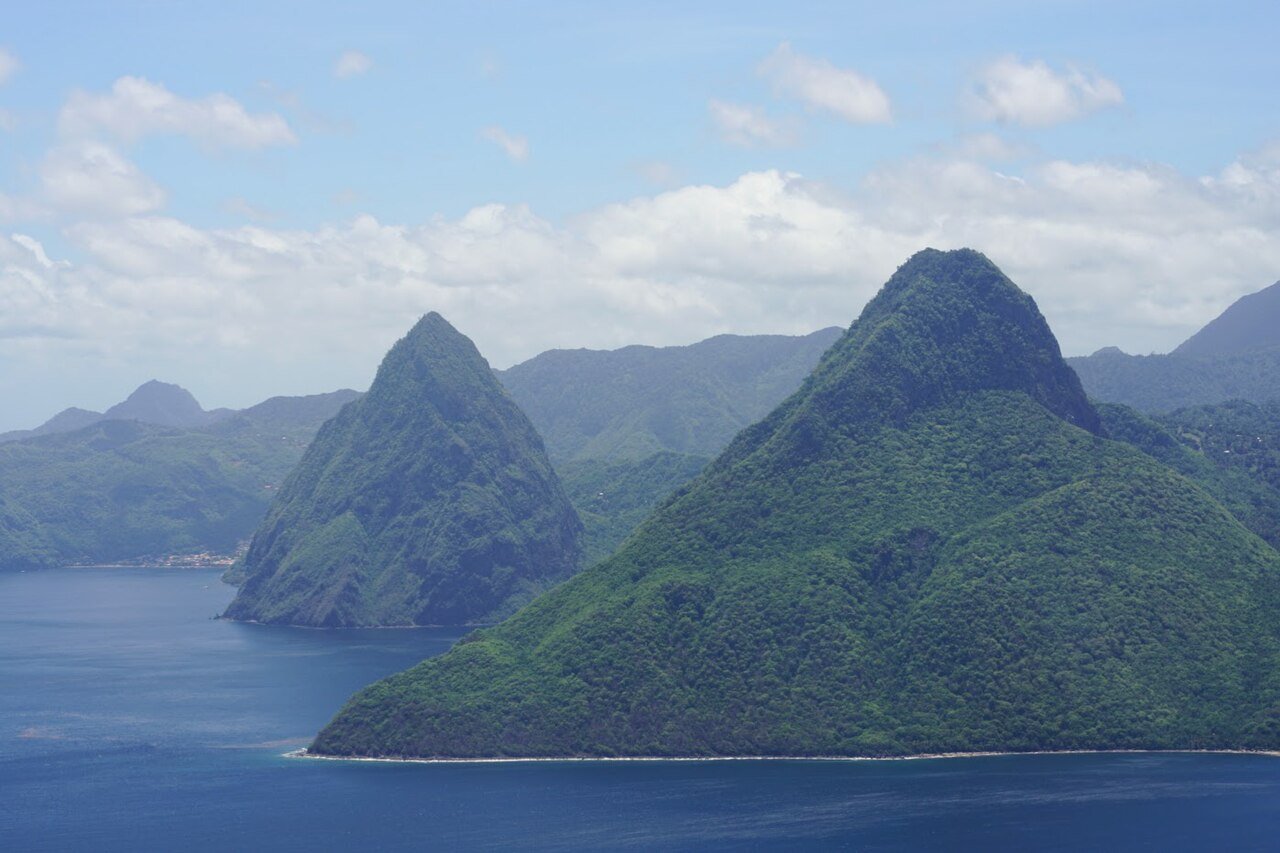
Saint Lucia has 1 UNESCO World Heritage Site — a single volcanic landscape so geologically distinctive that it secured inscription on its first and, to date, only nomination. The Pitons Management Area anchors the island’s southern coast with two steep lava domes rising straight from the Caribbean Sea, a concentration of natural drama rare anywhere on earth. From Cultural Heritage Online.
Why Saint Lucia’s list looks the way it does
Saint Lucia’s World Heritage record is compact by Caribbean standards, but that compact record reflects a deliberate and well-argued case. The island’s single inscription — the Pitons Management Area, recognised in 2004 — was awarded under UNESCO criteria (vii) and (viii), meaning it qualified both for outstanding aesthetic beauty and for significant evidence of earth’s geological history. Few sites meet both simultaneously, which signals just how exceptional the Pitons formation is.
The relatively short list also reflects the nature of the island itself: a young volcanic landmass of roughly 617 square kilometres, where the most compelling heritage is geological and ecological rather than monumental or archaeological. Saint Lucia has not pursued additional nominations to date, and the Pitons remain the country’s sole entry in the World Heritage register as of 2026.
The first inscription
Saint Lucia’s sole World Heritage Site was inscribed in 2004, making that year both the country’s debut on the list and its entire record so far. The site recognised was:
- Pitons Management Area (2004) — a natural site covering 2,909 hectares near the town of Soufrière on the island’s west coast, encompassing two volcanic plugs, associated forests, coral reefs, and a geothermally active zone.
The nomination was prepared by the Saint Lucia government with support from regional conservation bodies. The World Heritage Committee accepted it on the strength of the volcanic geology and the exceptional visual character of the twin peaks, Gros Piton and Petit Piton, which rise to 770 and 743 metres respectively.
The most visited — and the alternatives
The Pitons Management Area is, by definition, both Saint Lucia’s most visited and its only World Heritage property. Gros Piton and Petit Piton are the island’s defining silhouette, appearing on the national flag and drawing climbers, divers, and landscape photographers year-round. The site extends below the waterline: the surrounding marine area contains coral gardens and fish assemblages that are among the best-documented in the eastern Caribbean.
Visitors who want to move beyond the summit trails will find distinct experiences within the same protected zone. The Sulphur Springs geothermal field sits inside the management area boundary and represents one of the few drive-in volcanic craters in the world, with boiling mud pools and fumaroles that illustrate the same volcanic processes that built the Pitons themselves. The Tet Paul Nature Trail, also within the broader Soufrière landscape, offers crater-rim views across both peaks with considerably lighter foot traffic than the main Gros Piton approach. The coral reef at Anse Chastanet, partly within the buffer zone, provides a well-regarded dive site tied directly to the marine component of the inscription.
Natural and shared sites
The Pitons Management Area is classified entirely as a natural site — there is no cultural or mixed designation in Saint Lucia’s World Heritage record. It is also a standalone national inscription, not part of any transnational or serial nomination. The criteria applied at inscription emphasise both superlative natural phenomena (criterion vii) and the outstanding example of ongoing geological processes represented by the volcanic plugs and the associated hydrothermal system (criterion viii).
The management area is administered by the Saint Lucia government under a framework that balances conservation with access. The buffer zone extends to 7,190 hectares, encompassing marine habitat, agricultural land, and settlement edges. This layered boundary structure is typical of island natural sites where the inscribed core must be protected from development pressure on multiple sides simultaneously.
How to find them
The Pitons Management Area is reached by road from Castries to Soufrière, a journey of roughly one and a half hours along the island’s west coast. Gros Piton can be climbed with a licensed local guide; Petit Piton is a more technical ascent and is generally restricted. The marine component is accessible from several dive operators based in Soufrière and Anse Chastanet. The geothermal zone at Sulphur Springs is signposted from Soufrière town and is open to independent visitors.
Saint Lucia’s World Heritage sites sit alongside thousands of other places on CHO’s interactive map, with GPS and sourced editorial history for each. See also our guides to Italy’s and France’s UNESCO sites, and our piece on cultural travel beyond mass tourism.
Frequently Asked Questions
How many UNESCO World Heritage Sites does Saint Lucia have?
Saint Lucia has one UNESCO World Heritage Site: the Pitons Management Area, inscribed in 2004. It is a natural site recognised for its volcanic geology and exceptional landscape values, and it remains the country’s only entry on the World Heritage list as of 2026.
What was Saint Lucia’s first UNESCO World Heritage Site?
The Pitons Management Area, inscribed in 2004, was Saint Lucia’s first and to date only World Heritage inscription. The site encompasses the twin volcanic plugs of Gros Piton and Petit Piton near the town of Soufrière, along with surrounding forests, marine habitat, and a geothermal zone.
What UNESCO criteria did the Pitons Management Area meet?
The Pitons Management Area was inscribed under criteria (vii) and (viii). Criterion (vii) recognises the site’s superlative natural beauty, while criterion (viii) acknowledges its outstanding illustration of earth’s geological history through the volcanic plugs and active hydrothermal system.
Is the Pitons Management Area part of a transnational inscription?
No. The Pitons Management Area is a standalone national inscription, not part of any serial or transnational World Heritage property. It is administered solely by the government of Saint Lucia within a protected area framework that covers both the terrestrial and marine components of the site.
Sources used in this article
- UNESCO — State Party Saint Lucia — World Heritage list.
- UNESCO — Saint Lucia: World Heritage Sites.
- CHO magazine — What is a World Heritage Site?
- CHO — Interactive map of heritage sites.