Togo has 1 UNESCO World Heritage Site, a single transnational cultural landscape that crosses its northeastern border into Benin and stands as one of West Africa’s most architecturally distinctive inscriptions. The country’s list is short but not slight: the Koutammakou landscape carries criteria for both outstanding universal cultural value and the living traditions that sustain it, making it a reference point for how heritage committees assess intangible continuity alongside built form. From Cultural Heritage Online.
Why Togo’s list looks the way it does
West African nations were historically under-represented on the World Heritage List relative to the density and age of their cultural landscapes. Togo submitted its first nomination only in the early 2000s, reflecting both the procedural complexity of the inscription process and the Togolese government’s decision to pursue a site where the Outstanding Universal Value case was strongest. The result is a list with one entry — but that entry is a jointly managed, binational property that stretches across a landscape still inhabited and actively shaped by the people who built it.
Togo currently holds four properties on its Tentative List, signalling an intention to expand its representation in coming decades. These include the Aného-Glidji Agglomeration on the Maritime coast, the Serial Granaries of cave sites in the Savanes Region, the Bassar Ancient Iron Metallurgy Sites in the Kara Region, and the Fazao-Malfakassa National Park — the country’s only natural candidate. None has reached the nomination stage as of mid-2026.
The first inscriptions
Togo’s sole inscription also happens to be its first. In 2004, the UNESCO World Heritage Committee added the following property to the List:
- Koutammakou, the Land of the Batammariba (2004) — transnational cultural landscape, shared with Benin, inscribed under criteria (v) and (vi).
The inscription was granted on the basis of two criteria: the landscape as an outstanding example of a traditional human settlement that represents a culture in its interaction with the environment, and as an area directly and tangibly associated with living traditions, beliefs, and artistic works of outstanding universal significance. The Batammariba people, whose name translates roughly as “those who are the real architects of earth,” remain the custodians of the site.
The most visited — and the alternatives
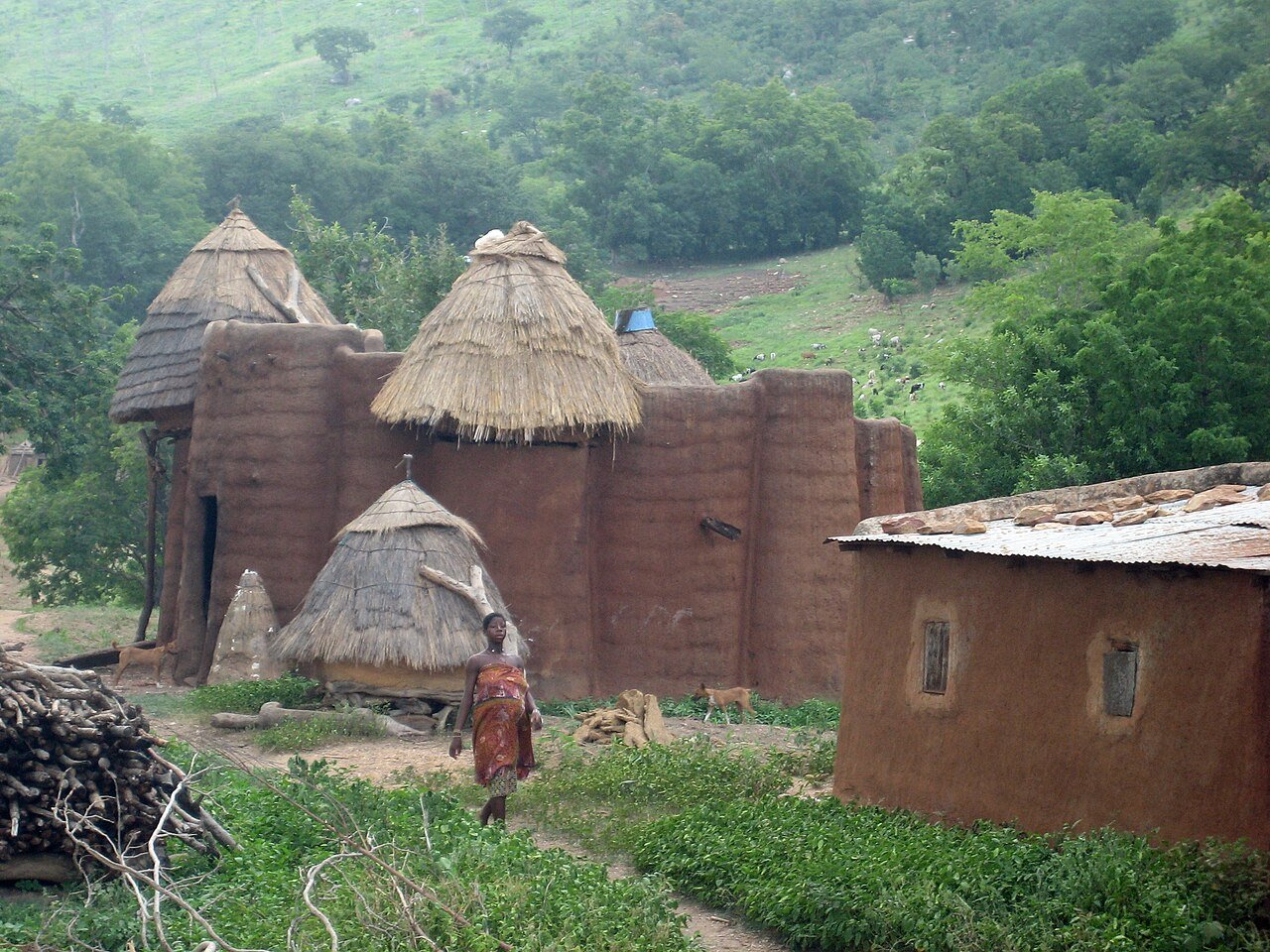
Koutammakou occupies the northeastern plateau of Togo near the town of Kandé, along the road toward the Benin border. Its defining feature is the takienta — a multi-storey mud tower-house whose form encodes social hierarchy, cosmology, and defense within a single structure. Clusters of takienta, separated by ceremonial open spaces used for initiation rituals, extend across a landscape of farmed fields and sacred groves. Visitors who reach it encounter a working settlement, not an archaeological site frozen in time.
For travelers willing to look beyond Koutammakou itself, three properties on Togo’s Tentative List suggest what future additions to the country’s heritage portfolio might look like. The Bassar Ancient Iron Metallurgy Sites document a tradition of iron smelting that was economically central to the precolonial Kara region. The Aného-Glidji Agglomeration preserves the layered urban history of the Guin people on the Atlantic coast, including sacred royal compounds that remain ceremonially active. The Serial Granaries of cave sites in the Savanes Region offer a different architectural register — grain stores built directly into cliff faces, reflecting adaptations to both the physical terrain and the social organization of food storage.
Natural and shared sites
Togo’s single inscribed site is classified as cultural, not natural, though its inscription under criterion (v) acknowledges the deep relationship between the Batammariba and the physical environment they have managed for centuries. The landscape around Koutammakou is not wilderness but a long-cultivated territory where the built and the natural are treated as inseparable by the community that inhabits it. The transnational dimension — shared management with Benin — is itself notable: fewer than thirty properties worldwide were listed as transnational at the time of Koutammakou’s inscription, and the site remains one of the more coherent examples of joint stewardship in the West African region.
Fazao-Malfakassa National Park, Togo’s candidate natural site, spans the centre of the country across two administrative regions and protects a transition zone between Sudanian savanna and Guinea forest. It appears on the Tentative List but has not advanced to a formal nomination dossier. Should it be inscribed, it would become Togo’s first natural World Heritage Site and bring the country’s total to two.
How to find them
Koutammakou is reached overland from Lomé via the RN1 north to Kara, then east toward the Benin border — a journey of roughly seven to eight hours by road. The site has no formal visitor infrastructure comparable to European World Heritage properties; access is arranged through local guides in Kandé or Nadoba, and a basic entrance system managed by the site’s joint Togolese-Beninese management committee is in place. Dry-season travel (November to March) is strongly advised, as unpaved tracks within the landscape become impassable during the rains.
Togo’s World Heritage sites sit alongside thousands of other places on CHO’s interactive map, with GPS and sourced editorial history for each. See also our guides to Italy’s and France’s UNESCO sites, and our piece on cultural travel beyond mass tourism.
Frequently Asked Questions
How many UNESCO World Heritage Sites does Togo have?
Togo has 1 UNESCO World Heritage Site as of 2026: Koutammakou, the Land of the Batammariba, inscribed in 2004. It is a transnational cultural landscape shared with Benin, recognized for its distinctive mud tower-houses and the living traditions of the Batammariba people.
What was Togo’s first UNESCO World Heritage Site?
Koutammakou, the Land of the Batammariba, inscribed in 2004, is both Togo’s first and only World Heritage Site. The site was nominated jointly with Benin and recognized under criteria relating to traditional human settlement and living cultural traditions.
What are the takienta tower-houses of Koutammakou?
Takienta are multi-storey mud tower-houses built by the Batammariba people of northeastern Togo and northwestern Benin. Their distinctive form reflects the community’s social organization, cosmological beliefs, and historical need for defense, and they continue to be inhabited and maintained by living residents of the Koutammakou landscape.
Does Togo have any natural UNESCO World Heritage Sites?
Togo currently has no natural UNESCO World Heritage Sites. Fazao-Malfakassa National Park, a savanna and forest transition zone in central Togo, appears on the country’s Tentative List as a natural candidate but had not advanced to a formal nomination dossier as of mid-2026.
Sources used in this article
- UNESCO — State Party Togo — World Heritage list.
- UNESCO — Togo: World Heritage Sites.
- CHO magazine — What is a World Heritage Site?
- CHO — Interactive map of heritage sites.