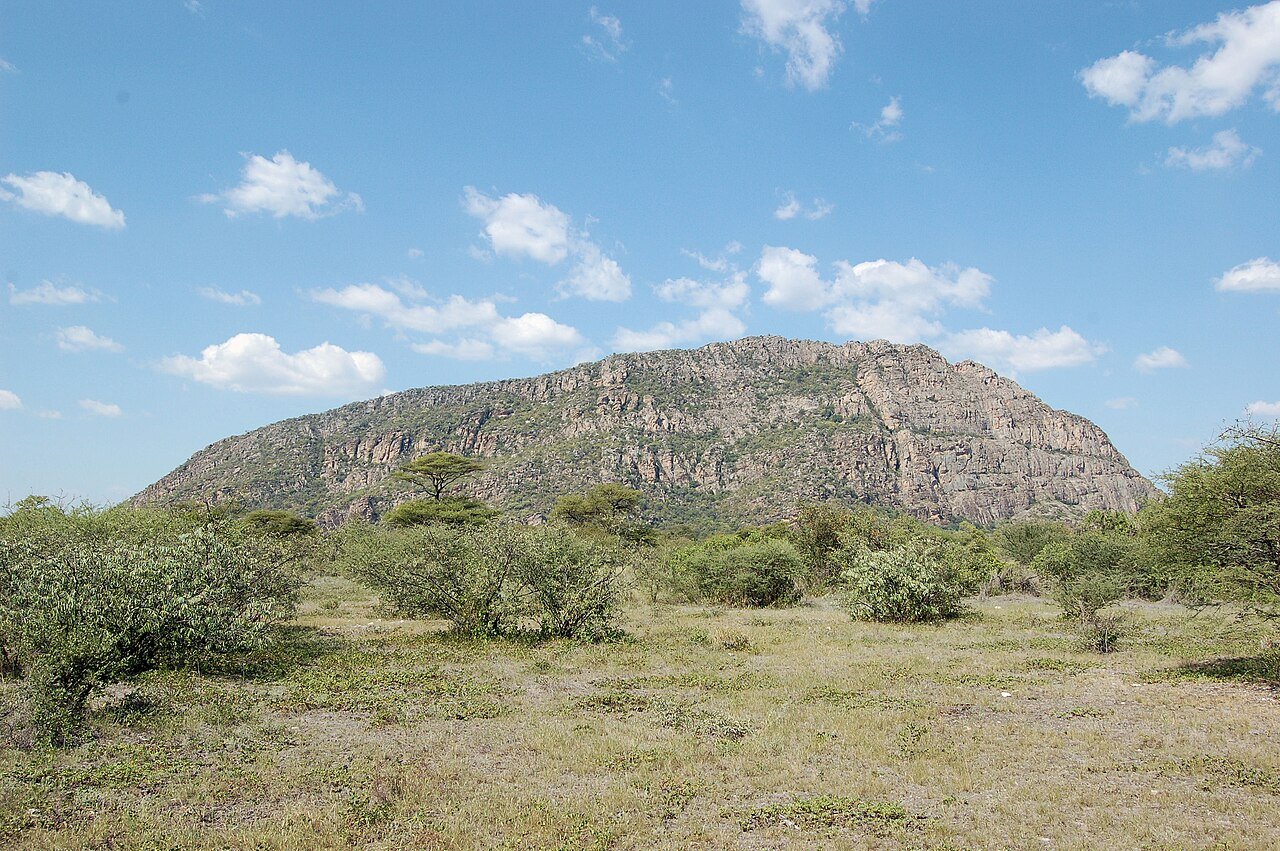
Botswana has 2 UNESCO World Heritage Sites — one cultural, one natural — spanning ancient rock art sanctuaries and one of Africa’s most extraordinary wetland ecosystems. Together they map a country whose heritage runs from the deep human past to living ecological spectacle. From Cultural Heritage Online.
Why Botswana’s list looks the way it does
Two inscriptions is a modest count for a country the size of France, but the selection is deliberately representative. UNESCO’s World Heritage Committee has applied its criteria with precision here: one site anchors Botswana’s extraordinary record of human habitation and spiritual practice, while the other protects an inland delta system with no analogue on Earth. Quality over quantity is not merely a consolation — it reflects the committee’s emphasis on Outstanding Universal Value over national comprehensiveness.
Botswana’s tentative list, which countries submit to signal future nominations, includes several sites that could broaden the picture considerably in coming decades. The Gcwihaba Caves, with six interconnected cave systems whose speleothems preserve Pleistocene-era climate data, and the Iron Age settlement remains at Toutswemogala Hill, occupied between the 7th and 19th centuries, both appear as candidates. A transnational extension of the Mapungubwe Cultural Landscape — already inscribed in South Africa — has also been proposed to include Botswana and Zimbabwe, which would add a shared cross-border inscription to the country’s record.
The first inscriptions
Botswana’s entry onto the World Heritage list came in 2001 with a single cultural site that immediately drew international attention for the sheer density of its rock art record. The first inscription was:
- Tsodilo Hills (2001) — a cluster of four hills rising from the Kalahari Desert, containing more than 4,500 rock paintings created over at least 100,000 years and regarded as a place of worship by the San people.
Botswana then waited thirteen years before a second site joined the list. That gap reflects both the selectivity of the nomination process and the extensive scientific work required to build the evidence base for a site as complex as the Okavango Delta.
The most visited — and the alternatives
The Okavango Delta is Botswana’s most internationally recognised natural landmark, and its 2014 inscription made it the 1,000th site on the global World Heritage list — a milestone that brought considerable media attention. The delta’s water flows inland from Angola, fans out across northern Botswana, and never reaches the sea, creating a seasonal mosaic of channels, floodplains, and islands that supports one of the highest concentrations of wildlife in Africa. Tourism infrastructure around the delta, centred on Maun and the private concessions of the Okavango, is well developed by southern African standards.
Tsodilo Hills draws a more specialist audience — archaeologists, cultural travellers, and those following the history of hunter-gatherer societies in the Kalahari. For visitors willing to look beyond the two inscribed sites, the tentative list offers additional reasons to travel. The Gcwihaba Caves in northwestern Botswana preserve speleothems that scientists have used to reconstruct rainfall patterns going back to the Pleistocene, making them significant for climate research as much as for their geology. Toutswemogala Hill, east of Mochudi, represents one of the better-documented Iron Age hilltop settlements in southern Africa, with occupation layers spanning more than a millennium.
Natural and shared sites
The Okavango Delta stands as Botswana’s sole natural World Heritage Site, and its inscription criteria capture why it is considered exceptional: the delta functions as a terminal inland drainage system, receiving floodwaters from the Angolan highlands each year and distributing them across a semi-arid landscape. This hydrological cycle sustains populations of elephant, lion, wild dog, and numerous waterbird species at densities rarely matched elsewhere on the continent. The site covers approximately 2.023 million hectares, with a buffer zone that adds a further 2.286 million hectares of protection.
The proposed transnational extension of the Mapungubwe Cultural Landscape would, if inscribed, link Botswana directly to a site already recognised for its evidence of the first class-based society in southern Africa, dating to around AD 900–1300. Such an inscription would give Botswana a shared listing alongside South Africa and Zimbabwe, placing it within a broader regional narrative about early state formation and long-distance trade networks that stretched from the Limpopo Valley to the East African coast.
How to find them
Both inscribed sites require planning to reach. Tsodilo Hills lies roughly 400 kilometres northwest of Maun, accessible via unpaved road with a four-wheel-drive vehicle. The site has a community campsite and a small museum run by the Department of National Museum and Monuments, but facilities are basic and visitor numbers remain low relative to the site’s cultural significance. The Okavango Delta is reached primarily through Maun, which has an international airport with connections to Johannesburg and other regional hubs. Access to the delta’s interior is almost entirely by light aircraft or traditional mokoro canoe, which keeps visitor pressure on the ecosystem comparatively low.
Botswana’s World Heritage sites sit alongside thousands of other places on CHO’s interactive map, with GPS and sourced editorial history for each. See also our guides to Italy’s and France’s UNESCO sites, and our piece on cultural travel beyond mass tourism.
Frequently Asked Questions
How many UNESCO World Heritage Sites does Botswana have?
Botswana has 2 UNESCO World Heritage Sites as of 2026: Tsodilo Hills, inscribed in 2001, and the Okavango Delta, inscribed in 2014. One is classified as cultural and one as natural.
What was Botswana’s first UNESCO World Heritage Site?
Tsodilo Hills was Botswana’s first UNESCO World Heritage Site, inscribed in 2001. Located in the Kalahari Desert, the site contains over 4,500 rock paintings spanning at least 100,000 years of human activity and holds deep spiritual significance for the San people.
What made the Okavango Delta’s UNESCO inscription historically significant?
When the Okavango Delta was inscribed in 2014, it became the 1,000th site on the UNESCO World Heritage list globally. It is also one of the few World Heritage Sites recognised specifically for its status as a terminal inland delta — a river system that flows into a desert rather than reaching the sea.
Does Botswana have any transnational UNESCO World Heritage Sites?
Botswana does not currently hold any inscribed transnational sites, but a cross-border extension of the Mapungubwe Cultural Landscape — already a World Heritage Site in South Africa — has been proposed to include territory in Botswana and Zimbabwe. Mapungubwe is recognised for its evidence of one of southern Africa’s earliest class-based societies, dating to around AD 900–1300.
Sources used in this article
- UNESCO — State Party Botswana — World Heritage list.
- UNESCO — Botswana: World Heritage Sites.
- CHO magazine — What is a World Heritage Site?
- CHO — Interactive map of heritage sites.
Sources
- S1 — Tlou, Thomas, and Alec Campbell. History of Botswana. Macmillan Botswana, 1984. ISBN 978-0-333-36531-1.
- S2 — Main, Michael. Kalahari: Life’s Variety in Dune and Delta. Southern Book Publishers, 1987. ISBN 978-1-86812-211-0.
Spotted an error? Write to editorial@culturalheritageonline.com and we correct it the same day.