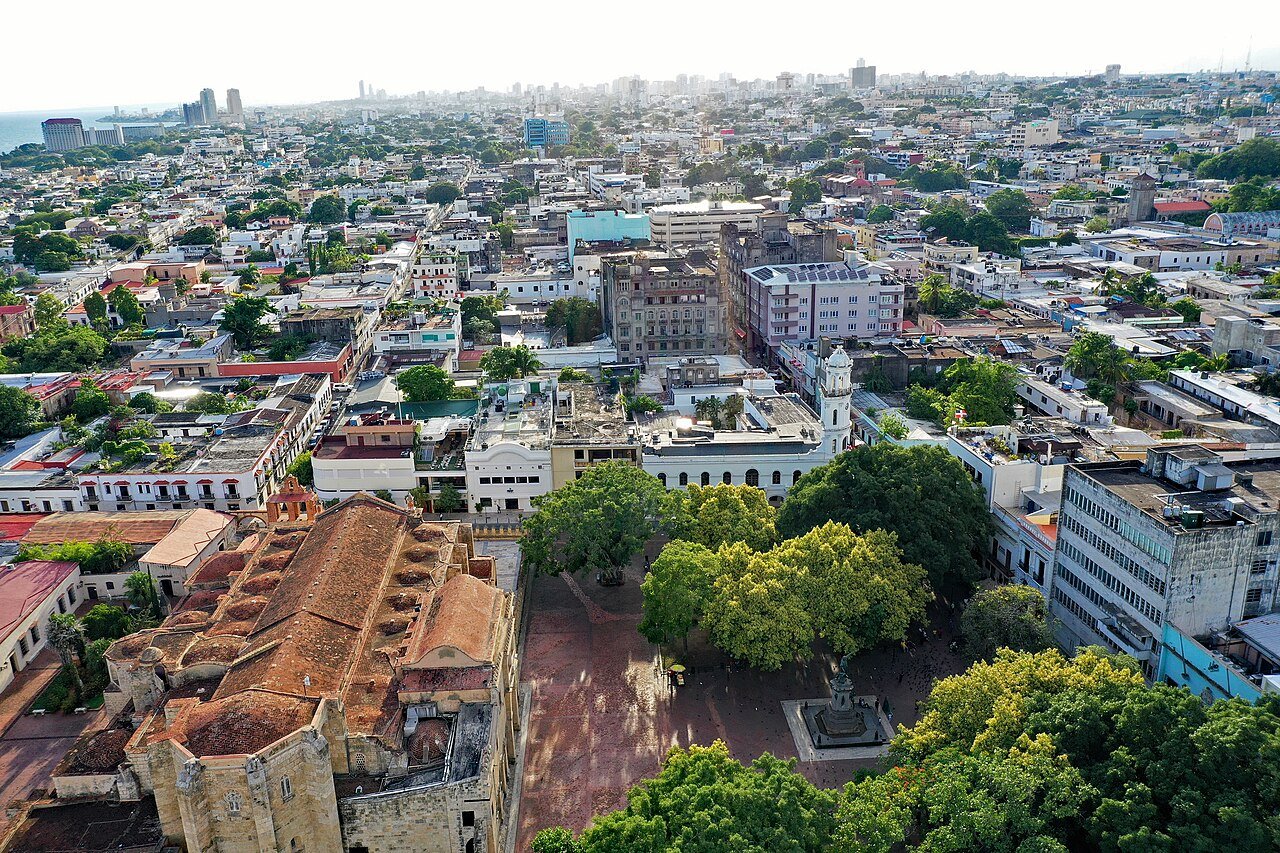
The Dominican Republic has one UNESCO World Heritage Site — and it carries the weight of an entire hemisphere’s origins. The Colonial City of Santo Domingo, the oldest continuously inhabited European settlement in the Americas, anchors a national heritage list that remains compact but holds extraordinary historical density. From Cultural Heritage Online.
Why the Dominican Republic’s list looks the way it does
A single inscription does not reflect an absence of heritage. The Dominican Republic holds a tentative list of thirteen properties submitted to UNESCO, ranging from Jaragua National Park in the southwestern peninsula to pre-Hispanic rock art sites distributed across multiple provinces. The inscription process is selective and resource-intensive; many countries with extraordinary heritage carry modest official lists while their tentative submissions await evaluation.
The country’s position in the Caribbean also shapes the character of its heritage. Hispaniola was the staging ground for early Spanish colonisation of the Americas, meaning its built environment holds layer upon layer of sixteenth-century firsts: the first cathedral, the first university, the first paved street on this side of the Atlantic. That concentration of precedent is precisely what made Santo Domingo a straightforward case for inscription.
The first inscription
The Dominican Republic joined the World Heritage Convention in 1985, and its first — and to date only — inscription came five years later. UNESCO added the following site in 1990:
- Colonial City of Santo Domingo (1990) — inscribed under criteria ii, iv, and vi for its role as the model for Spanish colonial urban planning across the Americas and as the site of a series of continental firsts in European settlement.
The inscription recognised not just individual monuments but an entire historic urban fabric. The Zona Colonial, as locals call it, retains street layouts, defensive walls, and civic institutions whose templates were exported to Mexico City, Lima, and dozens of other colonial capitals over the following century.
The most visited — and the alternatives
The Colonial City of Santo Domingo draws the majority of cultural visitors to the country. The Alcázar de Colón, the palace built for Diego Columbus around 1510, and the Catedral Primada de América, begun in 1512, are the two anchors most itineraries build around. The surrounding streets, particularly Calle las Damas — considered the first paved street in the Americas — offer a walkable concentration of sixteenth-century civic architecture that is genuinely rare anywhere in the world.
Beyond those well-documented landmarks, the Zona Colonial contains less-examined sites worth attention. The ruins of the Hospital San Nicolás de Bari, built around 1503 and now roofless, are among the oldest European hospital remains in the Western Hemisphere. The Fortaleza Ozama, a river-mouth fortress dating to 1502, predates every other European military construction on the continent. The Monasterio de San Francisco, also in ruins, was the first monastery built in the Americas and retains a haunting courtyard open to the sky. All three sit within the inscribed buffer zone but receive a fraction of the visitor numbers directed at the cathedral and the Alcázar.
Natural and shared sites
The Dominican Republic currently has no inscribed natural or mixed World Heritage Sites. Its tentative list, however, includes Jaragua National Park, a biologically diverse coastal and marine area in the Pedernales Province that UNESCO’s preliminary assessments suggest could meet criteria for outstanding universal natural value. The park encompasses flamingo breeding grounds, sea turtle nesting beaches, and one of the Caribbean’s most intact dry-forest ecosystems.
The country also has no current transnational inscriptions, though its historical entanglement with the rest of the Caribbean means several proposed serial nominations, including one covering early colonial industrial infrastructure linked to sugar production, cross provincial and potentially international boundaries. Whether any of these advance to inscription in the coming years depends largely on the technical documentation and management frameworks the Dominican government can put in place.
How to find them
The Colonial City of Santo Domingo occupies the south-western edge of the modern capital, directly accessible from the capital’s international airport and from the country’s main tourist zones along the northern and eastern coasts. Most heritage visitors combine a day or two in the Zona Colonial with beach-based itineraries, which means the historic district is both easy to reach and often explored more quickly than it merits. Allocating a full day per major monument cluster is a more considered approach.
the Dominican Republic’s World Heritage sites sit alongside thousands of other places on CHO’s interactive map, with GPS and sourced editorial history for each. See also our guides to Italy’s and France’s UNESCO sites, and our piece on cultural travel beyond mass tourism.
Frequently Asked Questions
How many UNESCO World Heritage Sites does the Dominican Republic have?
The Dominican Republic has one UNESCO World Heritage Site: the Colonial City of Santo Domingo, inscribed in 1990. The country maintains a tentative list of thirteen additional properties under consideration for future nomination.
What was the Dominican Republic’s first UNESCO World Heritage Site?
The Colonial City of Santo Domingo was the Dominican Republic’s first — and remains its only — UNESCO World Heritage Site, inscribed in 1990. It was recognised for containing the oldest European-built structures in the Americas and for serving as the urban planning model for Spanish colonial cities across the continent.
Does the Dominican Republic have any natural UNESCO World Heritage Sites?
No. The Dominican Republic’s single inscription is a cultural site. Jaragua National Park, a coastal and marine protected area in the southwest of the country, appears on the tentative list as a candidate for natural designation but has not yet been formally nominated.
What makes the Colonial City of Santo Domingo historically significant?
Santo Domingo was founded in 1498 and became the administrative and ecclesiastical capital of the Spanish Americas. It contains the first cathedral, first university, and first European hospital built in the Western Hemisphere, as well as street layouts that became the template for colonial urban planning across Latin America.
Sources used in this article
- UNESCO — State Party the Dominican Republic — World Heritage list.
- UNESCO — the Dominican Republic: World Heritage Sites.
- CHO magazine — What is a World Heritage Site?
- CHO — Interactive map of heritage sites.