Honduras has 2 UNESCO World Heritage Sites, one of them among the most significant Maya archaeological zones in the Americas, the other a vast tropical biosphere spanning rainforest, rivers, and Caribbean coastline. Both were inscribed within the first decade of the World Heritage Convention, and neither has been joined by a third since 1982 — a statistic that says something about the country’s heritage landscape and the ambition of what is still pending. From Cultural Heritage Online.
Why Honduras’s list looks the way it does
Honduras ratified the World Heritage Convention in 1979, and by 1982 it had secured inscriptions for both of its current sites. That early burst of engagement reflected the international enthusiasm for codifying outstanding universal value in the years immediately following the Convention’s creation in 1972. What followed was four decades of inactivity on the inscription front, partly because the country’s institutional resources for managing existing sites — particularly the biosphere reserve — absorbed much of the effort that might otherwise have gone toward new nominations.
As of 2025, Honduras maintains four properties on its tentative list, including a colonial fortress, a prehistoric rock shelter, and a cluster of historic mining towns. None has yet proceeded to nomination. The practical result is a list of two: small in number, but covering an extraordinary geographic and cultural range, from carved stone plazas to cloud-covered tropical forest.
The first inscriptions
Honduras’s two World Heritage Sites were both inscribed within the first three years of the country’s ratification, making them among the earliest in Central America to receive the designation. Both remain on the list today, though one carries the additional burden of being listed as “in danger.”
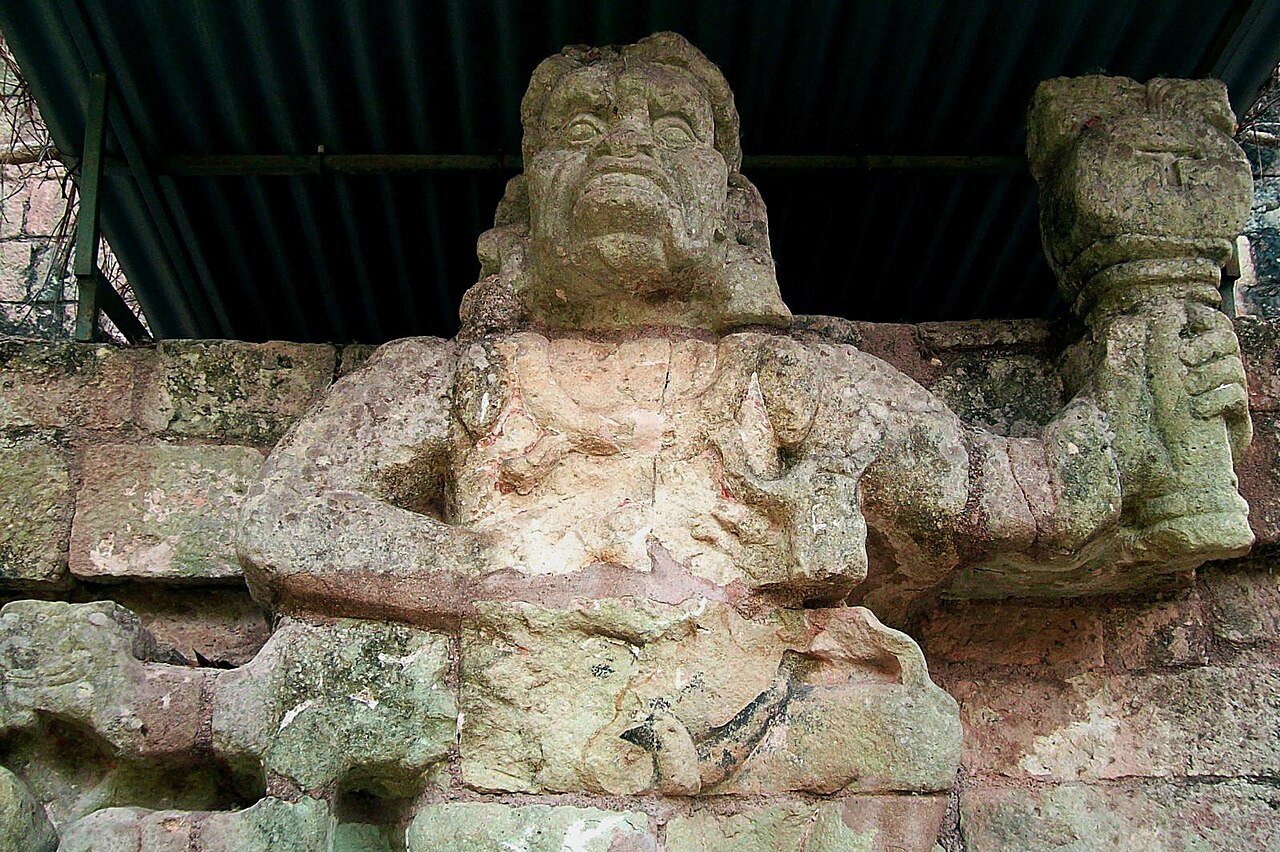
- Maya Site of Copán (inscribed 1980, cultural) — an archaeological zone in western Honduras recognized for its exceptional Maya sculpture, hieroglyphic stairway, and royal acropolis.
- Río Plátano Biosphere Reserve (inscribed 1982, natural) — a protected tropical wilderness in the Mosquitia region of northeastern Honduras, currently listed as a World Heritage Site in Danger.
The most visited — and the alternatives
Copán draws the bulk of international visitors who come specifically for Honduras’s World Heritage heritage. The site preserves one of the densest concentrations of Maya carving anywhere, including the Hieroglyphic Stairway — a single flight of steps bearing the longest known Maya inscription, with more than 2,200 individual glyphs. The adjacent town of Copán Ruinas has grown around the site’s tourism economy, making access straightforward from both the Guatemalan border and the capital, Tegucigalpa.
For those willing to look beyond the obvious, Honduras’s tentative list points to a very different kind of heritage. The San Fernando de Omoa Fortress, on the Caribbean coast, is one of the largest Spanish colonial fortifications in Central America, built in the eighteenth century to defend against British and pirate incursions. The El Gigante Rockshelter in the La Paz department contains stratified archaeological deposits dating back thousands of years, with evidence of early plant domestication that has attracted serious scholarly attention. A cluster of seven historic mining towns spread across three inland departments preserves colonial-era urban fabric and industrial heritage that rarely features in Honduras travel itineraries.
Natural and shared sites
The Río Plátano Biosphere Reserve covers roughly 800,000 hectares of tropical rainforest, wetlands, and coastline in the Mosquitia — one of the largest remaining areas of undisturbed tropical forest north of the Amazon. It meets all four natural World Heritage criteria, from geological features and ecological processes to biodiversity and threatened species habitat. Indigenous communities including the Miskito, Pech, and Tawahka peoples have lived in the region for centuries, and their presence is part of the site’s outstanding universal value.
The reserve was placed on the List of World Heritage in Danger in 1996, removed in 2007 following conservation improvements, and relisted as endangered in 2011 due to renewed pressures from illegal colonization, logging, and drug trafficking activity in its buffer zones. Honduras has no transnational or serial World Heritage inscriptions. Both of its sites are national in scope, and neither is shared with a neighboring country.
How to find them
Copán is reachable by road from Guatemala’s Chiquimula department or by a roughly four-hour drive from Tegucigalpa. The site is managed by the Honduran Institute of Anthropology and History (IHAH), and the adjacent sculpture museum houses originals of many stelae that have been replaced on-site with replicas for conservation. Río Plátano requires more planning — access is typically by small aircraft to the town of Palacios, or by boat from the coastal town of La Ceiba, with community-based guides operating within the reserve.
Honduras’s World Heritage sites sit alongside thousands of other places on CHO’s interactive map, with GPS and sourced editorial history for each. See also our guides to Italy’s and France’s UNESCO sites, and our piece on cultural travel beyond mass tourism.
Frequently Asked Questions
How many UNESCO World Heritage Sites does Honduras have?
Honduras has 2 UNESCO World Heritage Sites, one cultural and one natural. Both were inscribed between 1980 and 1982, and no new sites have been added since. As of 2025, the country maintains four properties on its tentative list.
What was Honduras’s first UNESCO World Heritage Site?
The Maya Site of Copán was Honduras’s first World Heritage inscription, recognized in 1980. It was followed two years later by the Río Plátano Biosphere Reserve in 1982. Both inscriptions came within the first few years of Honduras ratifying the World Heritage Convention in 1979.
Is the Río Plátano Biosphere Reserve currently listed as endangered?
Yes. The Río Plátano Biosphere Reserve has been on the List of World Heritage in Danger since 2011, due to pressures including illegal colonization, deforestation, and encroachment in its buffer zones. It had previously been removed from the danger list in 2007 before conditions deteriorated again.
What sites does Honduras have on its tentative World Heritage list?
As of 2025, Honduras has four properties on its tentative list, including the San Fernando de Omoa Fortress on the Caribbean coast, the El Gigante Rockshelter in La Paz department, and a cluster of seven historic colonial mining towns spanning three departments. None has yet been formally nominated for inscription.
Sources used in this article
- UNESCO — State Party Honduras — World Heritage list.
- UNESCO — Honduras: World Heritage Sites.
- CHO magazine — What is a World Heritage Site?
- CHO — Interactive map of heritage sites.