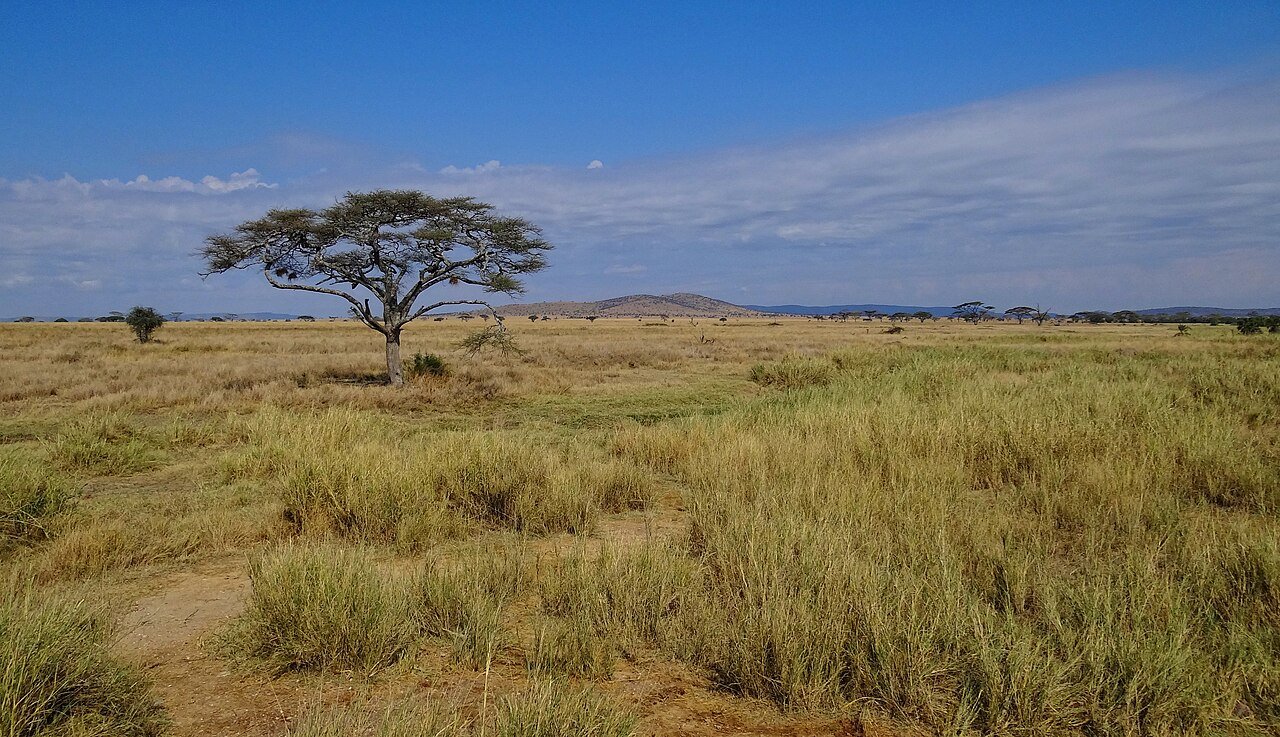
Tanzania has seven UNESCO World Heritage Sites, a tally that spans savannah, volcanic crater, medieval harbour ruins, and ancient rock paintings — a concentration of ecological and historical significance matched by few countries on the African continent. The list ranges from landscapes that define popular ideas of wild Africa to coastal ruins that recall the Indian Ocean’s centuries of maritime trade. From Cultural Heritage Online.
Why Tanzania’s list looks the way it does
Of Tanzania’s seven inscribed sites, three are natural, three are cultural, and one — the Ngorongoro Conservation Area — holds mixed status, recognised for outstanding value on both counts. That balance reflects the country’s unusually diverse heritage: a coastline shaped by Swahili, Arab, and Portuguese influences; an interior dominated by geological spectacle; and a record of human activity stretching back hundreds of thousands of years to the Olduvai Gorge, which sits within Ngorongoro’s boundaries.
Tanzania’s inscription history stretches from 1979 to 2006, meaning no site has been added in the past two decades. Seven properties remain on the tentative list, including Gombe National Park — long associated with Jane Goodall’s chimpanzee research — and the transnational Geometric Rock Art in the Lake Victoria Region, shared with Kenya and Uganda, which entered the tentative list in 2024.
The first inscriptions
Tanzania entered the World Heritage list in 1979, earlier than most African states, with a site that embodied complexity from the outset. The country’s initial years of inscription produced four sites in quick succession:
- Ngorongoro Conservation Area (1979) — mixed, the first Tanzanian inscription
- Ruins of Kilwa Kisiwani and Songo Mnara (1981) — cultural
- Serengeti National Park (1981) — natural
- Selous Game Reserve (1982) — natural
The 1981 double inscription — Serengeti and Kilwa Kisiwani — captured Tanzania’s dual character in a single year. Kilwa Kisiwani, reachable only by boat from the southern coast, was for centuries one of the wealthiest ports on the Swahili Coast, its coral-and-lime mosques and palaces standing as physical evidence of a trade network that linked the African interior to Persia, India, and China.
The most visited — and the alternatives
Serengeti National Park and Kilimanjaro National Park attract the largest share of international visitors. Serengeti’s inscription in 1981 recognised its role in one of the largest animal migrations on Earth; Kilimanjaro, added in 1987, protects Africa’s highest peak along with its forests and moorlands. The Stone Town of Zanzibar, inscribed in 2000, draws substantial tourism as well — its layered architecture of Omani, Indian, and colonial British origin makes it one of the best-preserved Swahili urban environments in the region.
Less frequented but no less significant are the Kondoa Rock-Art Sites in central Tanzania, Tanzania’s most recent inscription (2006), where more than 150 rock shelters display paintings spanning thousands of years of human activity, some still regarded as sacred by surrounding communities. The Ruins of Kilwa Kisiwani and Songo Mnara on the southern coast receive a fraction of northern-circuit visitor numbers despite comprising the most intact medieval Swahili settlement in sub-Saharan Africa. The Selous Game Reserve — one of the largest protected areas on the continent — is named for British explorer Frederick Selous and retains remote wilderness character that the more famous northern parks rarely offer.
Natural and shared sites
Tanzania’s three purely natural inscriptions form a coherent ecological arc. Serengeti (1981) and Selous (1982) together cover vast tracts of savannah and woodland; Kilimanjaro National Park (1987) protects the mountain’s equatorial glaciers, heath zones, and montane forest, all within a compact area relative to the other two. Ngorongoro, as a mixed site, adds a different dimension: the caldera floor hosts one of the densest concentrations of large mammals in Africa, while the surrounding conservation area contains Olduvai Gorge and Laetoli, where 3.6-million-year-old hominin footprints were preserved in volcanic ash.
At the transnational level, Tanzania is part of the tentative nomination for Geometric Rock Art in the Lake Victoria Region, a cross-border initiative with Kenya and Uganda submitted in 2024. Should it proceed to inscription, it would mark Tanzania’s first serial transnational World Heritage Site and connect the Kondoa tradition to a wider regional artistic heritage.
How to find them
Tanzania’s seven inscribed sites spread across a large and geographically varied country. Ngorongoro and Serengeti lie in the north, reachable via Arusha; Kilimanjaro National Park centres on Moshi and Arusha. Selous is in the south, several hours from Dar es Salaam by road or a short flight. Stone Town occupies the old core of Zanzibar City on Unguja Island. Kilwa Kisiwani requires a local boat crossing from Kilwa Masoko, a coastal town south of Dar es Salaam. Kondoa sits in the central highlands, roughly equidistant from Dodoma and Arusha.
Tanzania’s World Heritage sites sit alongside thousands of other places on CHO’s interactive map, with GPS and sourced editorial history for each. See also our guides to Italy’s and France’s UNESCO sites, and our piece on cultural travel beyond mass tourism.
Frequently Asked Questions
How many UNESCO World Heritage Sites does Tanzania have?
Tanzania has seven inscribed UNESCO World Heritage Sites, comprising three natural sites, three cultural sites, and one mixed site. An additional seven properties are on the country’s tentative list, including a potential transnational nomination shared with Kenya and Uganda.
What was Tanzania’s first UNESCO World Heritage Site?
The Ngorongoro Conservation Area was Tanzania’s first UNESCO World Heritage Site, inscribed in 1979. It holds mixed status, recognised for both its extraordinary natural landscape — including the Ngorongoro Crater — and its exceptional cultural significance, encompassing Olduvai Gorge and the Laetoli hominin footprints.
What is the most recently inscribed World Heritage Site in Tanzania?
The Kondoa Rock-Art Sites were inscribed in 2006, making them Tanzania’s most recent addition to the World Heritage List. Located in the central highlands, the site protects more than 150 rock shelters containing paintings produced over thousands of years, some of which remain in active use by local communities for ritual purposes.
Does Tanzania have any mixed UNESCO World Heritage Sites?
Yes — Ngorongoro Conservation Area is Tanzania’s sole mixed World Heritage Site, recognised under both natural and cultural criteria. It protects a volcanic caldera with exceptional wildlife density alongside Olduvai Gorge, a site of global importance for the study of early human evolution and hominin fossils.
Sources used in this article
- UNESCO — State Party Tanzania — World Heritage list.
- UNESCO — Tanzania: World Heritage Sites.
- CHO magazine — What is a World Heritage Site?
- CHO — Interactive map of heritage sites.
Sources
- S1 — Sinclair, A. R. E., and Peter Arcese, eds. Serengeti II: Dynamics, Management, and Conservation of an Ecosystem. University of Chicago Press, 1995. ISBN 978-0-226-76032-2.
- S2 — Iliffe, John. A Modern History of Tanganyika. Cambridge University Press, 1979. ISBN 978-0-521-29611-3.
Spotted an error? Write to editorial@culturalheritageonline.com and we correct it the same day.