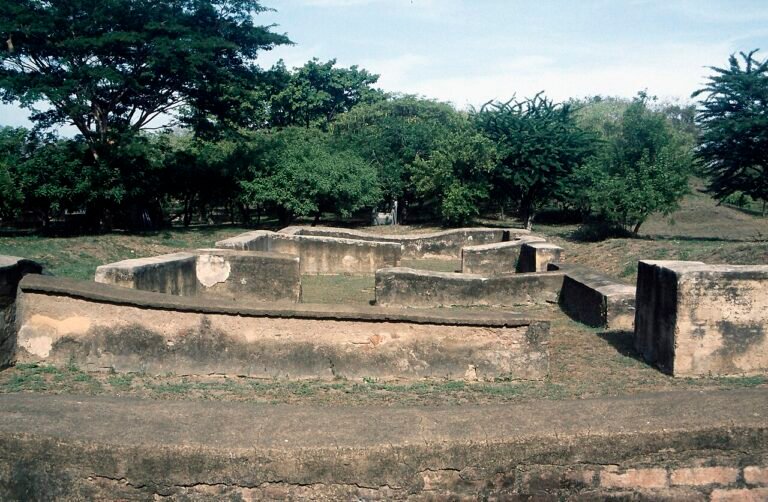
Latvia has three UNESCO World Heritage Sites, each representing a distinct chapter in the country’s layered history — from a medieval Hanseatic capital that became one of Europe’s great Art Nouveau cities, to a network of 19th-century survey points that helped science measure the shape of the Earth, to a small ducal town that has survived centuries with its timber streetscapes almost intact. From Cultural Heritage Online.
Why Latvia’s list looks the way it does
Three sites is a modest count, but the selection reflects something meaningful about how Latvian heritage has been assessed by the World Heritage Committee. Every inscription on Latvia’s list is cultural — there are no natural sites — and each one qualifies under criteria that foreground authenticity of urban fabric or exceptional contribution to human knowledge rather than monumental grandeur alone.
The list also illustrates two very different paths to inscription. Riga and Kuldīga were inscribed as self-contained urban ensembles valued for their architectural integrity and historical associations. The Struve Geodetic Arc, by contrast, is a transnational serial inscription shared across ten countries: a scientific instrument of continental scale whose component parts only acquire their full meaning when understood together.
The first inscriptions
Latvia’s relationship with the World Heritage Convention began in 1997, when the country’s first site entered the list. Since then, two further inscriptions have followed at long intervals, giving the list a deliberately curated character rather than the result of sustained campaigning.
- Historic Centre of Riga — inscribed 1997
- Struve Geodetic Arc — inscribed 2005 (transnational, ten countries)
- Old Town of Kuldīga — inscribed 2023
The most visited — and the alternatives
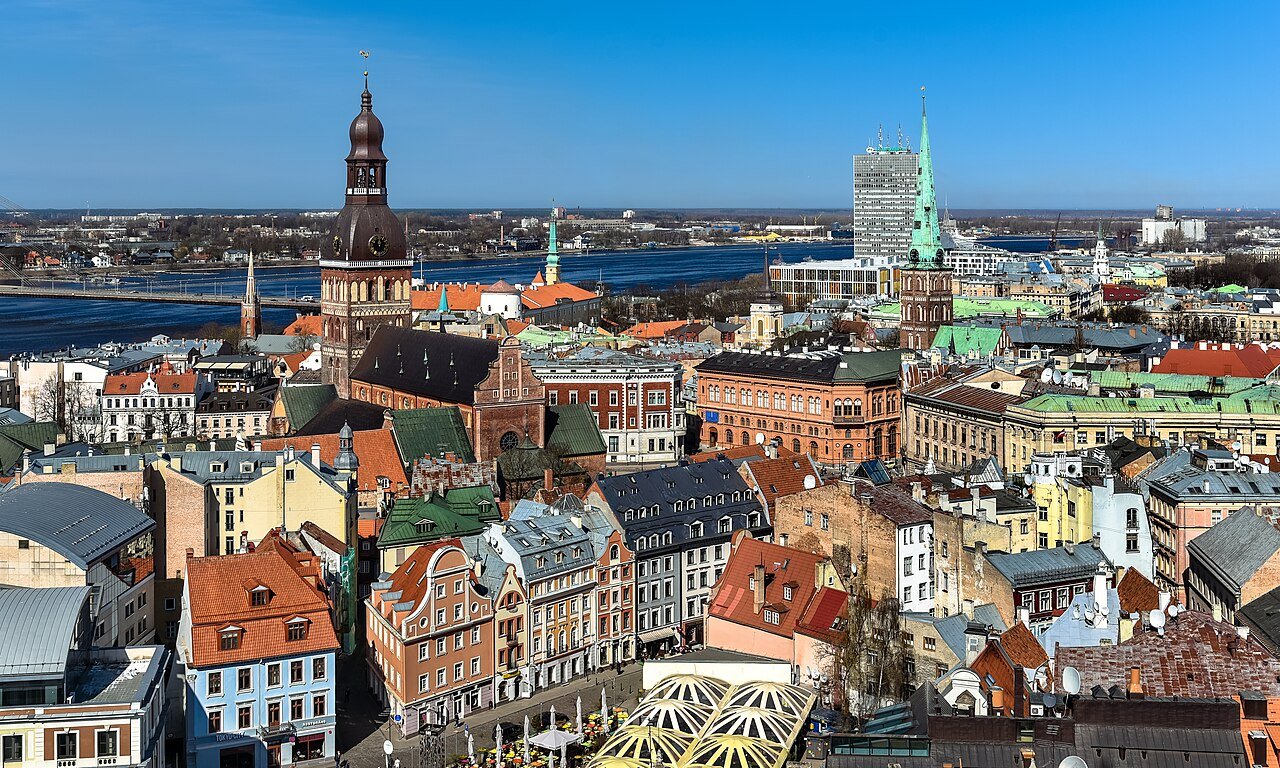
Riga’s Historic Centre draws the overwhelming majority of Latvia’s heritage visitors, and the reasons are not difficult to understand. The city holds one of the highest concentrations of Art Nouveau architecture anywhere in Europe, alongside a medieval core that retains its Hanseatic street pattern and a significant collection of wooden residential buildings from the 19th century. Visitors who spend time in the Quiet Centre district — the residential neighbourhood immediately surrounding the old town — find a scale and coherence of Art Nouveau streetscape that larger capitals rarely preserve.
Kuldīga offers a quieter counterpoint. Inscribed in 2023, the small town in western Latvia preserves late 16th- to 18th-century urban architecture from the period when it served as an administrative centre of the Duchy of Courland and Semigallia. Its red-brick bridge over the Venta river, reputedly the longest such bridge in Europe by some measures, and the broad waterfall — the widest in Europe — running through the town centre make Kuldīga one of the more distinctive small-town heritage experiences in the Baltic region. The Struve Geodetic Arc, meanwhile, is represented in Latvia by a set of survey triangulation points rather than a conventional monument, making it an unusual destination for visitors with a particular interest in the history of science and cartography.
Natural and shared sites
Latvia currently has no natural World Heritage Sites. The country’s landscapes — notably the Gauja National Park and the extensive coastal dune systems along the Gulf of Riga — appear on discussion lists among conservationists and have been explored at the national level, but no formal nomination has reached the inscription stage as of 2026.
The Struve Geodetic Arc is Latvia’s only shared inscription, and its transnational character is central to its significance. The arc runs for 2,820 kilometres through ten countries, from Hammerfest in Norway to the Black Sea coast, and comprises a chain of triangulation survey points established between 1816 and 1855 under the direction of the astronomer Friedrich Georg Wilhelm von Struve. The measurements taken along this chain produced the first accurate determination of a long segment of the Earth’s meridian. Latvia’s portion forms part of a scientific network whose coherence exists only at continental scale.
How to find them
All three of Latvia’s inscribed sites are accessible by public transport from Riga, though Kuldīga requires a longer journey by bus and rewards an overnight stay. The Struve Arc points in Latvia are distributed across the countryside and require some advance planning to locate; local tourism boards in the regions concerned publish coordinates and access notes.
Latvia’s World Heritage sites sit alongside thousands of other places on CHO’s interactive map, with GPS and sourced editorial history for each. See also our guides to Italy’s and France’s UNESCO sites, and our piece on cultural travel beyond mass tourism.
Frequently Asked Questions
How many UNESCO World Heritage Sites does Latvia have?
Latvia has three UNESCO World Heritage Sites, all inscribed for their cultural significance. They are the Historic Centre of Riga (1997), the Struve Geodetic Arc (2005), and the Old Town of Kuldīga (2023). Latvia currently has no natural World Heritage Sites.
What was Latvia’s first UNESCO World Heritage Site?
The Historic Centre of Riga was Latvia’s first UNESCO World Heritage Site, inscribed in 1997. It was recognised for its exceptionally well-preserved medieval street plan, its Hanseatic heritage, and its outstanding concentration of Art Nouveau architecture from the late 19th and early 20th centuries.
What is the Struve Geodetic Arc and why is it a World Heritage Site?
The Struve Geodetic Arc is a chain of survey triangulation points established between 1816 and 1855 to measure a long segment of the Earth’s meridian with precision. It spans 2,820 kilometres across ten countries and was inscribed in 2005 as a shared transnational site. Latvia is one of ten co-nominating states alongside Norway, Sweden, Finland, Russia, Estonia, Lithuania, Belarus, Moldova, and Ukraine.
When was the Old Town of Kuldīga inscribed and what makes it significant?
Kuldīga was inscribed on the World Heritage List in 2023, making it Latvia’s most recently designated site. The town preserves urban architecture dating from the late 16th to the 18th century, when Kuldīga served as an administrative centre of the Duchy of Courland and Semigallia, and its historic core has survived largely without the demolitions or heavy reconstruction that altered comparable Baltic towns.
Sources used in this article
- UNESCO — State Party Latvia — World Heritage list.
- UNESCO — Latvia: World Heritage Sites.
- CHO magazine — What is a World Heritage Site?
- CHO — Interactive map of heritage sites.
Sources
- S1 — Plakans, Andrejs. The Latvians: A Short History. Hoover Institution Press, 1995. ISBN 978-0-8179-9302-3.
- S2 — O'Connor, Kevin. The History of the Baltic States. Greenwood Press, 2003. ISBN 978-0-313-32355-3.
Spotted an error? Write to editorial@culturalheritageonline.com and we correct it the same day.