Nepal has 4 UNESCO World Heritage Sites — a count that belies the country’s extraordinary concentration of civilisational significance, from the snows of the highest mountain on Earth to the subtropical forests where the Buddha was born. Two are cultural designations rooted in living religious traditions, two are natural areas protecting some of the rarest ecosystems and megafauna on the planet. Together they form a tightly drawn portrait of a country that sits, quite literally, between worlds: the Gangetic plain and the Tibetan plateau, Hinduism and Buddhism, ancient urban culture and raw wilderness. From Cultural Heritage Online.
Why Nepal’s list looks the way it does
Nepal’s four inscriptions span nearly two decades, from 1979 to 1997, and reflect the dual character of the country’s heritage. The Himalayan range that defines Nepal’s northern edge is not merely scenery: it is a cultural and spiritual boundary that has shaped trade, religion, and settlement patterns for millennia. UNESCO’s choices reflect this — Sagarmatha and Chitwan anchor the natural side of the list, while Kathmandu Valley and Lumbini represent two of the most spiritually charged urban landscapes in Asia.
The relatively small number of inscribed sites does not indicate a thin heritage. Nepal has a lengthy tentative list, and several candidate sites — including the ancient walled city of Lo Manthang at 3,800 metres elevation and the archaeological remains at Tilaurakot, associated with the early life of Gautama Buddha — await the resources and documentation that formal nomination requires. The four inscribed sites carry, between them, criteria spanning outstanding natural beauty, ecological importance, architectural history, and living religious significance.
The first inscriptions
In 1979, two Nepalese sites joined the World Heritage List in the same year, establishing Nepal among the early participants in the programme. They are:
- Sagarmatha National Park — inscribed 1979, natural designation
- Kathmandu Valley — inscribed 1979, cultural designation
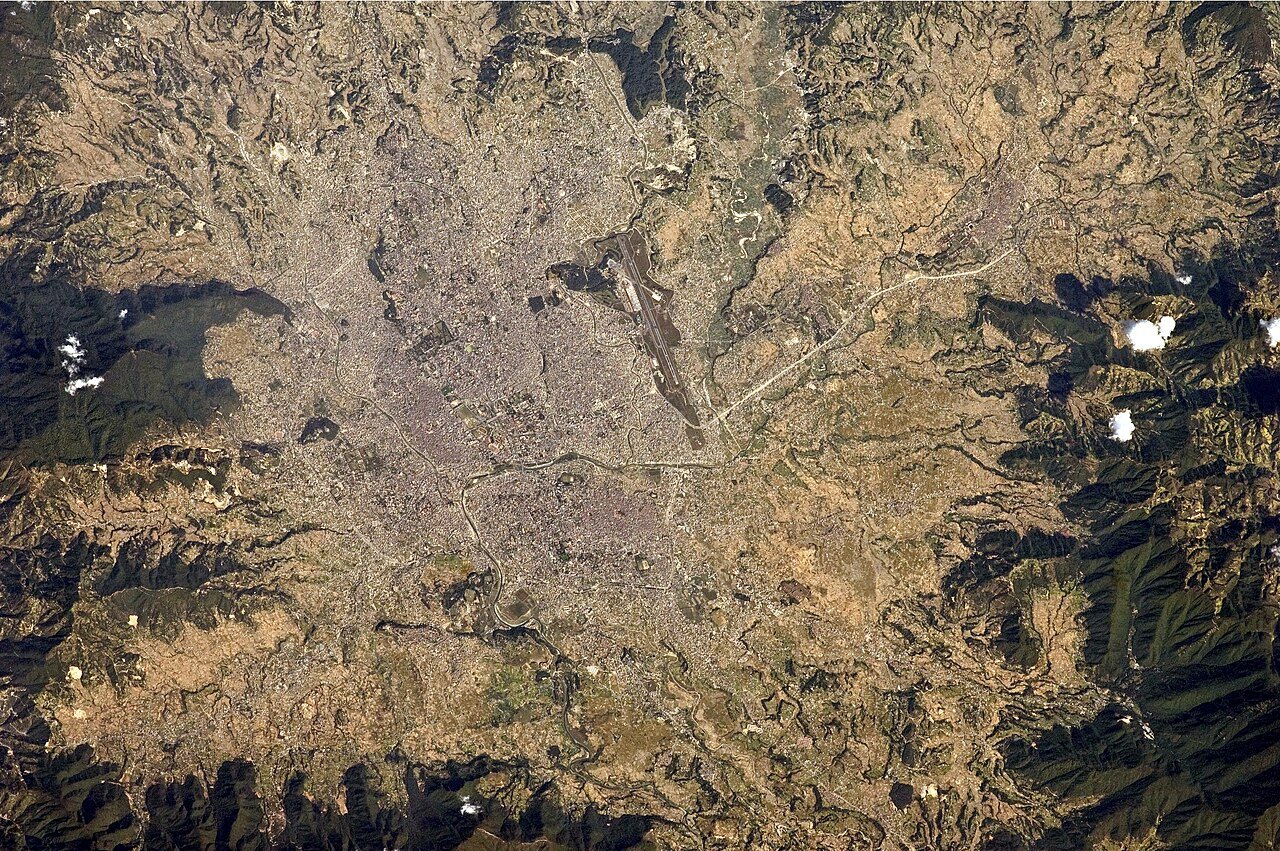
The pairing was fitting. Sagarmatha encompasses the southern slopes of Mount Everest and represents one of the most dramatic altitudinal ranges on Earth. Kathmandu Valley, meanwhile, concentrated in a relatively compact Himalayan basin, holds seven groups of monuments and buildings — including Durbar Squares, Buddhist stupas, and Hindu temples — that represent the peak of Newar artistic and architectural achievement over roughly a thousand years. The double inscription announced, from the outset, that Nepal’s heritage was both elemental and intricately made.
The most visited — and the alternatives
Kathmandu Valley and Sagarmatha National Park attract the largest share of international visitors. Boudhanath Stupa, one of the largest stupas in the world and a focal point for Tibetan Buddhist practice, sits within the Valley inscription and draws pilgrims and travellers year-round. The high trails leading toward Everest Base Camp pass through Sagarmatha, making the national park simultaneously one of the world’s most celebrated trekking destinations and a protected habitat for the snow leopard and red panda.
Less travelled, but equally significant, are the other two inscriptions. Chitwan National Park (1984) in the Terai lowlands protects one of the last viable populations of the one-horned rhinoceros and a healthy population of Bengal tigers — it was among the first areas in Asia where conservation policy demonstrably reversed a species’ decline. Lumbini, the Birthplace of the Lord Buddha (1997) lies in the western Terai and centres on the Maya Devi Temple and the Ashoka Pillar, erected by the Mauryan emperor in 249 BCE to mark the site of the Buddha’s birth. For a site of such global religious importance, Lumbini sees comparatively modest visitor numbers relative to its significance — a quiet place of reflection at the edge of the pilgrim circuit.
Natural and shared sites
Nepal’s two natural inscriptions — Sagarmatha and Chitwan — occupy opposite ends of the country’s ecological spectrum. Sagarmatha (the Nepali name for Everest) encompasses glaciers, deep gorges, and forests of birch and rhododendron at elevations between roughly 2,800 and 8,849 metres. It is part of a broader transboundary Himalayan landscape connecting to conservation areas in China and India, and its designation in 1979 acknowledged both the scenery and the cultural significance the mountain holds for the Sherpa community who live within the park.
Chitwan, by contrast, is subtropical lowland: tall elephant grass, sal forest, and the Rapti and Narayani rivers provide habitat for gharial crocodiles, Gangetic dolphins, and over 500 bird species alongside the flagship mammals. Established as a national park in 1973 and inscribed in 1984, Chitwan has become a reference model for community-based conservation in South Asia, with buffer zone programmes that involve villages directly in wildlife protection.
How to find them
All four of Nepal’s inscribed sites are accessible from Kathmandu, though “accessible” is relative: Lumbini requires an internal flight or a long road journey west, and reaching the higher elevations of Sagarmatha means a flight to Lukla followed by several days on foot. Chitwan is within driving distance of the capital and is often combined with a Lumbini visit on a Terai circuit.
Nepal’s World Heritage sites sit alongside thousands of other places on CHO’s interactive map, with GPS and sourced editorial history for each. See also our guides to Italy’s and France’s UNESCO sites, and our piece on cultural travel beyond mass tourism.
Frequently Asked Questions
How many UNESCO World Heritage Sites does Nepal have?
Nepal has 4 UNESCO World Heritage Sites as of 2023: Sagarmatha National Park, Kathmandu Valley, Chitwan National Park, and Lumbini, the Birthplace of the Lord Buddha. Two are cultural designations and two are natural, with no mixed sites on the list.
What was Nepal’s first UNESCO World Heritage Site?
Nepal had two simultaneous first inscriptions in 1979: Sagarmatha National Park and Kathmandu Valley. Both were included in the early years of the World Heritage programme, placing Nepal among the first countries in Asia to receive inscriptions.
What natural UNESCO World Heritage Sites does Nepal have?
Nepal has two natural World Heritage Sites. Sagarmatha National Park (1979) protects the Everest massif and its surrounding Himalayan ecosystem, while Chitwan National Park (1984) preserves subtropical lowland forest in the Terai and is one of Asia’s most important conservation areas for the one-horned rhinoceros and Bengal tiger.
Where is Lumbini, and why is it a World Heritage Site?
Lumbini is located in the western Terai region of Nepal, near the border with India. It was inscribed in 1997 as the birthplace of Siddhartha Gautama, the historical Buddha, and its central monument is the Maya Devi Temple alongside an Ashoka Pillar dating to 249 BCE — physical evidence of the site’s identification since antiquity.
Sources used in this article
- UNESCO — State Party Nepal — World Heritage list.
- UNESCO — Nepal: World Heritage Sites.
- CHO magazine — What is a World Heritage Site?
- CHO — Interactive map of heritage sites.