Ireland has 2 UNESCO World Heritage Sites, both cultural, spanning a Neolithic passage-tomb landscape older than the Egyptian pyramids and a storm-lashed Atlantic monastery that once sustained early Christian learning at the edge of the known world. From Cultural Heritage Online.
Why Ireland’s list looks the way it does
Ireland’s World Heritage tally is small — two inscribed sites as of 2025 — yet each carries extraordinary historical weight. The country’s tentative list, which currently runs to four further nominations, signals that UNESCO recognition of Irish heritage is still very much in progress rather than complete.
The compact size of the list reflects in part the strict threshold UNESCO applies. Both inscribed Irish sites cleared that threshold with considerable room to spare: one rewrites assumptions about prehistoric Europe’s intellectual and artistic capacity, the other is among the most remote monastic settlements ever deliberately founded. Ireland has no natural or mixed-category inscriptions; its entire formal UNESCO heritage footprint sits within the cultural category.
The first inscriptions
Ireland’s entry into the World Heritage programme came in 1993 with its first and, to date, most celebrated inscription. A second site followed three years later. Both remain Ireland’s only inscribed properties.
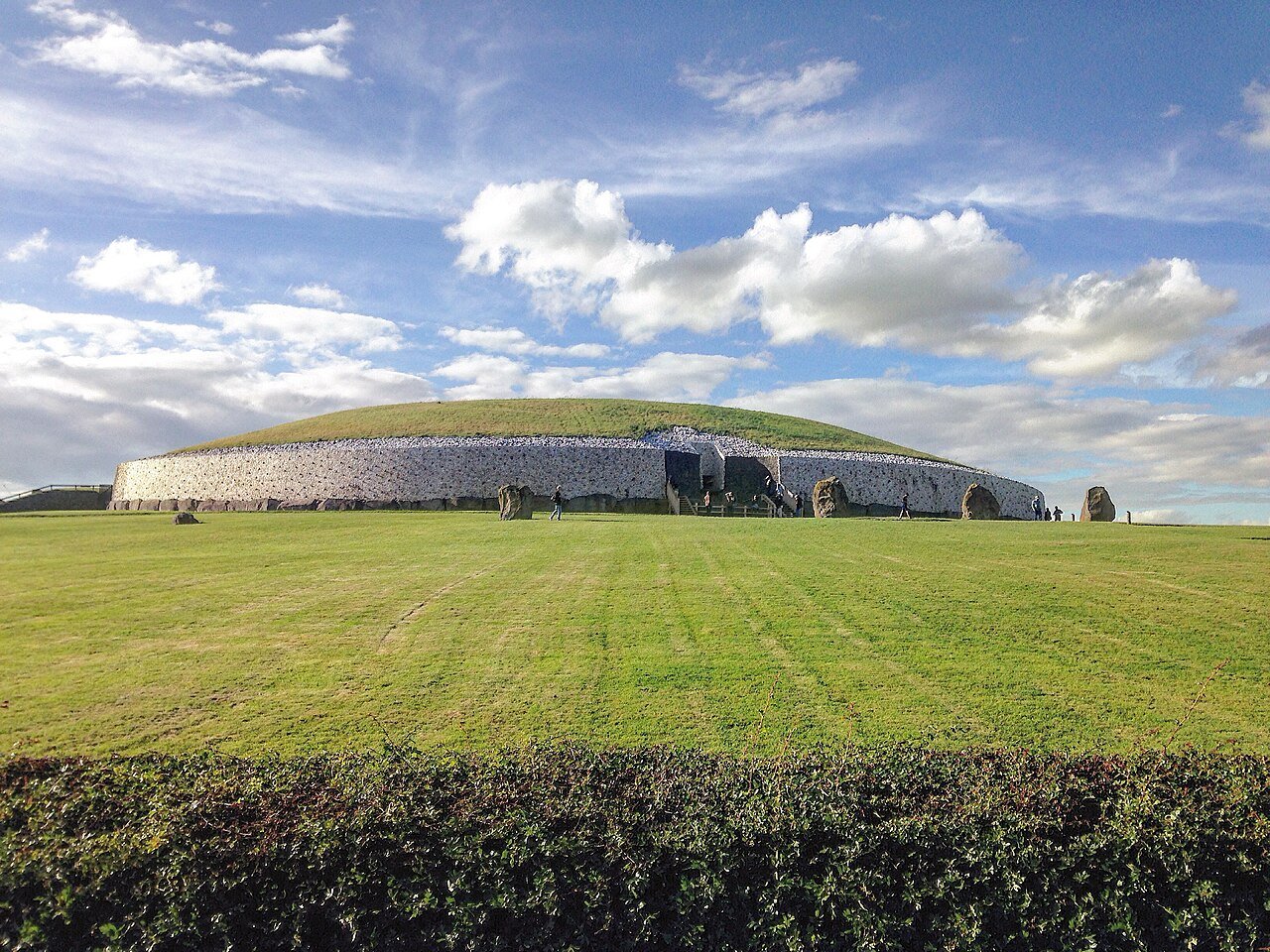
- Brú na Bóinne – Archaeological Ensemble of the Bend of the Boyne (1993) — a dense Neolithic complex on the banks of the River Boyne, containing the largest concentration of prehistoric megalithic art in Europe.
- Sceilg Mhichíl (1996) — a pair of steep, wave-battered rock pinnacles off the Kerry coast, home to an early Christian monastery whose dry-stone beehive huts cling above near-vertical cliff walls.
The most visited — and the alternatives
Newgrange, the great passage tomb within Brú na Bóinne, draws large visitor numbers each year, partly because of its winter solstice alignment — at dawn on the shortest days, a single shaft of light penetrates the 19-metre passage and illuminates the inner chamber. The broader Brú na Bóinne complex, which includes the Knowth and Dowth mounds, covers an area rich enough that archaeologists continue to find new features. Sceilg Mhichíl rose to wider international attention after its use as a filming location, though access remains physically demanding: the only route up is a steep stairway of around 600 dry-stone steps, cut by the monks themselves.
Beyond the two inscribed sites, Ireland’s tentative list points to properties that carry distinct historical narratives. The Royal Sites of Ireland nomination brings together several ancient ceremonial and political centres, among them the Hill of Uisneach, traditionally considered the geographical and symbolic meeting point of Ireland’s provinces. A separate tentative nomination covers the Western Stone Forts, including Dún Aonghasa on Aran Island, a semicircular stone enclosure whose open side faces a sheer drop into the Atlantic. The Passage Tomb Landscape of County Sligo identifies two clusters of megalithic tombs linked geographically by the River Unshin, roughly 23 kilometres apart — a corridor of Neolithic funerary activity that predates Brú na Bóinne’s fame but has received far less international attention.
Natural and shared sites
Ireland currently holds no natural or mixed World Heritage inscriptions. The island’s landscapes — the Burren limestone plateau, the basalt coastline of the north, the blanket bogs of Connacht — have not yet achieved formal World Heritage recognition, though the tentative list includes no natural candidates at present either.
Two of Ireland’s tentative nominations are transnational. The Transatlantic Cable Ensemble is a shared nomination with Canada, recognising the infrastructure of the first undersea telegraph cables that connected Europe and North America in the second half of the nineteenth century. The Historic Astronomical Observatories of Ireland, a serial nomination jointly developed with Northern Ireland, centres on Birr Castle Demesne and Dunsink Observatory — sites that contributed to nineteenth-century advances in telescope design and stellar observation.
How to find them
Both inscribed sites have managed visitor operations. Brú na Bóinne is accessed through the Brú na Bóinne Visitor Centre near Donore in County Meath; timed entry to Newgrange and Knowth is required and books up well in advance, particularly for the winter solstice lottery. Sceilg Mhichíl boat trips depart from several Kerry harbours, weather permitting, and the island itself is managed by the Office of Public Works with strict visitor caps to protect the fragile stonework.
Ireland’s World Heritage sites sit alongside thousands of other places on CHO’s interactive map, with GPS and sourced editorial history for each. See also our guides to Italy’s and France’s UNESCO sites, and our piece on cultural travel beyond mass tourism.
Frequently Asked Questions
How many UNESCO World Heritage Sites does Ireland have?
As of 2025, Ireland has 2 inscribed UNESCO World Heritage Sites: Brú na Bóinne, inscribed in 1993, and Sceilg Mhichíl, inscribed in 1996. Both are cultural sites. Ireland also maintains a tentative list of four further nominations currently under consideration.
What was Ireland’s first UNESCO World Heritage Site?
Ireland’s first UNESCO World Heritage inscription was Brú na Bóinne – Archaeological Ensemble of the Bend of the Boyne, designated in 1993. The site encompasses the Newgrange, Knowth, and Dowth passage tombs along the River Boyne in County Meath, and holds the largest concentration of prehistoric megalithic art in Europe.
Does Ireland have any natural UNESCO World Heritage Sites?
No. Both of Ireland’s inscribed World Heritage Sites fall within the cultural category. Ireland currently has no natural or mixed inscriptions, and no natural-category nominations appear on its tentative list.
What Irish sites are on the UNESCO tentative list?
Ireland’s tentative list includes the Royal Sites of Ireland, the Western Stone Forts, the Passage Tomb Landscape of County Sligo, and two transnational nominations — the Transatlantic Cable Ensemble (shared with Canada) and the Historic Astronomical Observatories of Ireland (shared with Northern Ireland). Tentative listing does not guarantee future inscription.
Sources used in this article
- UNESCO — State Party Ireland — World Heritage list.
- UNESCO — Ireland: World Heritage Sites.
- CHO magazine — What is a World Heritage Site?
- CHO — Interactive map of heritage sites.