Israel has 9 UNESCO World Heritage Sites, an entirely cultural roster that spans four thousand years of human history — from Canaanite city-mounds and Nabataean desert caravan cities to a modernist garden suburb and the sacred centre of a global faith. From Cultural Heritage Online.
Why Israel’s list looks the way it does
Israel’s World Heritage list is one of the most thematically concentrated in the Middle East. Every one of its nine inscribed sites is classified as cultural — there are no natural or mixed designations — which reflects both the extraordinary density of built and archaeological heritage within a small territory and the criteria UNESCO’s evaluation bodies have applied to submitted nominations.
The list ranges from pre-Israelite Bronze Age settlements to an urban neighbourhood planned by Bauhaus-trained architects in the 1930s. That breadth is partly a product of geography: Israel sits at the crossroads of three continents, and its landscape preserves layers of Canaanite, Israelite, Hellenistic, Roman, Byzantine, Islamic, Crusader, and Ottoman occupation, often stacked on the same site.
The first inscriptions
Israel joined the World Heritage Convention relatively late but made an emphatic entrance in 2001, when two sites were inscribed simultaneously:
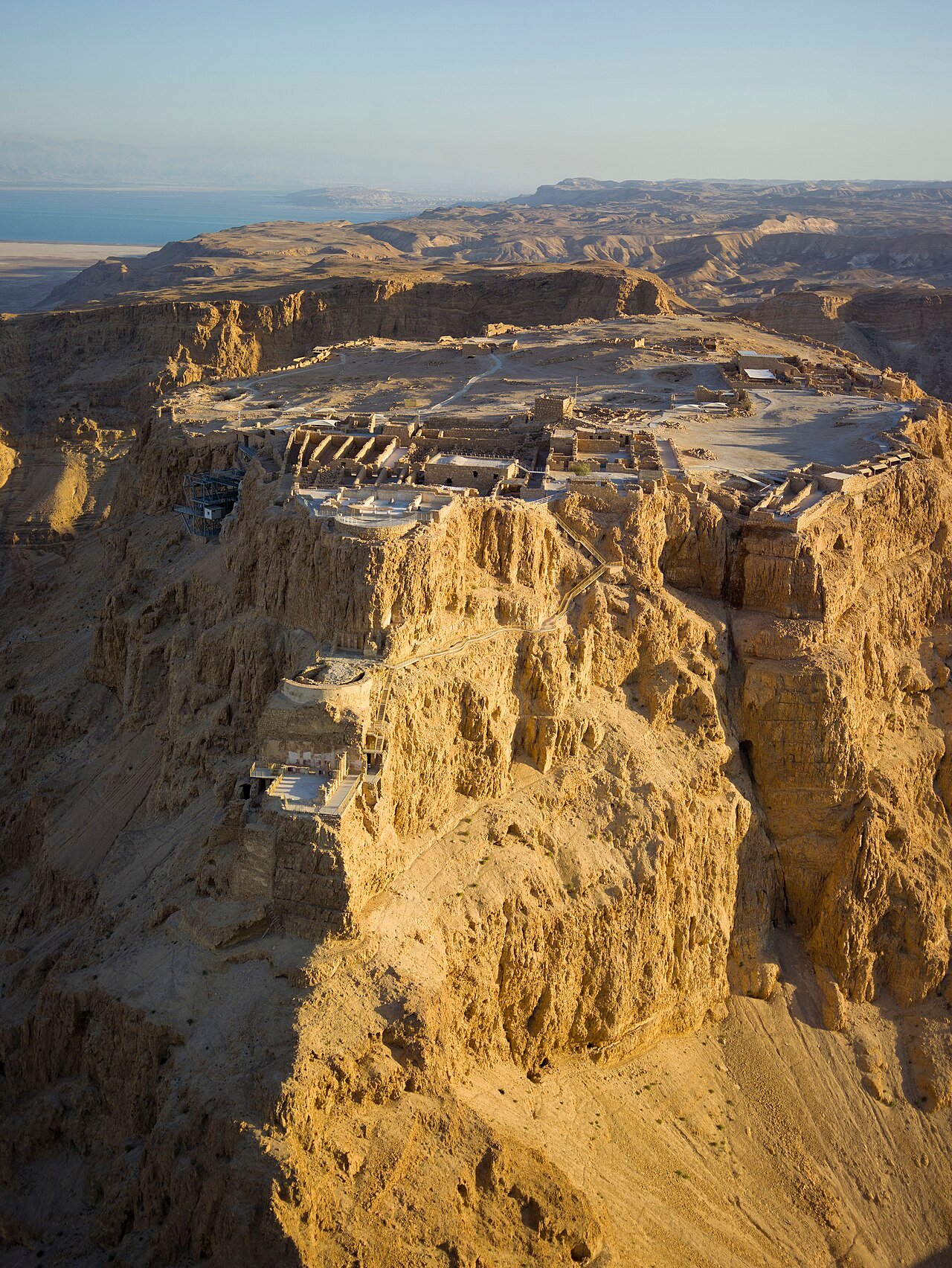
- Masada — the isolated mesa fortress above the Dead Sea where Herod the Great built palaces in the first century BCE, later the site of a siege that became central to modern Israeli national memory
- Old City of Acre — the best-preserved Crusader-era port city in the world, with an intact urban fabric of caravanserais, khans, mosques, and subterranean Hospitaller halls dating from the twelfth and thirteenth centuries
Both sites had been under consideration for years before the formal nomination process was completed. Their simultaneous inscription signalled the range that would define the country’s list going forward: monumental landscape on one hand, layered urban fabric on the other.
The most visited — and the alternatives
Masada and Acre draw the largest international visitor numbers, alongside the White City of Tel Aviv (inscribed 2003), whose four thousand Bauhaus and International Style buildings represent the largest concentration of that architectural movement anywhere outside Germany. These three sites anchor most heritage itineraries to the country.
Less travelled, but no less significant, are several inscriptions that reward closer attention:
- Biblical Tels: Megiddo, Hazor, Be’er Sheva (2005) — three multi-period city mounds whose excavations have produced some of the most important archaeological evidence for the Iron Age Levant, including elaborate water systems at each site
- Incense Route — Desert Cities in the Negev (2005) — four Nabataean towns along the ancient overland spice and frankincense trade from southern Arabia, with remarkable hydraulic engineering in an arid landscape
- Caves of Maresha and Beit Guvrin (2014) — a subterranean labyrinth in the Judaean foothills carved over two millennia into soft chalk, used successively as burial chambers, cisterns, dovecotes, and workshops
- Necropolis of Beit She’arim (2015) — a network of catacombs in the Lower Galilee where Jewish communities from across the Hellenistic diaspora buried their dead between the second and fourth centuries CE, producing a remarkable corpus of funerary art and inscription
Natural and shared sites
Israel has no inscribed natural or mixed World Heritage Sites as of the most recent update to the list. The Nahal Me’arot cave system on Mount Carmel, inscribed in 2012 as part of the serial property “Caves and Karst of Mount Carmel,” is classified as cultural rather than natural: its Outstanding Universal Value rests on the human evolutionary and archaeological record preserved in the cave sediments, spanning roughly 500,000 years of hominin presence, rather than on its geological formations alone.
The country’s list includes no transnational nominations shared with neighbouring states. The Bahá’í Holy Places in Haifa and the Western Galilee (2008), which encompass the Shrine of the Báb and the Bahá’í World Centre gardens, are internationally significant as the global spiritual and administrative centre of the Bahá’í Faith, but they are inscribed as a purely Israeli property. Their terraced gardens on the slopes of Mount Carmel are among the most formally composed sacred landscapes inscribed under the Convention.
How to find them
Israel’s nine sites are distributed across the country in a way that makes combining them on a single itinerary more practical than it might appear on a map. Masada, the Incense Route cities, and the Negev sites lie in the south; the Mount Carmel caves, Beit She’arim, and the Bahá’í gardens cluster around Haifa in the north; the Biblical Tels span the centre and north; and Acre, Jerusalem’s surroundings, and the White City anchor the coastal and central zones.
Israel’s World Heritage sites sit alongside thousands of other places on CHO’s interactive map, with GPS and sourced editorial history for each. See also our guides to Italy’s and France’s UNESCO sites, and our piece on cultural travel beyond mass tourism.
Frequently Asked Questions
How many UNESCO World Heritage Sites does Israel have?
Israel has 9 inscribed UNESCO World Heritage Sites. All nine are classified as cultural heritage properties; the country has no natural or mixed inscriptions on the World Heritage List.
What was Israel’s first UNESCO World Heritage Site?
Israel’s first inscriptions came in 2001, when two sites were added simultaneously: Masada and the Old City of Acre. Both had been long recognised as nationally significant before their World Heritage nominations were completed.
What is the most recently inscribed World Heritage Site in Israel?
The Necropolis of Beit She’arim was inscribed in 2015, making it the most recent addition to Israel’s World Heritage list. The site comprises a complex of Jewish burial catacombs in the Lower Galilee dating from the second to fourth centuries CE.
Does Israel have any natural UNESCO World Heritage Sites?
No. As of the most recent update to the list, all of Israel’s nine World Heritage Sites are classified as cultural properties. The Nahal Me’arot cave system on Mount Carmel, sometimes described in geological terms, was inscribed on the basis of its archaeological and human evolutionary significance rather than natural criteria.
Sources used in this article
- UNESCO — State Party Israel — World Heritage list.
- UNESCO — Israel: World Heritage Sites.
- CHO magazine — What is a World Heritage Site?
- CHO — Interactive map of heritage sites.