
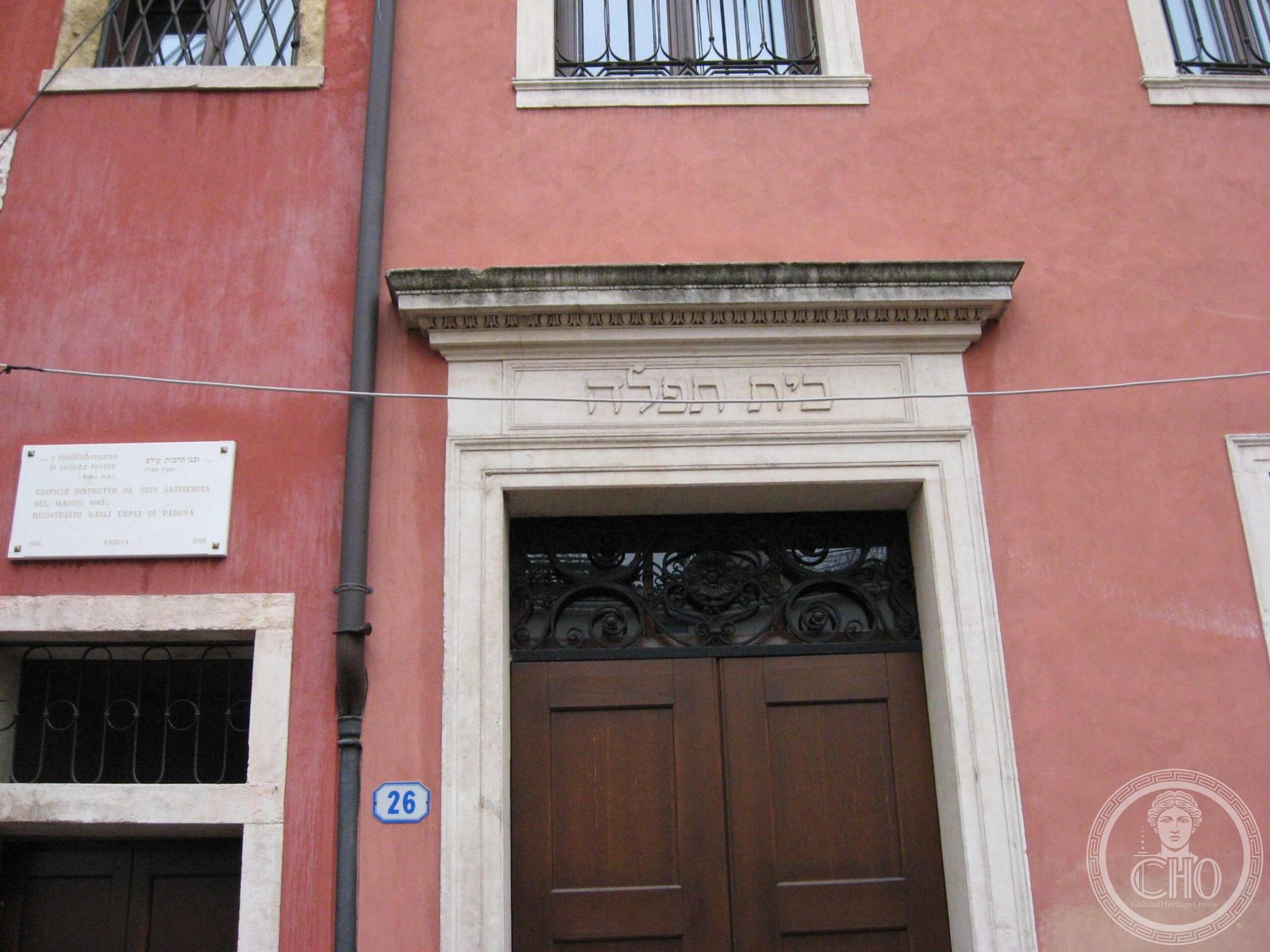
In the narrow streets branching from Via S. Martino and Solferino lies the Jewish quarter of medieval Padua, a palimpsest of recycled columns, inscriptions, and merchant shops where celebrated rabbis taught Talmud and students pledged cloaks to finance their studies.
At a glance
The Ghetto occupies the ancient heart of Padua between the cathedral and main squares, its compressed streets—Dell’Arco, dei Fabbri, Squarcione, Gritti, and Soncin—preserving both architectural layers and the economic and spiritual life of the Jewish community from the medieval period onward.
History
The Jewish settlement in Padua flourished as a specialized commercial hub. Low-cost taverns, second-hand dealers, and cloth merchants clustered near what is now Piazza delle Erbe, serving both townspeople and university students. The community also became a major center of Jewish learning: Yehaudah Minz Ha-Levi (1408–1509) founded a rabbinical academy in what is now the Hotel Toscanelli; Meir Isaac Katzenellenbogen (1482–1565) and Mosè Chayym Luzzato, a rabbi, poet, and kabbalistic intellectual, drew scholars from across Europe to study here.
The Lenguazza courtyard functioned as a pawn shop where impoverished students could pledge clothing—immortalized in verses by Arnaldo Fusinato, who celebrated the ghetto’s charitable provision for the poor.
What you see
The ghetto’s Romanesque street plan remains largely original, but its buildings testify to centuries of adaptation and reuse. Columns of uncertain origin, classical capitals, coats of arms, and stone inscriptions are woven into baroque wrought-iron railings and carved heads—some depicting Jewish merchants—that support flues and frame mullioned windows. Sixteenth-century frescoes stand alongside eighteenth-century windows and wooden doors, a continuous record of space reclaimed and rebuilt by a confined but resilient community.
Cultural significance
The ghetto preserves the material and social history of Paduan Jewry across nearly five centuries. Within a hidden courtyard lies the Grande Synagogue of the German rite, the ritual bath (Miqweh), and a kasher butcher’s shop—a religious and communal heart within the commercial heart. Names inscribed on doorstones, such as Mosè Quondam Jacob Trieste on the Fabbri tavern portal, anchor family memory to stone. The district continues to function as a center of study, commerce, and social life, echoing its medieval purpose.
Key facts
- Address: Via S. Martino e Solferino, 19–11, 35122 Padova
- Coordinates: 45.4057428, 11.8758882
- Phone: 049 8751106
- Official website: http://moked.it/padovaebraica/
Practical information
Opening hours are not listed; check the official website or contact the community office for visiting arrangements and guided tours. The site is an active neighborhood; respect residents’ privacy and observe any posted guidelines.
Getting there
The ghetto lies in central Padua, accessible on foot from the Cathedral and Piazza delle Erbe. The main entrance is via the portico on Via S. Martino and Solferino; the historic Lenguazza courtyard is reached through the same street.
See the place
Sources & resources
Find it on the map
See this place and what’s around it →📷 Become a Cultural Heritage Online photographer
Share your photos of places: they stay published under your name as the author. The more they're seen, the more you get noticed — and soon a contest will reward the most appreciated photos.
Log in or sign up free to add a photo