
Richtersveld (paesaggio culturale): l’ultimo mondo dei pastori Nama
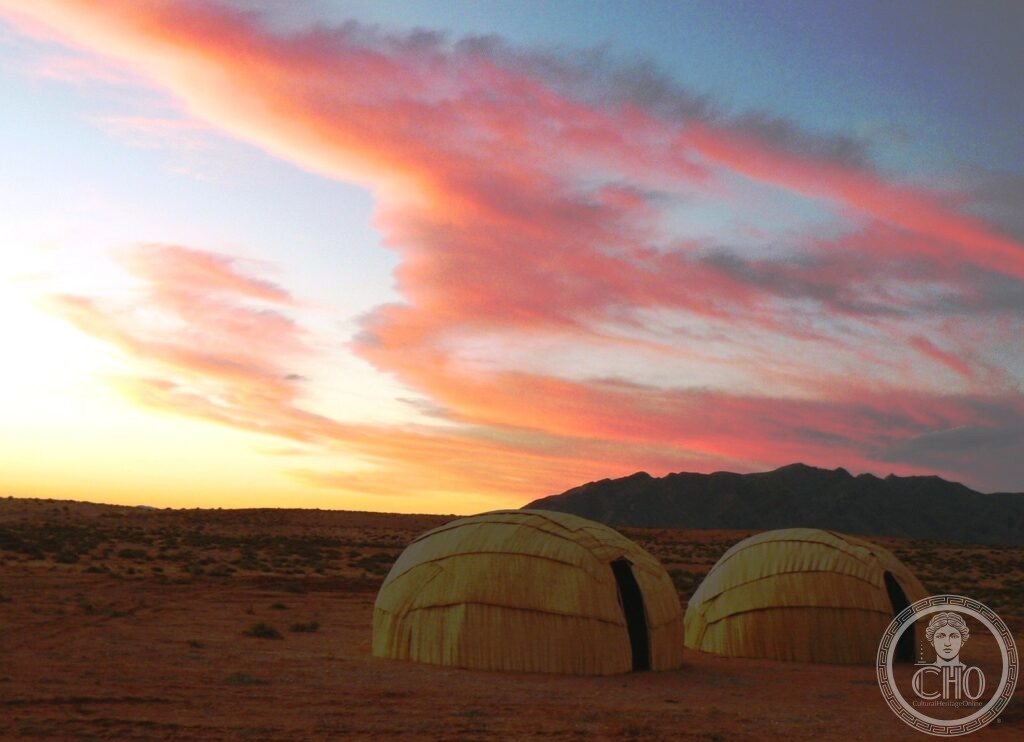
Nel deserto montuoso del Sudafrica nord-occidentale, il popolo Nama mantiene ancora un’antica vita di pastorizia stagionale, vivendo in capanne smontabili di stuoie, le matjieshuis. Il Richtersveld è un raro paesaggio dove una cultura pastorale millenaria e un deserto di piante succulente uniche convivono.
At a glance
The Richtersveld Cultural and Botanical Landscape, in the mountainous desert of the Northern Cape of South Africa, is one of the few places where the Nama people still practise their ancient way of life: a seasonal, herding existence, moving with their livestock and living in portable domed huts of reed mats, the matjieshuis. Set in a stark, biodiverse succulent desert, it is a rare living cultural landscape, inscribed by UNESCO in 2007.
Key facts
- UNESCO: World Heritage since 2007 (Richtersveld Cultural and Botanical Landscape)
- Nama herders: a surviving semi-nomadic pastoral culture
- Matjieshuis: portable domed huts of woven reed mats
- Seasonal movement: herders move with the grazing through the year
- Succulent desert: a biodiverse arid landscape of rare plants
- Living landscape: a culture and environment still bound together
History
The Nama, a Khoekhoe people, have herded sheep and goats across this harsh desert for many centuries, developing a way of life finely tuned to its scarce water and seasonal grazing. They move with their animals between pastures and live in the matjieshuis, light domed huts of reed matting over a wooden frame that can be packed up and carried — ideal for a mobile life.
While such pastoralism has vanished across much of southern Africa, it survives in the Richtersveld, where the community manages the land communally. Recognised as a living cultural landscape that sustains both a traditional culture and a unique desert flora, it was inscribed by UNESCO in 2007.
What you see
The landscape is one of rugged, arid mountains and plains, dotted with the seasonal camps of Nama herders and their domed reed huts, and clothed in an extraordinary variety of succulent plants — including the tall, strange “halfmens” — that bloom after rain. Livestock move across the sparse grazing as they have for generations.
The sight of the matjieshuis under the desert sky, amid the succulents, captures a way of life elsewhere lost.
Practical information
- Area: a remote communal conservancy and national park
- Best time: spring for desert flowers; the desert is hot and dry
- Time needed: a day or more; distances are large
- Note: remote and rugged; a four-wheel-drive and planning are needed
Getting there
The Richtersveld is in the far north-west of the Northern Cape, South Africa, near the Namibian border and the Orange River, a long drive from Springbok. GPS: 28.50° S, 17.00° E.
Nearby
- Orange River — the river marking the border with Namibia
- Namaqualand — famous for its spring wildflowers
- Ai-Ais (Namibia) — the Fish River Canyon across the border
Sources
- UNESCO World Heritage Centre — “Richtersveld Cultural and Botanical Landscape” (ref. 1265)
- South African National Parks (SANParks) — official body
- Encyclopaedia Britannica — Nama; Northern Cape
Find it on the map
See this place and what’s around it →📷 Diventa un fotografo di Cultural Heritage Online
Condividi le tue foto dei luoghi: restano pubblicate con la tua firma come autore. Più vengono viste, più ti fai conoscere — e presto un concorso premierà le foto più apprezzate.
Accedi o registrati gratis per aggiungere una foto