
A rugged mountainous region in central Sardinia spanning five municipalities, defined by the Flumendosa River, ancient temples, prehistoric rock carvings, and the unique waterfall town of Sadali.
At a glance
Barbagia di Seulo encompasses the territories of Sadali, Esterzili, Seui, Ussassai, and Seulo across densely wooded highlands. The landscape rises dramatically toward Mount Santa Vittoria (1,212 m), offering panoramic trekking routes and archaeological sites spanning millennia. This region forms part of the Sarcidano-Barbagia di Seulo Mountain Community, maintaining strong institutional and cultural ties with neighboring Sarcidano.
History
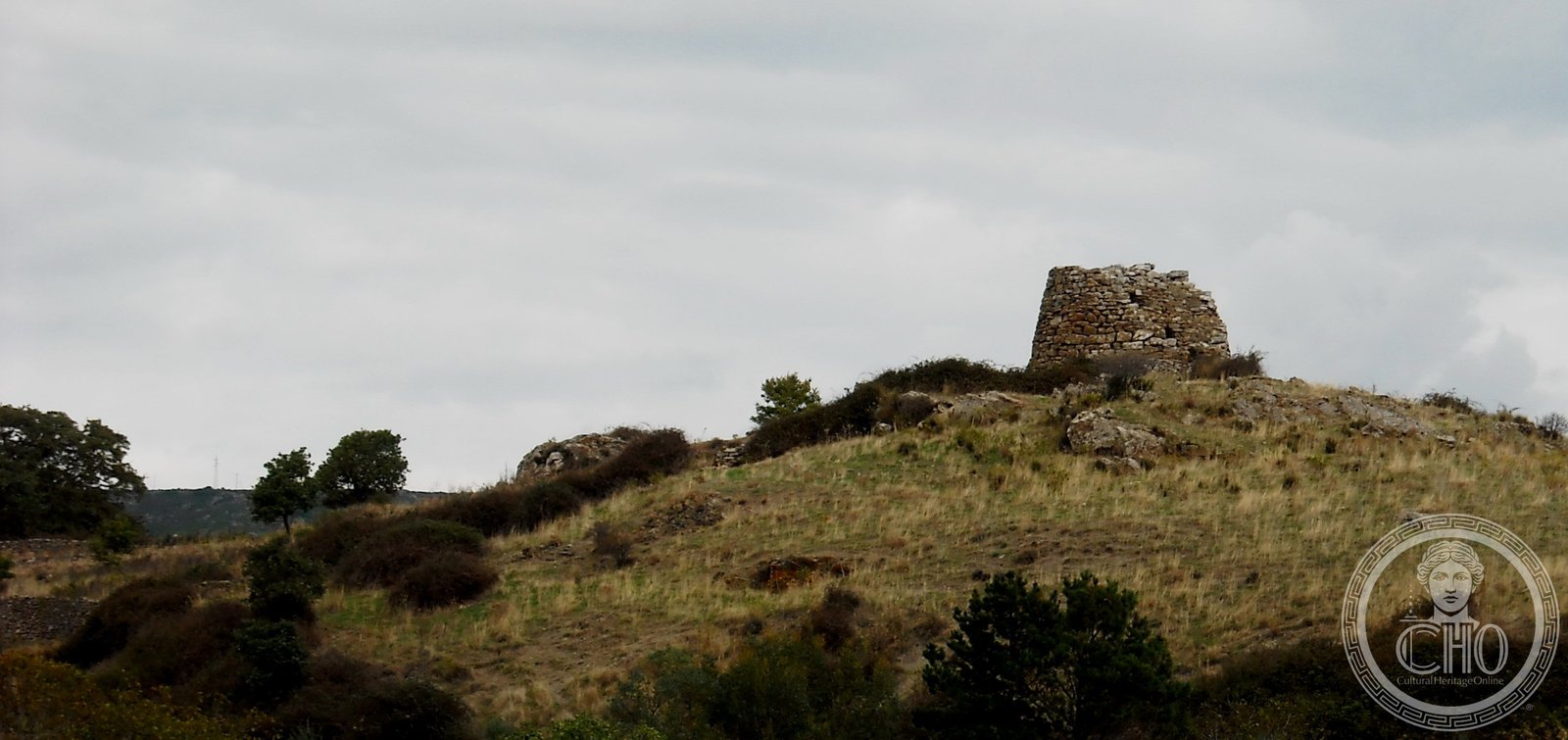
The region’s earliest recorded occupation dates to the Nuragic period (13th century BC), evidenced by temples and ceremonial rock formations. The temple of Sa Domu de Orgìa, built in the 13th century BC on Mount Santa Vittoria, represents the largest surviving example of its architectural type in Sardinia. Local legend describes it as the dwelling of a powerful witch guarding treasure alongside the mythical Musca Macedda, a deadly fly capable of bringing destruction.
Prehistoric cupellism—ritualistic practices involving carved cup marks on rock surfaces—appears throughout the region. In Seulo, a shale formation at approximately 400 metres elevation displays thirty micro cup marks incised across four square metres, hypothesized to represent the heavens. Such rock expressions accompany Domus ‘e Janas (Sardinian dolmens), distributed at varying altitudes from riverbanks to limestone plateaus above 1,100 metres.
What you see
Esterzili sits on the slopes of Mount Santa Vittoria at roughly 700 metres elevation. The temple of Sa Domu de Orgìa crowns the summit, showcasing Nuragic megalithic construction techniques. Mount Santa Vittoria itself attracts hikers with dramatic vistas across the wooded terrain.
Sadali stands unique among Sardinian towns for containing a natural waterfall within its borders. The San Valentino waterfall cascades in the church square, where multiple streams converge after flowing through narrow channels between restored stone houses. From there, water disappears into Sa ‘Ucca Manna (the Big Mouth), a crevasse routing water through underground passages to re-emerge downstream. The Is Janas caves and several nuraghi remain accessible for exploration within the town.
Cultural significance
The region preserves an exceptionally rich archaeological record from the Nuragic Bronze Age through prehistoric periods. Sa Domu de Orgìa ranks among Sardinia’s most important temples, offering insights into ancient religious architecture and ritual practice. The cupel-marked rocks provide rare physical evidence of prehistoric ceremonial life and cosmological beliefs.
Sadali’s hydrological uniqueness—the only town in Sardinia with an interior waterfall—shaped its identity and religious character, reflected in the dedication to Saint Valentine. The restored historic centre demonstrates contemporary stewardship of heritage while preserving functional traditional water management systems.
Key facts
- Location: Piazza del Popolo 3, 08030 Seulo, Sardegna
- Coordinates: 39.8697588, 9.2381366
- Sa Domu de Orgìa temple: 13th century BC (Nuragic period)
- Mount Santa Vittoria peak: 1,212 metres elevation
- Phone: 078258109
- Official website: https://www.comune.seulo.ca.it/index.php/vivere/cultura/71
Practical information
Opening hours and admission fees for archaeological sites are not listed; check the official website or contact the municipality for current access conditions. Hiking Mount Santa Vittoria requires sturdy footwear and preparation for exposed terrain at altitude. Best seasons for visiting are spring and autumn; summer temperatures in this region can be intense.
Getting there
Seulo lies in the heart of Sardinia’s central highlands. Visitors typically access the region by car from the provincial capital Nuoro or via the Flumendosa River valley. Local maps and guides recommend planning routes through multiple municipalities to experience the full range of natural and archaeological features across Barbagia di Seulo.
See the place
Sources & resources
Find it on the map
See this place and what’s around it →Historical events at this place (1)
📷 Become a Cultural Heritage Online photographer
Share your photos of places: they stay published under your name as the author. The more they're seen, the more you get noticed — and soon a contest will reward the most appreciated photos.
Log in or sign up free to add a photo