
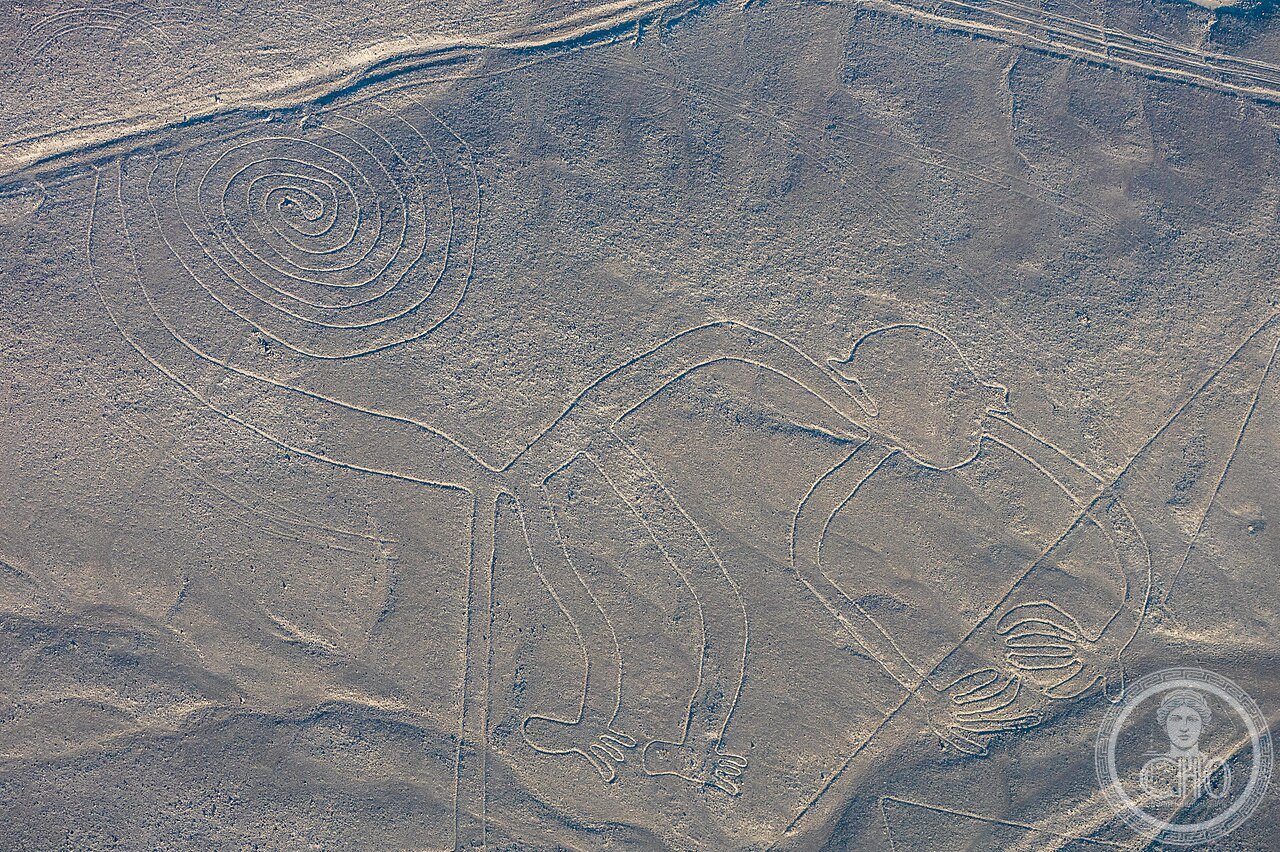
Over 300 geoglyphs etched into the Peruvian coastal desert — vast geometric lines, trapezoids, and 70 zoomorphic figures including a 93-metre hummingbird and a 135-metre condor, visible in their true scale only from the air.
At a glance
The Nazca Lines sprawl across a 450-square-kilometre plateau in southern Peru, created between approximately 200 BC and 700 AD by the Nazca culture. By removing reddish-brown iron oxide-coated pebbles from the desert surface to reveal the pale yellow-grey ground beneath, ancient people drew lines up to 9 kilometres long, geometric shapes of extraordinary precision, and large-scale representations of animals and humans that can be fully understood only from altitude.
The extreme aridity and windlessness of the Nazca plateau — one of the driest environments on Earth — has preserved these fragile surface markings for two millennia. UNESCO inscribed the Nazca Lines on the World Heritage List in 1994.
The figures
Approximately 70 zoomorphic and anthropomorphic figures include the hummingbird (93 metres beak to tail), the condor (135 metres), the spider (46 metres), and a monkey distinguished by its spiral tail. A humanoid figure known as the “Astronaut” or “Owl Man” stands approximately 30 metres tall on a hillside. In 2019, a team from Yamagata University (Japan) announced the discovery of 143 additional geoglyphs using AI pattern recognition on high-resolution satellite imagery.
Who made them and when
Created during the Nazca cultural period (c. 200 BC to 700 AD) by communities living in one of the driest environments on Earth. The technique was simple: clearing dark surface stones to expose lighter subsoil beneath, requiring communal organisation but no advanced tools. Scholars Donald Proulx and Katharina Schreiber documented the cultural context extensively. The underground aqueducts (puquios) built by the same culture demonstrate their sophisticated water management in a water-scarce landscape.
Scholarship and myth
Paul Kosok first recognised astronomical potential in 1941 when he observed a line pointing toward the winter solstice sunset. Maria Reiche arrived in 1946 and dedicated more than four decades to mapping and protecting the lines, living in the desert and successfully lobbying for a restricted zone designation. Her astronomical calendar theory remains influential.
Johan Reinhard proposed in 1985 that the lines are ritual processional pathways linked to water and mountain worship — fitting the Nazca culture’s documented obsession with water scarcity. The lines were likely walked as ceremonial routes, not merely viewed from above.
The ancient astronaut theory popularised by Erich von Däniken in 1968 has been definitively rejected by every credible archaeologist. The lines are made of compacted desert floor that could not support any aircraft landing, and predate aviation by two millennia.
How to see them
The figures cannot be appreciated from ground level — they are too large and too subtle. The standard experience is a light aircraft flight (approximately 30 minutes) from Nazca Airport. Motion sickness is common as small aircraft bank steeply to give all passengers a view of each figure. A viewing tower on the Pan-American Highway offers a limited ground-level view of the Hands and Tree figures. Walking directly on the pampa is controlled; ruts from vehicle damage inflicted in past decades remain visible as a cautionary lesson.
Key facts
- Country: Peru
- Coordinates: 14.739°S, 75.130°W
- Cultural period: Nazca, c. 200 BC – 700 AD
- Total: over 300 geometric forms; approx. 70 zoomorphic figures
- Largest figure: Condor, 135 m
- Longest line: approximately 9 km
- UNESCO World Heritage Site: 1994
- Nearest airport: Nazca (NZC)
Getting there
Flights depart from Nazca Airport (NZC) and from Pisco Airport. Lima is approximately 450 km northwest (7–8 hours by bus; 1 hour by air). Morning flights are best before thermal turbulence develops. Entry to restricted pampa areas requires a permit from Peru’s Ministry of Culture.
See the place
Sources
Find it on the map
See this place and what’s around it →📷 Become a Cultural Heritage Online photographer
Share your photos of places: they stay published under your name as the author. The more they're seen, the more you get noticed — and soon a contest will reward the most appreciated photos.
Log in or sign up free to add a photo