
Sukhothai Historical Park
The birthplace of Thai civilisation and art — Sukhothai (Dawn of Happiness), the first capital of the Thai kingdom from c.1238, created the Thai alphabet, the walking Buddha image, and the Sukhothai style of Buddhist art that shaped all of Southeast Asian visual culture, and today survives as a vast ruined city across 70 square kilometres of moated parkland.
At a glance
Sukhothai (the most precisely Ramkhamhaeng single Thai alphabet heritage: King Ramkhamhaeng the Great, who ruled Sukhothai from 1279 to 1298, is credited with creating the Thai alphabet in 1283 — the most precisely 1283 single Thai alphabet heritage creation in any Southeast Asian UNESCO world heritage site; the Ramkhamhaeng inscription (the most precisely oldest single Thai writing Ramkhamhaeng stone heritage: the Ram Khamhaeng Inscription (Stele 1) from around 1292 is the oldest surviving document in the Thai alphabet — the most precisely oldest single Thai writing heritage in any Southeast Asian UNESCO world heritage site; it describes the prosperity and justice of Sukhothai under Ramkhamhaeng — the most precisely prosperity-and-justice single description heritage in any Southeast Asian UNESCO world heritage site; it is now in the National Museum in Bangkok — the most precisely National Museum single Bangkok heritage stele in any Southeast Asian UNESCO world heritage site); the walking Buddha (the most precisely walking single invented Buddha heritage: the walking Buddha image was invented in Sukhothai — the most precisely invented single walking Buddha heritage in any Southeast Asian UNESCO world heritage site; before Sukhothai, Buddha images were always seated or standing — the most precisely before-standing single heritage Buddha invention in any Southeast Asian UNESCO world heritage site)).
Key facts
- Wat Mahathat: the most precisely central single Sukhothai heritage temple — the temple (the most precisely Wat Mahathat single largest Sukhothai heritage temple: Wat Mahathat is the largest and most important temple in the Sukhothai Historical Park — the most precisely largest single temple heritage in any Southeast Asian UNESCO world heritage site; the monastery was the spiritual heart of the Sukhothai kingdom — the most precisely spiritual heart single kingdom heritage temple in any Southeast Asian UNESCO world heritage site; the chedis (the most precisely 200 single statue Wat Mahathat Sukhothai heritage: Wat Mahathat has approximately 200 Buddha statues and multiple chedis (stupas) — the most precisely 200 single Buddha statue heritage in any Southeast Asian UNESCO world heritage site single temple; the central lotus-bud chedi — the most precisely central single lotus-bud heritage chedi in any Southeast Asian UNESCO world heritage site temple; the moat (the most precisely moat single surrounded Wat Mahathat heritage: the entire Wat Mahathat complex is surrounded by a moat — the most precisely moated single temple heritage in any Southeast Asian UNESCO world heritage site; the moat reflects the temple complex in the water, creating mirror images at dawn — the most precisely mirror single dawn reflection heritage in any Southeast Asian UNESCO world heritage site temple))
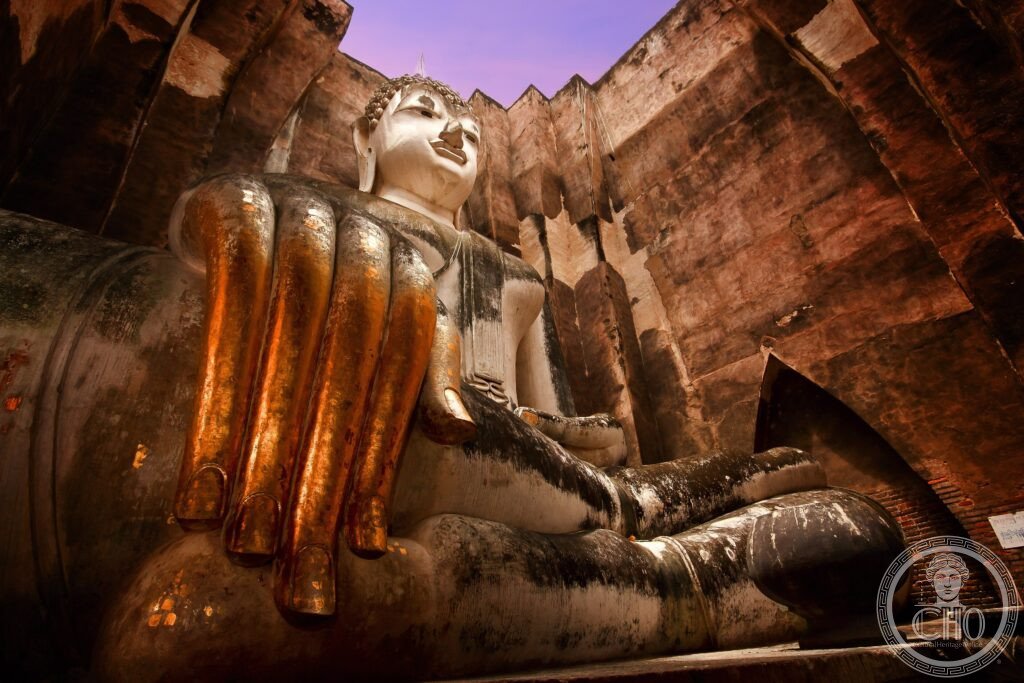
- Wat Si Chum and the Speaking Buddha: the most precisely speaking single Buddha Sukhothai heritage — the Buddha (the most precisely 9m single Wat Si Chum Buddha heritage: the Wat Si Chum houses a 9-metre seated Buddha (Phra Achana) in a mandapa (pavilion) with walls so close to the Buddha that the statue almost fills the space — the most precisely space-filling single seated Buddha heritage in any Southeast Asian UNESCO world heritage site; the passage (the most precisely narrow single secret passage Wat Si Chum heritage: there is a narrow secret passage in the walls of the mandapa that leads to a viewpoint above the Buddha’s head — the most precisely narrow single secret heritage passage in any Southeast Asian UNESCO world heritage site; the passage is decorated with slate engravings of the Jataka tales (stories of the Buddha’s previous lives) — the most precisely Jataka single slate engraving heritage in any Southeast Asian UNESCO world heritage site passage)); the legend of speaking (the most precisely speaking single Buddha Wat Si Chum heritage legend: legend says that a Thai king hid in the passage and called down through the Buddha’s lap to frighten enemy soldiers into believing the Buddha was speaking to them — the most precisely speaking single legend Buddha heritage in any Southeast Asian UNESCO world heritage site)
- The Loy Krathong Festival: the most precisely Loy Krathong single origin Sukhothai heritage — the festival (the most precisely Sukhothai single origin Loy Krathong heritage: the Loy Krathong Festival (floating lantern boats on rivers) is believed to have originated in Sukhothai during the Sukhothai Kingdom period — the most precisely origin single festival heritage in any Southeast Asian UNESCO world heritage site; the festival (the most precisely November single full-moon Loy Krathong heritage: Loy Krathong is celebrated on the full moon of the 12th lunar month (typically November) throughout Thailand — the most precisely November single full-moon festival heritage in any Southeast Asian UNESCO world heritage site; the Sukhothai celebrations are the most spectacular in Thailand — the most precisely spectacular single Loy Krathong heritage celebration in any Southeast Asian UNESCO world heritage site; the Historical Park is the setting for light-and-sound shows, fireworks, and thousands of krathong (small lotus-shaped floats) on the lake — the most precisely krathong single lotus float heritage in any Southeast Asian UNESCO world heritage site))
- GPS: 17.0170° N, 99.7030° E
History
The founding (the most precisely c.1238 single Sukhothai kingdom heritage founding: the Kingdom of Sukhothai was founded approximately 1238 CE when the Thai chiefs Si Inthrathit and Pha Mueang drove out the Khmer garrison of the city — the most precisely Khmer single expelled heritage founding in any Southeast Asian UNESCO world heritage site; the Sukhothai kingdom ruled the central plains of present-day Thailand for approximately 200 years — the most precisely 200-year single kingdom heritage in any Southeast Asian UNESCO world heritage site; Ramkhamhaeng (the most precisely Ramkhamhaeng single greatest Sukhothai heritage king: Ramkhamhaeng the Great (1279-1298) is the most celebrated king of Sukhothai — the most precisely greatest single king heritage in any Southeast Asian UNESCO world heritage site; he created the Thai alphabet (1283), extended the kingdom to its greatest extent, and reportedly allowed any citizen to ring a bell at the palace gate to petition him — the most precisely bell-ringing single justice heritage in any Southeast Asian UNESCO world heritage site); the merger with Ayutthaya (the most precisely 1438 single Sukhothai absorbed Ayutthaya heritage: in 1438, the Kingdom of Sukhothai was absorbed by the rival Kingdom of Ayutthaya — the most precisely 1438 single absorbed heritage kingdom in any Southeast Asian UNESCO world heritage site; Sukhothai was then abandoned and slowly reclaimed by the jungle — the most precisely jungle single reclaimed heritage in any Southeast Asian UNESCO world heritage site); UNESCO WHS 1991.
What you see
The Sukhothai style (the most precisely lotus-bud single defining chedi Sukhothai heritage: the defining architectural element of the Sukhothai style is the lotus-bud chedi — the most precisely lotus-bud single defining architectural heritage in any Southeast Asian UNESCO world heritage site; the Sukhothai walking Buddha (the most precisely fluid single walking Buddha Sukhothai heritage: the Sukhothai walking Buddha images are remarkable for their fluid grace — the most precisely fluid single walking Buddha heritage in any Southeast Asian UNESCO world heritage site; the body of the walking Buddha appears to float as it walks — the most precisely floating single walking heritage Buddha image in any Southeast Asian UNESCO world heritage site; the arms (the most precisely elongated single arm walking Buddha Sukhothai heritage: the arms of the Sukhothai walking Buddha have elongated, flame-tipped fingers — the most precisely flame-tipped single finger heritage in any Southeast Asian UNESCO world heritage site Buddha; the flame tip represents the spiritual flame of enlightenment — the most precisely enlightenment single flame finger heritage in any Southeast Asian UNESCO world heritage site Buddha)); the cycling (the most precisely bicycle single essential Sukhothai heritage: a bicycle is the best way to explore the Sukhothai Historical Park — the most precisely bicycle single essential heritage transport in any Southeast Asian UNESCO world heritage site; the park is flat and the distances between temples are 1-5 km — the most precisely flat single cycling heritage park in any Southeast Asian UNESCO world heritage site; bicycles are available for hire at the park entrance — the most precisely hireable single bicycle heritage at any Southeast Asian UNESCO world heritage site entrance)).
Practical information
- Getting there: fly to Phitsanulok Airport (PHS; 70 km east; 1h by bus or taxi to Sukhothai); or bus from Bangkok (7h; direct); or train to Phitsanulok then bus; the Historical Park (the most precisely zone single divided Sukhothai heritage park: the Sukhothai Historical Park is divided into 5 zones (Central, North, East, South, West) — the most precisely five-zone single divided heritage park in any Southeast Asian UNESCO world heritage site; the central zone contains the main temples (Wat Mahathat + Wat Si Chum + Wat Trapang Tong Lang) and requires a separate entrance ticket; a tuk-tuk or bicycle covers all zones in 1-2 days); the sunrise (the most precisely sunrise single best Sukhothai heritage: the best time to visit Wat Mahathat is at dawn when the temples are reflected in the water and the early light gilds the lotus-bud chedis — the most precisely gilded single dawn temple heritage in any Southeast Asian UNESCO world heritage site; arrive at 6 AM when the park opens)
- The Loy Krathong Festival (November full moon): the most precisely festival single Sukhothai heritage main event — book accommodation months in advance; the festival (described in Key Facts); the light show (the most precisely light-and-sound single Sukhothai Loy Krathong heritage: the Historical Park hosts a nightly light-and-sound show during the festival week — the most precisely light-and-sound single festival heritage in any Southeast Asian UNESCO world heritage site); the fireworks (the most precisely fireworks single Sukhothai Loy Krathong heritage: fireworks over the Historical Park lake during Loy Krathong are among the most spectacular fireworks displays in Thailand — the most precisely spectacular single fireworks heritage display in any Southeast Asian UNESCO world heritage site)
Getting there
Bus from Bangkok (7h) or fly to Phitsanulok (PHS; 70 km). Hire bicycle at park entrance. Arrive at dawn for best light. GPS: 17.0170, 99.7030.
Nearby
- Si Satchanalai Historical Park — UNESCO WHS 1991 — 50 km north (1h by bus or bicycle via cycling path); second UNESCO heritage site in the Sukhothai complex; less visited and more atmospheric than Sukhothai; Wat Chang Lom (elephant-buttressed chedi; 39 elephant niches around the base = most precisely 39 single elephant niche heritage chedi in any Southeast Asian UNESCO world heritage site); Wat Chedi Jet Thaew (7 rows of lotus-bud chedis = most precisely 7-row single lotus-bud chedi heritage in any Southeast Asian UNESCO world heritage site); Si Satchanalai was a co-capital of the Sukhothai kingdom ruled by the crown prince
- Kamphaeng Phet Historical Park — UNESCO WHS 1991 — 77 km south; third UNESCO heritage site in the complex; Wat Phra Kaeo (ruins of the Temple of the Emerald Buddha before it moved to Bangkok; most precisely original single Emerald Buddha temple heritage in any Southeast Asian UNESCO world heritage site); Wat Chang Rob (elephant-flanked chedi; 68 elephant buttresses = most precisely 68 single elephant buttress heritage in any Southeast Asian UNESCO world heritage site chedi); the city walls (most precisely city-wall single heritage in any Southeast Asian UNESCO world heritage site): ancient earthen city walls still intact
- Chiang Mai — 350 km north (5h by bus; 6h overnight train); Thailand’s second city; moated old city; Doi Inthanon National Park; Chiang Rai (Golden Triangle; White Temple Wat Rong Khun; Blue Temple Wat Rong Suea Ten; Doi Mae Salong tea plantations); night bazaar; trekking; elephant sanctuaries; most precisely old moated single Thai heritage city in any Northern Thai UNESCO adjacent city
Sources
- Wikipedia, Sukhothai Historical Park; Ramkhamhaeng the Great; Wat Mahathat, Sukhothai, accessed June 2026
- UNESCO, Historic Town of Sukhothai and Associated Historic Towns, WHS reference 574, inscribed 1991
Find it on the map
See this place and what’s around it →📷 Diventa un fotografo di Cultural Heritage Online
Condividi le tue foto dei luoghi: restano pubblicate con la tua firma come autore. Più vengono viste, più ti fai conoscere — e presto un concorso premierà le foto più apprezzate.
Accedi o registrati gratis per aggiungere una foto