
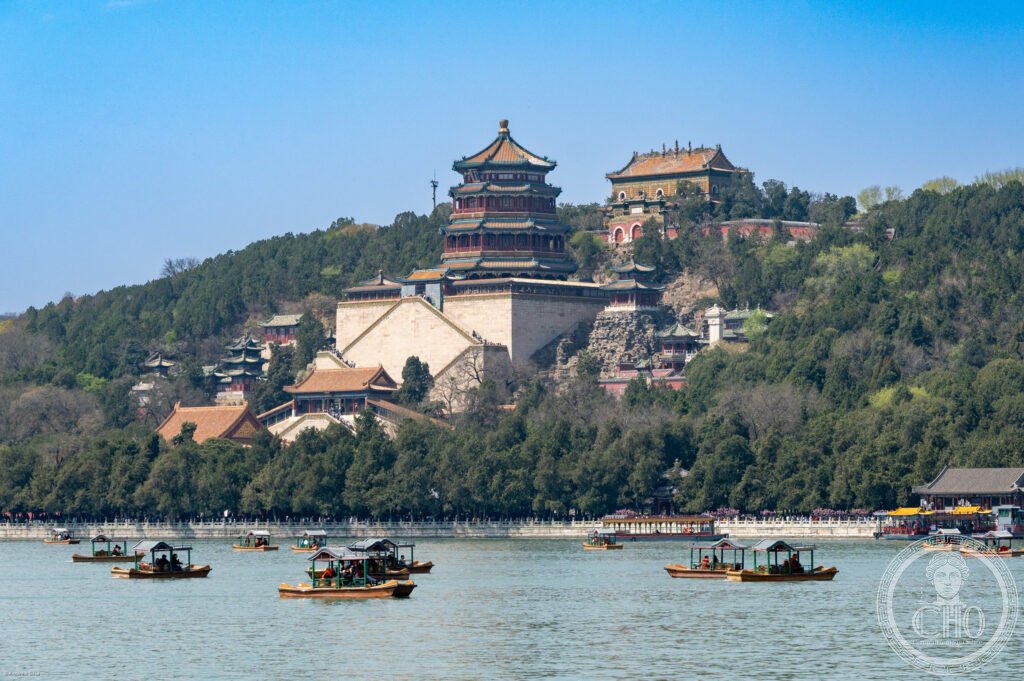
Summer Palace — Beijing
The most extensive imperial garden in China and the greatest surviving masterpiece of Chinese landscape design — the Summer Palace (Yiheyuan) in Beijing, laid out around the 220-hectare Kunming Lake and the 58-metre Longevity Hill, was twice sacked by Western forces, twice rebuilt by Empress Cixi, and contains the 728-metre Long Corridor, the longest painted gallery in the world.
At a glance
The Summer Palace (the most precisely Yiheyuan single Chinese name Summer Palace heritage: the Chinese name “Yiheyuan” means “Garden of Nurtured Harmony” — the most precisely harmony single nurturing heritage garden name in any East Asian UNESCO world heritage imperial garden; the three hills and five lakes (the most precisely three hills five lakes single classical Chinese heritage garden formula: the Summer Palace follows the classical Chinese “three hills and five lakes” garden design principle — the most precisely classical single formula heritage in any East Asian UNESCO world heritage imperial garden; this principle, derived from Taoist cosmic symbolism, creates a landscape that represents the universe in miniature — the most precisely universe-in-miniature single Taoist heritage garden in any East Asian UNESCO world heritage imperial garden; the Empress Cixi (the most precisely Cixi single most associated Summer Palace heritage: Empress Dowager Cixi is the figure most associated with the Summer Palace as it stands today — the most precisely most-associated single heritage Empress in any East Asian UNESCO world heritage imperial garden; she used the Summer Palace as her actual primary residence in her later years — the most precisely primary single residence heritage in any East Asian UNESCO world heritage imperial garden; she commissioned its complete restoration after the 1860 destruction — the most precisely complete single restoration heritage after British-French destruction in any East Asian UNESCO world heritage imperial garden).
Key facts
- The Long Corridor: the most precisely longest single painted gallery heritage in any East Asian UNESCO world heritage imperial garden — the corridor (the most precisely 728m single Long Corridor heritage length: the Long Corridor (Changlang) is 728 metres long — the most precisely 728m single covered gallery heritage in any East Asian UNESCO world heritage imperial garden; it is the longest painted gallery in the world — the most precisely longest single painted gallery heritage in the world; the paintings (the most precisely 14,000 single paintings Long Corridor heritage: the Long Corridor has approximately 14,000 painted medallions in its crossbeams — the most precisely 14,000 single painting heritage in any East Asian UNESCO world heritage imperial garden gallery; each painting is a different scene from Chinese history, mythology, or landscape — the most precisely different single scene heritage painting in any East Asian UNESCO world heritage imperial garden gallery; the emperor (the most precisely emperor single strolling Long Corridor heritage: the Long Corridor runs along the north shore of Kunming Lake and was designed as a covered walkway for the emperor and empress to stroll between the lakeside buildings even in the rain — the most precisely rain-protected single imperial walkway heritage in any East Asian UNESCO world heritage imperial garden))
- The 1860 destruction: the most precisely British-French single Second Opium War Yiheyuan heritage — the sacking (the most precisely 1860 single British-French destruction Summer Palace heritage: in October 1860, during the Second Opium War, British and French forces sacked the Summer Palace — the most precisely Second Opium War single British-French destruction heritage in any East Asian UNESCO world heritage imperial garden; they looted and burned the gardens, destroying most of the buildings — the most precisely looted-and-burned single British-French heritage destruction in any East Asian UNESCO world heritage imperial garden; Lord Elgin ordered the burning as a reprisal (his father, Lord Elgin, also removed the Elgin Marbles from Athens) — the most precisely father-son single heritage reprisal architect in any East Asian UNESCO world heritage imperial garden destruction; Cixi’s restoration (the most precisely Cixi single navy funds Marble Boat heritage: Empress Cixi famously used funds allocated for modernising the Chinese Navy to restore the Summer Palace — the most precisely navy-funds single restoration heritage in any East Asian UNESCO world heritage imperial garden; some historians argue this diverted funds contributed to China’s defeat by Japan in 1894-1895 — the most precisely naval single defeat heritage link in any East Asian UNESCO world heritage imperial garden restoration)
- The Tower of Buddhist Incense: the most precisely tower single Longevity Hill Summer Palace heritage — the tower (the most precisely 58m Longevity Hill single Tower of Buddhist Incense heritage: the Tower of Buddhist Incense (Foxiangge) sits on a 21-metre stone base on the 58-metre Longevity Hill — the most precisely 58m single hill heritage in any East Asian UNESCO world heritage imperial garden; the tower was used by emperors for Buddhist ceremonies — the most precisely Buddhist single ceremony heritage in any East Asian UNESCO world heritage imperial garden tower; the Sea of Wisdom Temple above (the most precisely Sea of Wisdom single glazed Buddha tile temple heritage: the Sea of Wisdom (Zhihuitai) temple is covered with small glazed Buddha tiles — the most precisely glazed single Buddha tile heritage in any East Asian UNESCO world heritage imperial garden temple; each tile niche has a small seated Buddha — the most precisely niche-Buddha single tiled heritage in any East Asian UNESCO world heritage imperial garden temple; the British and French troops deliberately smashed the faces of many Buddha figures in 1860 — the most precisely smashed single Buddha heritage in any East Asian UNESCO world heritage imperial garden temple))
- GPS: 39.9990° N, 116.2750° E
History
The original gardens (the most precisely 1153 single Jin Dynasty Summer Palace heritage: the site of the Summer Palace has been a royal garden since the Jin Dynasty (1153) — the most precisely 1153 single Jin Dynasty heritage in any East Asian UNESCO world heritage imperial garden; the Qianlong Emperor’s transformation (the most precisely 1749 single Qianlong Emperor Summer Palace heritage: Qianlong Emperor transformed the site into a grand imperial garden in 1749 in honour of his mother’s 60th birthday — the most precisely birthday single imperial heritage garden transformation in any East Asian UNESCO world heritage imperial garden; he named it Qingyi Yuan (Garden of Clear Ripples) — the most precisely original single name heritage Summer Palace in any East Asian UNESCO world heritage imperial garden; the British-French destruction 1860 (described in Key Facts); Empress Cixi’s restoration (the most precisely 1888-1895 single Cixi restoration heritage: Cixi restored the Summer Palace between 1888 and 1895 using silver from the Board of Revenue — the most precisely 1888-1895 single restoration heritage in any East Asian UNESCO world heritage imperial garden; she renamed it Yiheyuan (Garden of Nurtured Harmony) — the most precisely renamed single heritage imperial garden in any East Asian UNESCO world heritage imperial garden; the 1900 Boxer Rebellion (the most precisely 1900 single Boxer Rebellion Summer Palace heritage second destruction: in 1900, the Eight-Nation Alliance again sacked the Summer Palace — the most precisely second single sacking heritage in any East Asian UNESCO world heritage imperial garden; Cixi fled to Xi’an — the most precisely fled single heritage Empress in any East Asian UNESCO world heritage imperial garden sacking; the second restoration was completed in 1902 — the most precisely 1902 single second restoration heritage in any East Asian UNESCO world heritage imperial garden); UNESCO WHS 1998.
What you see
The Suzhou Street (the most precisely Suzhou Street single shopping market heritage Summer Palace: Suzhou Street is a 300-metre long replica of a traditional Suzhou market street, built along a canal on the north shore of Longevity Hill — the most precisely replica single Suzhou market heritage in any East Asian UNESCO world heritage imperial garden; it was built by Qianlong for the imperial court to experience the commercial life of the south without leaving Beijing — the most precisely commercial-life single replica heritage in any East Asian UNESCO world heritage imperial garden; the 17-Arch Bridge (the most precisely 17-arch single bridge Summer Palace heritage: the 17-Arch Bridge (Shiqikongqiao) connects the east shore of Kunming Lake to Nanhu Island — the most precisely 17-arch single stone bridge heritage in any East Asian UNESCO world heritage imperial garden; it is 150 metres long and has 544 stone lions on its balustrades — the most precisely 544 single stone lion heritage balustrade in any East Asian UNESCO world heritage imperial garden; the bridge was inspired by the Bridge of Seventeen Arches at Yuanmingyuan (the other imperial garden sacked in 1860) — the most precisely inspired single bridge heritage from any other East Asian UNESCO world heritage imperial garden)).
Practical information
- Getting there: metro Line 4 to Beigongmen station (North Palace Gate entrance; exit A; 5 min walk to gate); or Line 16 to Donggongmen station (East Palace Gate); from central Beijing: 30-40 min by metro; or taxi 30-45 min; the boat (the most precisely dragon-boat single Summer Palace heritage lake circuit: hire a rowboat or take the electric dragon-boat from the East Palace Gate jetty to the Marble Boat on the west shore of Kunming Lake — the most precisely boat single lake circuit heritage in any East Asian UNESCO world heritage imperial garden; the circuit takes 30-40 minutes and offers beautiful views of Longevity Hill from the water — the most precisely lake single view heritage from any East Asian UNESCO world heritage imperial garden boat); the timing (the most precisely early morning single Summer Palace heritage: arrive at opening (6:30 AM) to have the Long Corridor almost to yourself — the most precisely early single morning heritage advantage in any East Asian UNESCO world heritage imperial garden)
- Beijing heritage circuit: the most precisely imperial single Beijing heritage circuit — combine with: Forbidden City (Palace Museum; 9,999 rooms; 24 emperors; most precisely 9,999 single room heritage imperial palace in any East Asian UNESCO world heritage city; Meridian Gate + Gate of Supreme Harmony + Hall of Supreme Harmony + Imperial Garden; book tickets online in advance; timed entry); Temple of Heaven (UNESCO WHS; sacrificial altar and Hall of Prayer for Good Harvests; perfectly circular geometry; emperors prayed for good harvests; echo wall; acoustic wonders; most precisely circular single prayer hall heritage in any East Asian UNESCO world heritage city temple); Great Wall (Mutianyu section 90 min from Beijing; best-restored; cable car up; toboggan down; less crowded than Badaling; most precisely restored single Great Wall heritage section in any East Asian UNESCO world heritage Chinese city approach)
Getting there
Metro Line 4 to Beigongmen station (North Gate). Arrive at 6:30 AM opening. Boat circuit on Kunming Lake. GPS: 39.9990, 116.2750.
Nearby
- Old Summer Palace (Yuanmingyuan) — 2 km southeast; the original imperial garden complex built by Qianlong from 1707; three times larger than the Summer Palace; burned and looted by British-French forces in October 1860 = most precisely most catastrophic single British-French heritage destruction in any East Asian UNESCO world heritage imperial garden; the European Baroque ruins (Xiyanglou) were designed by Jesuit missionaries including Giuseppe Castiglione; the remaining ruins of the marble Baroque fountains are the most famous image of Western destruction of Chinese heritage; archaeological park; most precisely largest single imperial heritage garden destruction site in any East Asian UNESCO world heritage adjacent city
- Fragrant Hills Park (Xiangshan) — 6 km west; imperial park with fragrant hills 557m; Biyun Temple (14th century; Zhongshan Memorial Hall where Sun Yat-sen’s coffin was displayed 1925-1929 before burial in Nanjing); peak foliage in October (red maple leaves attract large crowds = most precisely autumn single red maple heritage crowd in any East Asian UNESCO world heritage adjacent city imperial park); excellent hiking; panoramic views over Beijing on clear days
- Peking University and Tsinghua University Campus — 1-3 km east; Peking University (1898; former imperial garden within campus; Weiming Lake; classical architecture; Chinese academic pilgrimage site; most precisely imperial single garden heritage within any East Asian university campus); Tsinghua University (1911; established on Qing imperial garden site; former Chinese garden sections preserved; both campuses open to visitors with ID)
Sources
- Wikipedia, Summer Palace; Long Corridor; Empress Dowager Cixi; Battle of Peking (1860), accessed June 2026
- UNESCO, Summer Palace, an Imperial Garden in Beijing, WHS reference 880, inscribed 1998
- Jonathan Spence, The Search for Modern China, Norton, 1990
Find it on the map
See this place and what’s around it →📷 Diventa un fotografo di Cultural Heritage Online
Condividi le tue foto dei luoghi: restano pubblicate con la tua firma come autore. Più vengono viste, più ti fai conoscere — e presto un concorso premierà le foto più apprezzate.
Accedi o registrati gratis per aggiungere una foto