
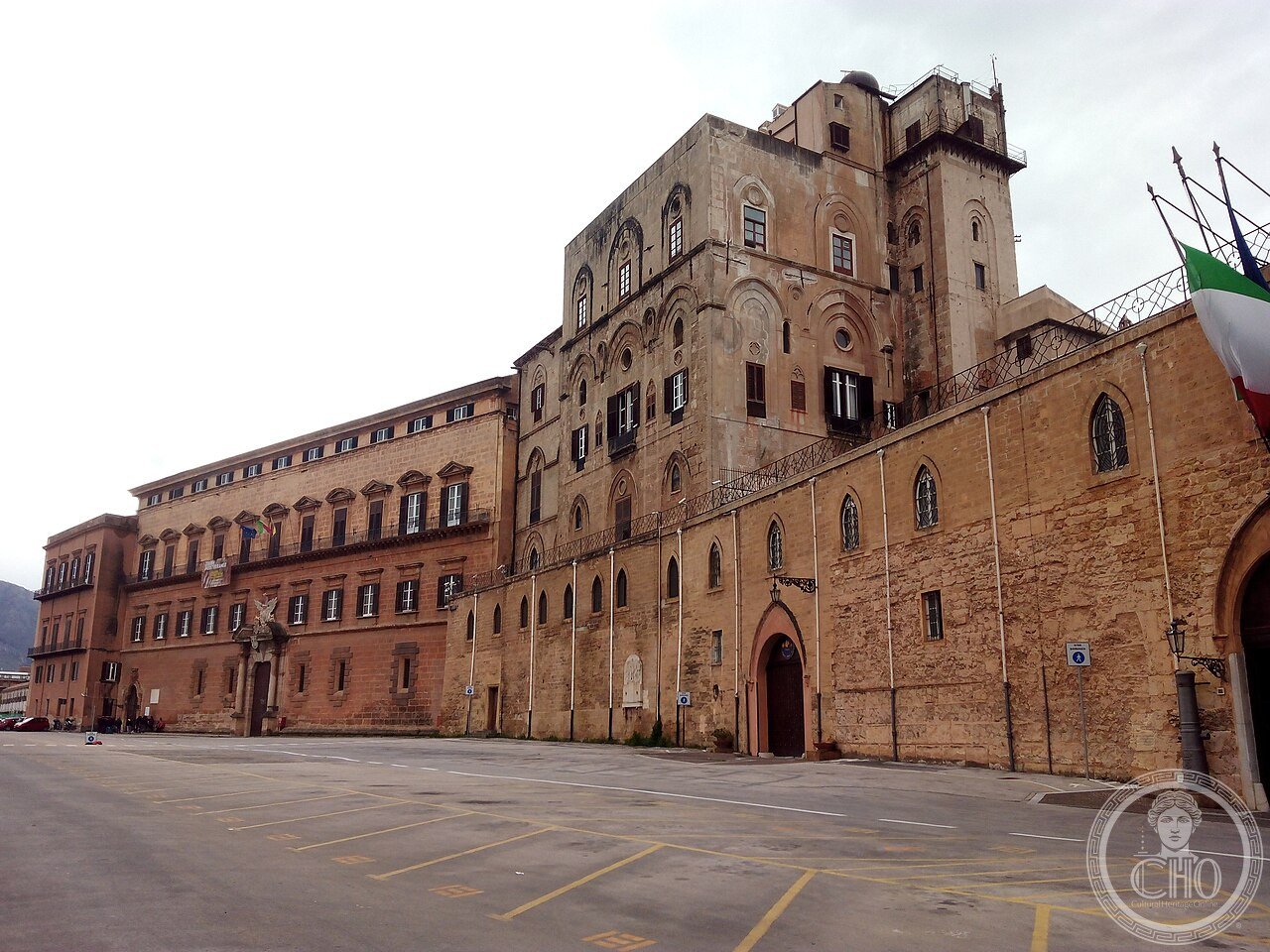
A UNESCO World Heritage serial site encompassing nine monuments of Arab-Norman architecture across Sicily, blending Islamic, Byzantine and Norman influences.
At a glance
This serial site represents one of Europe’s most sophisticated medieval syntheses, where Arab-Norman craftsmanship transformed Sicily into a bridge between worlds. The ensemble spans three cities and includes two palaces, three cathedrals, four churches and a historic bridge—all built during the Norman period when Sicily absorbed influences from the Arab south and the Christian north.
History
Norman conquest of Sicily in the late 11th century created a unique cultural moment. Arab-Norman architecture emerged from this collision of cultures, blending decorative traditions, building techniques and spatial concepts from multiple civilizations. The monuments were constructed over generations as Norman rulers consolidated power and established their courts.
Seven of the nine sites are located in Palermo, the Norman capital, while Cefalù and Monreale each house major cathedral complexes that anchored religious and civic authority.
What you see
The sites display characteristic Arab-Norman features: pointed arches, intricate stone carving, marble inlay, geometric patterns and harmonious proportions. Mosaics, muqarnas (honeycomb vaults) and marble columns reflect the Islamic heritage, while Christian imagery, Romanesque forms and Byzantine splendor speak to the Norman court’s religious identity. The palaces showcase domestic magnificence; the cathedrals combine spiritual grandeur with decorative richness.
Cultural significance
Arab-Norman Palermo represents a rare medieval moment of cultural pluralism, where three civilizations coexisted and enriched one another artistically. These monuments influenced European and Mediterranean architecture for centuries. The serial site was recognized by UNESCO as testimony to exceptional human creativity and cultural exchange during the 12th and 13th centuries.
Key facts
- Nine monuments across Palermo, Cefalù and Monreale
- Includes 2 palaces, 3 cathedrals, 4 churches, 1 bridge
- UNESCO World Heritage List (serial site)
- Address: Via Vittorio Emanuele, 353, 90134, Palermo
- Coordinates: 38.1151929, 13.3602107
- Phone: 091.6116368
- Website: http://arabonormannaunesco.it/
Practical information
Opening hours and admission fees vary by individual monument and location. Contact the official website or phone number for details on visiting each site and current conditions.
Getting there
Palermo is easily reached by air, train and car. The central monuments are walkable from the historic center. Cefalù and Monreale are day-trip destinations accessible by car or public transport from Palermo.
See the place
Sources & resources
Find it on the map
See this place and what’s around it →📷 Become a Cultural Heritage Online photographer
Share your photos of places: they stay published under your name as the author. The more they're seen, the more you get noticed — and soon a contest will reward the most appreciated photos.
Log in or sign up free to add a photoIs this page about you?
This page is read by travellers and heritage enthusiasts who find it on Google. Tell us how you are connected to this place and we will take it from there.