
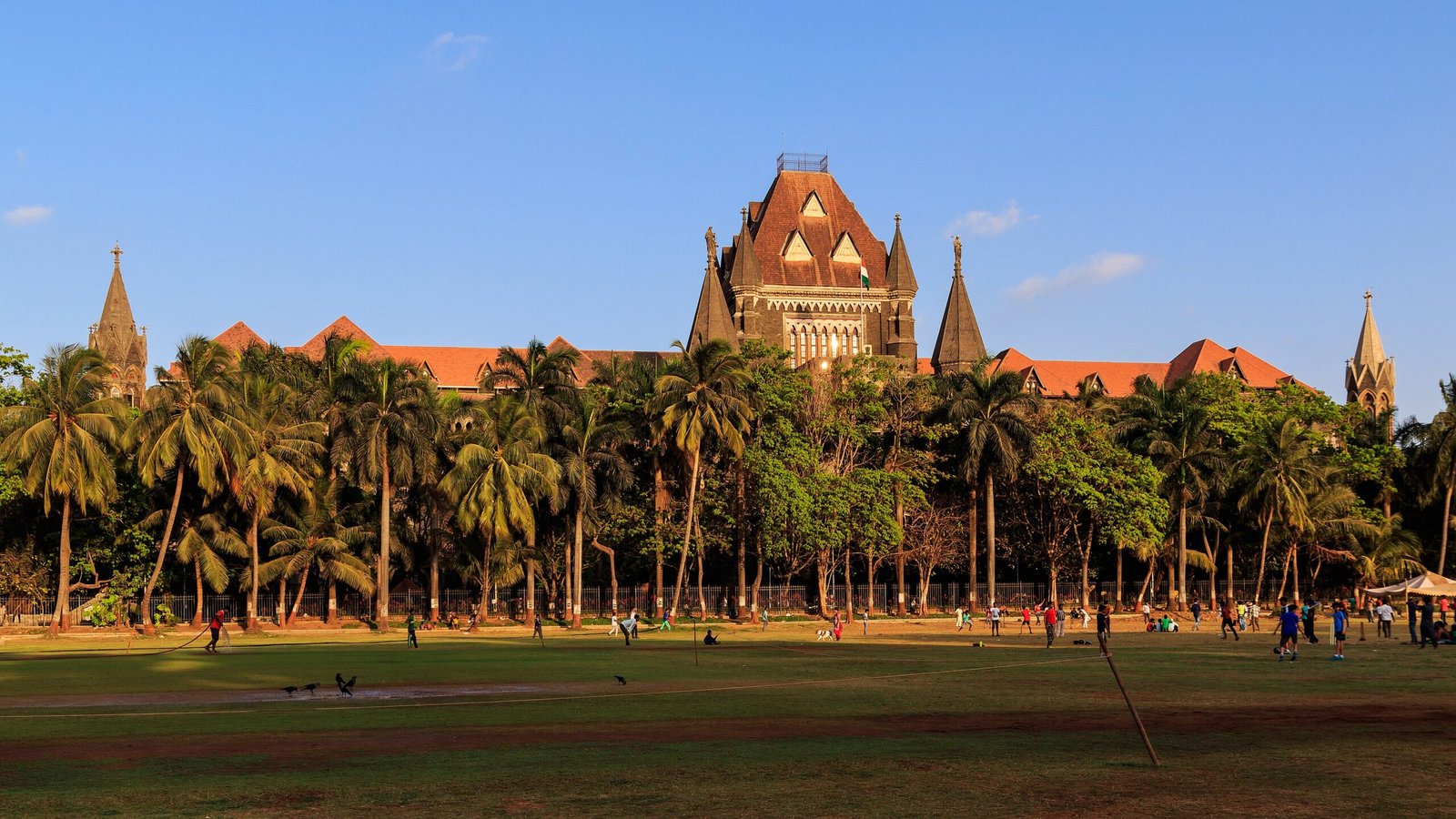
The only city in the world where a Victorian Gothic civic quarter and the largest Art Deco district in Asia outside Shanghai stand face to face across a colonial esplanade — inscribed by UNESCO in 2018.
At a glance
Along Mumbai’s eastern waterfront, two architectural eras converge in a display found nowhere else on Earth. The Victorian Gothic ensemble — ten monumental civic buildings erected 1867–1888 — represents the most significant collection of Victorian Gothic architecture outside Britain, adapted for tropical India with open verandahs, local basalt, and Indo-Saracenic ornament. Directly across the Oval Maidan, the Art Deco ensemble of Marine Drive (1920s–1950s) contains over 160 Streamline Moderne and Deco Gothique apartment buildings — the densest Art Deco district in Asia. UNESCO recognised both ensembles together as a single World Heritage Site in 2018, acknowledging Mumbai as the only city in the world to possess two intact 19th- and 20th-century European architectural movements in adjacent urban districts.
Key facts
- UNESCO inscription: 2018 (World Heritage Site)
- Victorian Gothic buildings: 10 principal civic structures, 1867–1888
- Art Deco buildings: over 160 apartment buildings, 1920s–1950s
- Location: Fort district and Marine Drive, south Mumbai
- Architect (Victorian): Various — notably Frederick William Stevens, James Trubshawe, George Gilbert Scott
- Style: Gothic Revival adapted for tropics + Streamline Moderne / Deco Gothique
- Outstanding Universal Value: Unique co-presence of two intact European architectural movements in a single city
History
In the 1860s the British colonial administration of Bombay undertook a monumental transformation of the city’s eastern esplanade. Following the demolition of the old fortifications, a sweeping seafront promenade was created, and along it the colonial government constructed a series of public institutions in the then-fashionable Gothic Revival style — the same style then reshaping the centres of London, Paris, and Vienna. The Bombay architects adapted it boldly: open arcaded verandahs replaced solid stone walls to prevent tropical overheating; local Kurla basalt and Porbandar limestone replaced European stone; decorative programmes blended pointed Gothic arches with Hindu and Saracenic motifs. The buildings that resulted — the Bombay High Court (1878), the University Library and Rajabai Clock Tower (1878), the Secretariat (1874), Elphinstone College (1888) — were unlike anything in Britain.
From the 1920s onward, the newly reclaimed Back Bay seafront (Marine Drive) became the canvas for a second architectural revolution. Mumbai’s emerging middle class — Parsi, Hindu, Muslim — commissioned apartments in the international Art Deco styles sweeping from Paris and Miami. The result was Asia’s largest concentration of Art Deco residential architecture, built in a remarkably short window and preserved almost intact to this day.
What you see
The Victorian Gothic ensemble lines the eastern seafront and Oval Maidan. Its crown jewel is the Bombay High Court (1878), a forest of Gothic spires and flying buttresses in grey basalt, topped by a figure of Justice and a figure of Mercy. Adjacent stands the University of Mumbai complex: the Rajabai Clock Tower (inspired by London’s Big Ben but crowned with carvings of Parsi, Hindu, and Muslim figures) and the University Library, both designed by George Gilbert Scott. The Chhatrapati Shivaji Maharaj Vastu Sangrahalaya (the old Prince of Wales Museum, 1923), while slightly later, forms part of the same civic district.
The Art Deco ensemble runs the full length of Marine Drive (Netaji Subhash Chandra Bose Road) and its back streets. Walk the crescent at dusk: the sun catches the horizontal banding, geometric grilles, and stylised floral motifs of hundreds of apartment facades. The buildings here were built for families — not monuments — yet their collective grandeur rivals Miami’s South Beach District. Signature details include lotus-blossom capitals, sunrise motifs, aeroplane weathervanes, and the characteristic curved corner balconies of Streamline Moderne.
Practical information
- Access: Both ensembles are public streets — free to walk at any time
- Best time: Early morning (golden light on the Gothic facades); Marine Drive at sunset for the Art Deco crescent
- Guided tours: Available through the Bombay Heritage Walks organisation (www.bombayheritagewalks.com)
- Photography: Unrestricted on exteriors; some interiors require permission (High Court is a functioning court)
- Duration: Victorian Gothic circuit: 2–3 hours on foot; Marine Drive walk: 1–2 hours
- Nearest metro: CSMT (Chhatrapati Shivaji Maharaj Terminus) station for the Gothic quarter
Getting there
The Victorian Gothic ensemble is clustered around Oval Maidan and the Fort district in south Mumbai — a 10-minute walk from Chhatrapati Shivaji Maharaj Terminus (CSMT), well served by suburban railway and metro. Marine Drive begins at Nariman Point; the full crescent is 3.6 km and walkable. Mumbai’s international airport (Chhatrapati Shivaji Maharaj International Airport) is approximately 25–30 km north, connected by the Mumbai Metro Line 1 and Line 7, or taxi/ride-hail.
Nearby
The Chhatrapati Shivaji Maharaj Terminus (Victoria Terminus, 1888) — itself a UNESCO World Heritage Site since 2004 — stands just 500 metres east, a Gothic-Mughal fusion that is arguably the most spectacular railway station in the world. Kala Ghoda, the city’s arts and gallery district, bridges the two ensembles. The Gateway of India (1924) and the Taj Mahal Palace Hotel (1903) are a 15-minute walk south along the waterfront. The Elephanta Caves UNESCO site is a 1-hour ferry ride from the Gateway.
Sources
- UNESCO World Heritage List — Victorian Gothic and Art Deco Ensembles of Mumbai (Ref. 1480): whc.unesco.org/en/list/1480
- Wikipedia: Victorian Gothic and Art Deco Ensembles of Mumbai
- Bombay Heritage Walks: bombayheritagewalks.com
Find it on the map
See this place and what’s around it →📷 Become a Cultural Heritage Online photographer
Share your photos of places: they stay published under your name as the author. The more they're seen, the more you get noticed — and soon a contest will reward the most appreciated photos.
Log in or sign up free to add a photo