
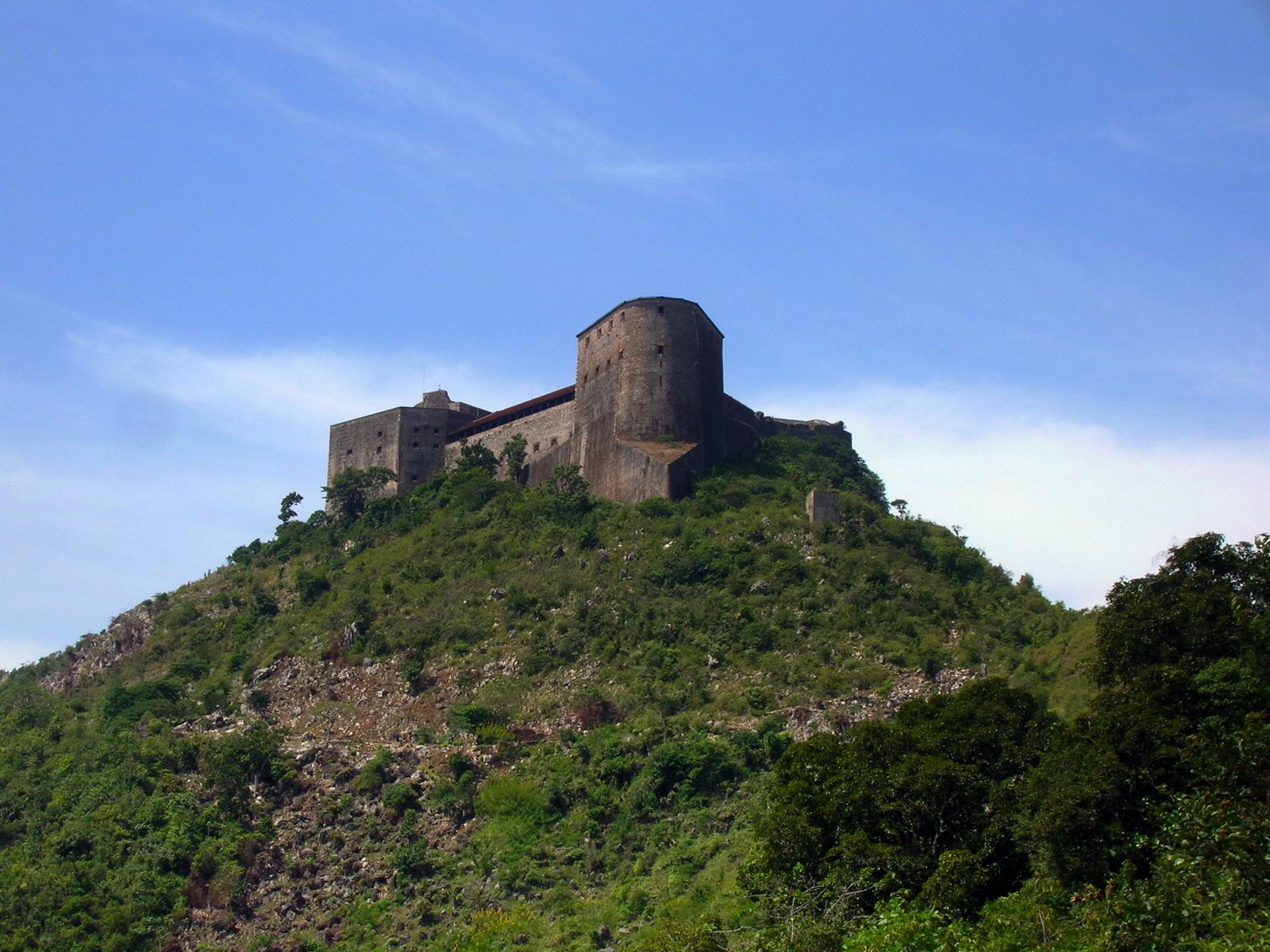
Perched on a 970-metre peak in northern Haiti, the Citadelle Laferrière is one of the most powerful symbols of freedom ever built — a mountaintop fortress raised by formerly enslaved people who had just defeated Napoleon’s army and created the world’s first Black republic, inscribed by UNESCO in 1982 as an irreplaceable monument to human dignity and self-determination.
At a glance
The National History Park encompasses three sites in the Massif du Nord of northern Haiti: the Citadelle Laferrière (the great mountaintop fortress), Sans Souci Palace (the ruined royal palace at the base of the mountain), and the Ramiers outpost structures. All were built between 1805 and 1820 under King Henri Christophe, who ruled northern Haiti after the revolution that made Haiti the first Black republic and the first nation founded by formerly enslaved people, following the defeat of Napoleon’s forces in 1804.
Key facts
- UNESCO inscription: 1982 (List No. 180) — the earliest Caribbean WHS
- Builder: King Henri Christophe (1767–1820), King of northern Haiti from 1811
- Construction: 1805–1820; approximately 20,000 workers
- Citadelle altitude: 970 metres above sea level, Massif du Nord
- Walls: 3–4 metres thick, up to 40 metres high
- Garrison capacity: 5,000 soldiers
- Armament: 365 cannons; cannon balls still stacked in pyramids on the terraces
- Sans Souci: Royal palace begun 1810; ruined by the 1842 earthquake
History
Haiti’s revolution (1791–1804) was the only successful large-scale slave revolt in history. The formerly enslaved African population of Saint-Domingue defeated in turn the colonial French, the invading British, and finally Napoleon’s expedition — establishing on 1 January 1804 the independent Republic of Haiti, the first Black republic in the world. Henri Christophe, born into slavery on the island of Grenada, rose through the revolutionary ranks to become the dominant military figure in the north and eventually declared himself King Henri I of a northern Haitian kingdom in 1811. His overriding obsession was that the new nation could not survive without impregnable defences against an inevitable French reconquest attempt. Work on the Citadelle began in 1805 while the revolution was still raw, using the labour of formerly enslaved people — now free citizens — in a massive collective act of national self-protection. Christophe’s kingdom collapsed in 1820 when his forces mutinied; he shot himself with a silver bullet. The feared French reconquest never came. The fortress was never attacked.
What you see
The approach to the Citadelle is itself an experience: the path from Milot climbs steeply through tropical forest for about an hour on foot or by horse. The fortress emerges gradually — first the enormous prow-shaped south-west wall rising sheer from the mountain summit, resembling the bow of a warship, then the full extent of an irregular polygon of walls that follows every contour of the peak. Inside, the scale is staggering: vaulted galleries, brick-arched ammunition magazines, palace rooms for Christophe’s court, vast cisterns capable of holding a year’s water supply, and everywhere the cannon balls — thousands of them, stacked in neat pyramids on the terraces exactly as they were placed two centuries ago. The views from the ramparts extend across the Plaine du Nord and on clear days to Cuba. Down at Milot, Sans Souci Palace is a magnificent romantic ruin of European-scale arcaded facades rising from the tropical vegetation that began reclaiming it after 1842.
Outstanding Universal Value
UNESCO recognised the complex as the physical embodiment of one of history’s most significant acts of human liberation. The Citadelle represents the first act of monumental self-assertion by a formerly enslaved people: the deliberate construction of a civilisation-scale project that demonstrated Haiti’s permanence and capability. Sans Souci Palace, modelled on Versailles, made the same assertion in a different register — that the new Black republic could produce architecture, art, and governance equal to any European court. The complex is unique in world heritage: there is no other site that memorialises the establishment of the first nation founded by people who freed themselves from slavery through armed revolution.
Practical information
- Access point: Milot village, 12 km south of Cap-Haïtien in the Nord Department
- From Cap-Haïtien: 20–30 minutes by road; tap-taps (shared minibuses) and moto-taxis available
- Ascent to Citadelle: 45–60 minutes on foot from the park entrance; horses available for hire at Milot; the path is steep but maintained
- Sans Souci: At the base of the hill, adjacent to Milot; accessible without the climb
- Opening hours: Daily 8:00–17:00; entrance fees apply; official guides available and recommended
- Safety: Check current travel advisories for Haiti before visiting; organise logistics from Cap-Haïtien with a reputable local operator
Getting there
Cap-Haïtien International Airport (CAP) receives flights from Port-au-Prince and some regional Caribbean connections. From Cap-Haïtien city, the road to Milot (12 km south) is passable by car. Guided day trips from Cap-Haïtien typically include transport, the horse ascent option, guides, and lunch in Milot. For the most recent safety and logistics advice, consult a specialist Haiti travel operator or the ICOMOS Haiti cultural heritage network.
Nearby
Cap-Haïtien (12 km north) is Haiti’s second city and former colonial capital (Cap-Français), with a historic centre of 18th-century French colonial architecture. The Sans-Souci neighbourhood in Cap-Haïtien preserves colonial streetscapes. Labadie beach (15 km north-west) is a popular coastal destination. The Plaine du Nord, the agricultural heartland of northern Haiti, contains several sites associated with the revolution of 1791–1804.
Sources
- UNESCO World Heritage: National History Park – Citadel, Sans Souci, Ramiers (List No. 180)
- Wikipedia: Citadelle Laferrière
- Wikipedia: Sans-Souci Palace
- Wikipedia: Henri Christophe
Find it on the map
See this place and what’s around it →📷 Become a Cultural Heritage Online photographer
Share your photos of places: they stay published under your name as the author. The more they're seen, the more you get noticed — and soon a contest will reward the most appreciated photos.
Log in or sign up free to add a photo