
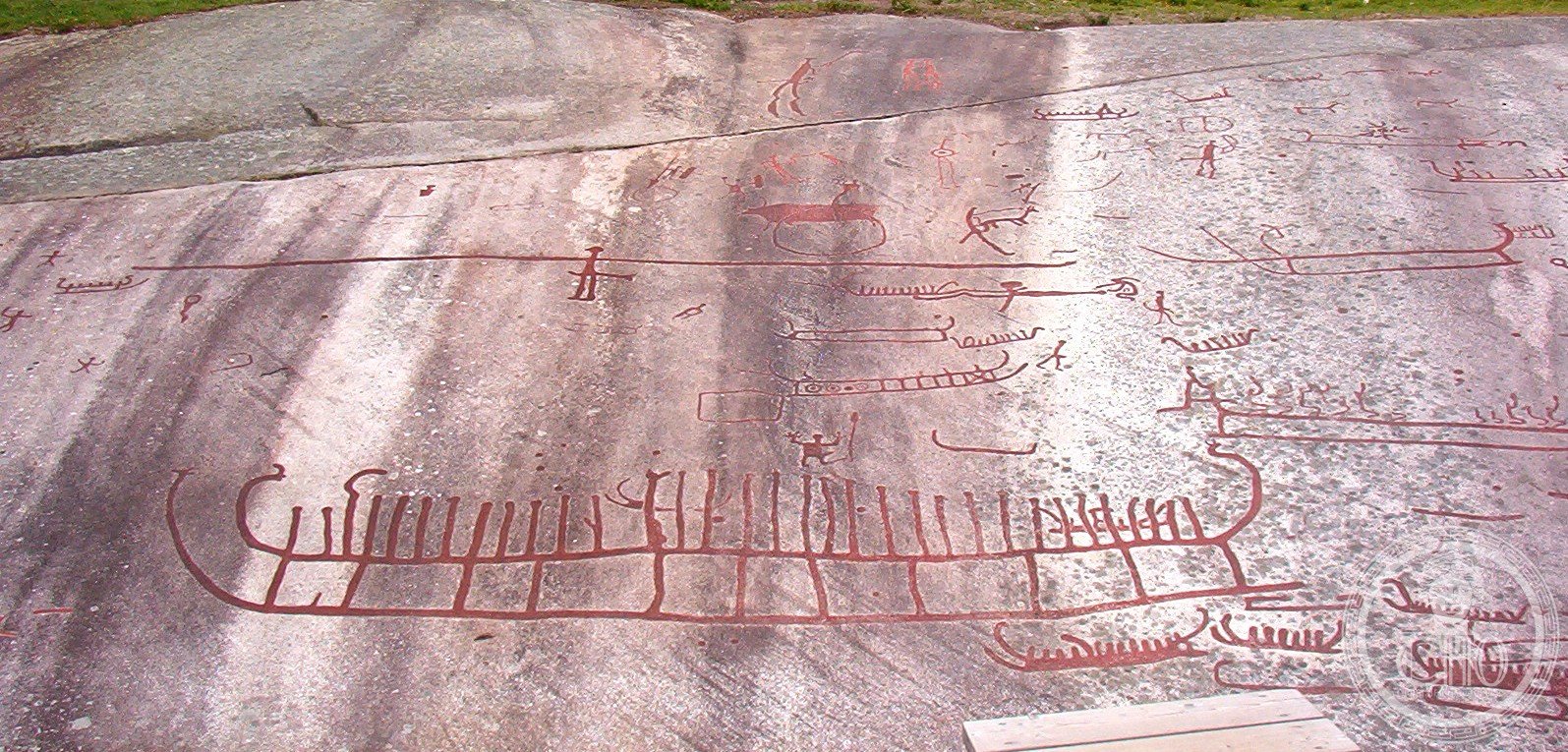
On the west coast of Sweden, 1,500 granite outcrops carry 50,000 Bronze Age figures — ships, warriors, animals and ritual scenes — making Tanum the densest concentration of prehistoric rock art in northern Europe and a UNESCO World Heritage Site since 1994.
At a glance
The Tanum municipality in Bohuslän contains at least 1,500 carved rock panels with an estimated 50,000 individual figures, the largest concentration of Bronze Age petroglyphs in Scandinavia. Created between approximately 1800 and 500 BCE during the Nordic Bronze Age, the carvings record a world of seafarers, warriors, fertility rituals and cosmological beliefs. UNESCO inscribed the Tanum landscape in 1994, recognising its exceptional preservation of an entire Bronze Age ritual world.
Key facts
- UNESCO inscription: 1994 (World Heritage Site)
- Period: c. 1800-500 BCE (Nordic Bronze Age)
- Rock panels: at least 1,500 recorded in Tanum municipality
- Individual figures: estimated 50,000+
- Most common motif: ships (over 2,000 carved vessels)
- Location: Bohuslän, west coast of Sweden, near Norwegian border
- Rock type: gently sloping granite, light-coloured with shallow carved grooves
- Repainting: carvings repainted red in summer for visibility
History
The Bronze Age people of Bohuslän began carving these granite outcrops around 1800 BCE, continuing for over a millennium until approximately 500 BCE. During this period the coastline lay much closer and boats were the fundamental technology of life. This explains why ships dominate: over 2,000 carved vessels have been documented in Tanum, ranging from small craft to large boats carrying up to 60 rowers in precise profile.
The carvings were deliberate ritual statements, likely connected to seasonal ceremonies, rites of passage and the veneration of ancestors. The concentration of carvings in specific localities suggests these were recognised sacred places returned to generation after generation. The act of carving deepened existing grooves, reinforcing continuity across centuries.
After the Bronze Age the carvings were forgotten beneath turf and moss. Systematic documentation began in the 19th century, revealing the extraordinary density that eventually brought UNESCO recognition. The Vitlycke Museum is now the main interpretive centre.
What you see
The Tanum rock art landscape is an open-air museum spread across gentle granite slopes. The carvings (called hallristningar in Swedish) are incised as shallow cup-marks, grooves and outline figures, repainted red each summer with a non-toxic mineral pigment.
Ships are the defining image: broad-hulled vessels in profile, prows often curved into animal heads, hulls packed with rowers or warriors. Human figures appear in almost every context: warriors, acrobats, couples in ritual embrace, musicians playing lurs. Animals include deer, horses, oxen, fish and snakes.
The most famous panel is the Vitlycke bridal couple — two figures in an embrace conveying ritual importance. Other key sites include Aspeberget, Fossum, and Litsleby with its 2.3-metre-tall warrior figure.
Practical information
- Main access point: Vitlycke Museum, Vitlycke 2, 457 93 Tanumshede
- Opening hours: daily in summer (June-August), reduced hours spring/autumn
- Entry: rock carving sites free and always accessible; museum entry has a small fee
- Best season: June-August when carvings are freshly repainted
- Photography: permitted everywhere; overcast light works best for red-painted panels
- Guided tours: available from Vitlycke Museum, including evening torch-lit tours
- Accessibility: Vitlycke main panel has paved path and is wheelchair-accessible
Getting there
Tanum is located 130 km north of Gothenburg on the E6 motorway. By car from Gothenburg, take the E6 north to Tanumshede exit, around 90 minutes. By train, take the Bohusbanan line to Tanumshede station (3 km from Vitlycke Museum). From Oslo, the E6 south crosses into Sweden and reaches Tanum in approximately 2 hours. Nearest airports: Gothenburg Landvetter (GOT, 150 km) and Oslo Gardermoen (OSL, 200 km).
Nearby
The Bohuslän coast surrounding Tanum offers rich heritage and natural landscape. Koster Islands National Park, Sweden first marine national park, lies 30 km west. Smögen fishing village, 50 km south, is one of Sweden most photographed wooden harbour towns. Across the border: Fredriksten Fortress in Halden, Norway is 60 km north. Within Tanum municipality, Bronze Age burial mounds near the rock carving sites complete the prehistoric landscape.
Sources
- UNESCO World Heritage List — Rock Carvings in Tanum (1994)
- Vitlycke Museum — vitlyckemuseum.se
- Wikipedia — Rock carvings in Tanum
- Swedish National Heritage Board (Riksantikvarieämbetet) — SHFA petroglyphs database
Find it on the map
See this place and what’s around it →📷 Become a Cultural Heritage Online photographer
Share your photos of places: they stay published under your name as the author. The more they're seen, the more you get noticed — and soon a contest will reward the most appreciated photos.
Log in or sign up free to add a photo