
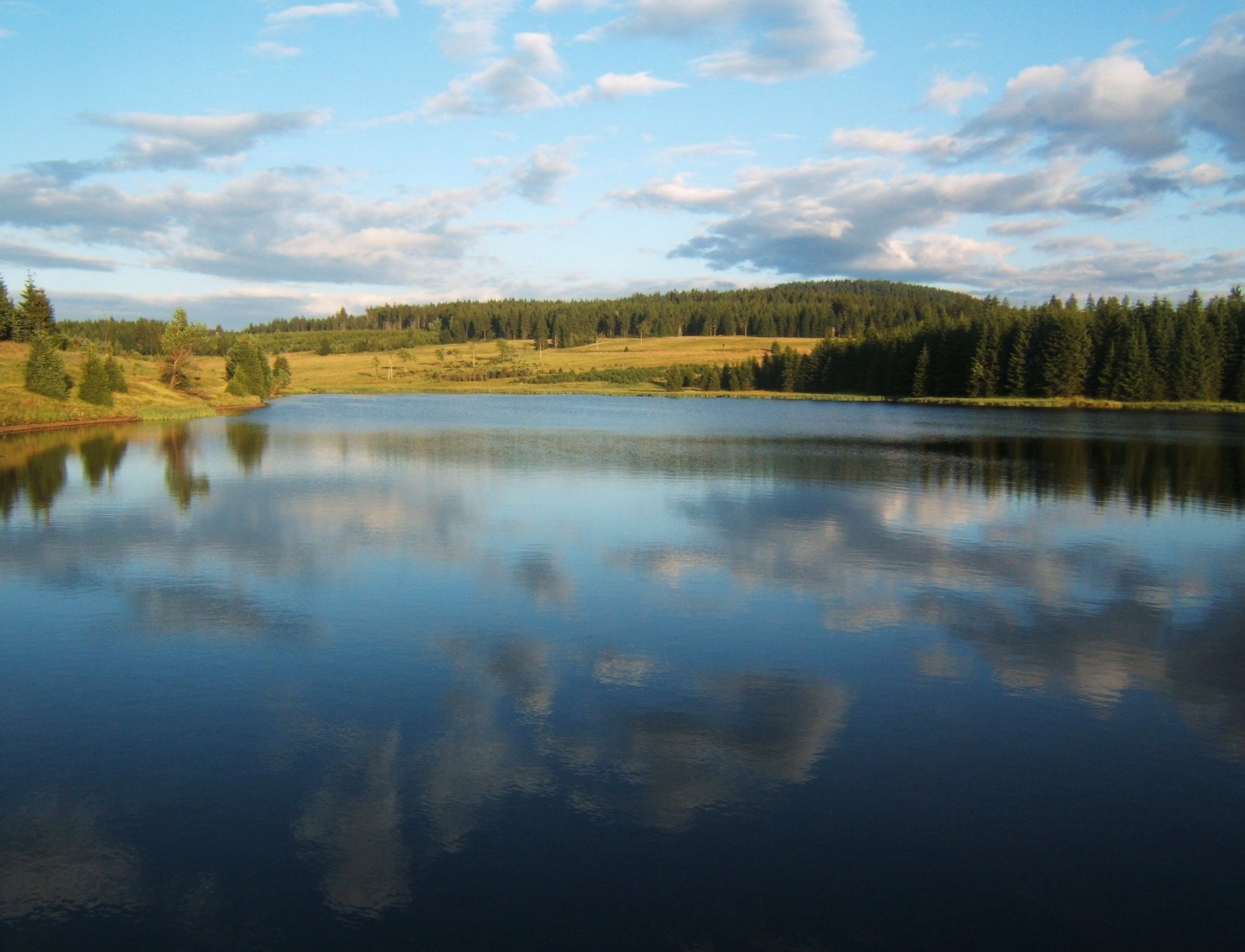
The mountain range straddling the German-Czech border that for 800 years produced the silver that financed the Holy Roman Empire — coined the word “dollar” — and invented the Christmas traditions that spread around the world: a working-class landscape of extraordinary cultural depth.
At a glance
The Ore Mountains (German: Erzgebirge; Czech: Krušnohoří) form a ridge 150 km long along the border of Saxony (Germany) and Bohemia (Czech Republic). From the first silver strike at Freiberg in 1168 CE through 20th-century uranium mining, the region was one of the most intensively mined landscapes in Europe. UNESCO inscribed 22 component sites as a World Heritage Cultural Landscape in 2019 for their outstanding representation of mining heritage across eight centuries.
The inscription recognises not only the physical infrastructure — shaft mines, smelting works, and one of the world’s most sophisticated historic water management systems (the Revierwasserlaufanstalt) — but also the unique folk culture that mining communities created: wood carving, lace-making, and the Christmas wooden crafts (pyramids, nutcrackers, Räuchermännchen) that became global traditions.
Key facts
- UNESCO inscription: 2019 (criteria ii, iii, iv) — 22 component sites across Germany and Czech Republic
- First silver strike: Freiberg, 1168 CE; peak production 15th–16th centuries
- The dollar origin: Joachimsthaler silver coins (1519) → Thaler → dollar
- Water management system: Revierwasserlaufanstalt — 100 km network of channels, ponds, and wheels
- Key historic towns: Freiberg (DE), Annaberg-Buchholz (DE), Jáchymov/Joachimsthal (CZ)
- Uranium mining: 20th century; Jáchymov was where Marie Curie’s radium ore was sourced
- Visitor mines: Reiche Zeche, Freiberg (underground tours); Silberbergwerk Freiberg
- Folk craft: Wooden Christmas pyramids, nutcrackers, and Räuchermännchen (smoker figures) originate here
History
Silver was discovered near Freiberg in 1168, triggering the first great medieval mining rush in Central Europe. Within decades, Freiberg had grown into a major city. The region’s silver financed the Wettin dynasty (rulers of Saxony) and later the Holy Roman Emperors. At peak production in the 15th and 16th centuries, the Erzgebirge supplied a significant fraction of all the silver circulating in Europe.
In 1516, an enormous silver deposit was discovered at Joachimsthal (today’s Jáchymov) on the Bohemian side of the mountains. The local lords began minting large silver coins there in 1519 — called Joachimsthaler. The name was shortened to Thaler, which then became Daler in Dutch and Scandinavian usage and eventually dollar in English. Every time someone uses the word dollar, they are speaking the echo of this mountain valley.
The Erzgebirge miners developed extraordinary technical solutions to the challenge of deep mining: ventilation systems, drainage tunnels (Stolln) kilometres long, and the Revierwasserlaufanstalt — a 100 km network of channels, ponds, and water wheels that harnessed the mountain streams to power pumping and crushing machinery across the entire region. This system, built from the 16th to 19th centuries, is one of the most sophisticated pre-industrial hydraulic engineering works in the world.
When the silver ran out in the 17th century, the miners turned to other ores — tin, cobalt, bismuth — and to cottage industries. Cut off from agricultural lowlands by the mountains, mining families developed intricate woodcarving and lace-making traditions through the long winter months. These crafts produced the carved wooden Christmas figures — pyramids with rotating blades, nutcrackers, smoking men — that exported worldwide from the 18th century and are now the globally recognised symbols of Christmas.
In the 20th century, Jáchymov’s uranium deposits (which had supplied Marie Curie’s research) made the Czech side strategically vital: after 1945, the Soviets ran forced-labour camps there mining uranium for nuclear weapons. This dark history layers over the centuries of silver and craft.
What you see
The 22 UNESCO component sites span both sides of the border and include historic mining towns, preserved shaft-head structures, smelting landscapes, and segments of the hydraulic system. The most accessible starting point is Freiberg (Germany): a beautifully preserved mining town with a late-Gothic Dom (cathedral) with an extraordinary tulip pulpit, a Mining Academy founded in 1765 (the world’s first mining university), and the Reiche Zeche mine with underground tours. The silver-mining history is concentrated in the Freiberg Mining Region component site.
Annaberg-Buchholz showcases the late-Gothic St. Anne’s Church — built in a single generation on silver wealth — and the Erzgebirge Museum with the iconic Christmas craft collection. On the Czech side, Jáchymov (formerly Joachimsthal) has the first mint where Joachimsthalers were struck, a fascinating mining museum, and spa facilities built on the radioactive spring waters that once made it a fashionable resort.
Practical information
- German entry point: Freiberg (Saxony) — 30 min by train from Dresden
- Czech entry point: Jáchymov — accessible by bus from Karlovy Vary
- Underground mine tours: Reiche Zeche, Freiberg: book via tu-freiberg.de; full mining costume and helmet included
- Best season: December for Annaberg-Buchholz Christmas market (authentic regional crafts); summer for hiking the hydraulic water-trail
- Language note: German dominates; Czech tourist infrastructure improving post-inscription
Getting there
Freiberg is the most convenient gateway: 30 minutes by regional train from Dresden Hauptbahnhof. By car, the A4 Autobahn exits at Freiberg. Annaberg-Buchholz is 45 km south of Chemnitz. Cross-border visits require a car; there is no direct public transport connecting the German and Czech component sites.
Nearby
- Dresden — 45 km north; Baroque capital with the Zwinger palace and Albertinum art museum
- Meissen — 35 km north; birthplace of European porcelain, UNESCO-listed Albrechtsburg
- Karlovy Vary — 40 km west (Czech Republic); 19th-century spa town, film festival
- Saxon Switzerland — 60 km northeast; dramatic sandstone table mountains, Bastei bridge
Sources
- UNESCO World Heritage List: Mining Region of the Erzgebirge/Krušnohoří, inscribed 2019
- Saxon State Office for Heritage Management: Erzgebirge WHS documentation
- Wikipedia: Mining Region of the Erzgebirge/Krušnohoří
- Freiberg Mining Academy: tu-freiberg.de
Find it on the map
See this place and what’s around it →📷 Become a Cultural Heritage Online photographer
Share your photos of places: they stay published under your name as the author. The more they're seen, the more you get noticed — and soon a contest will reward the most appreciated photos.
Log in or sign up free to add a photo