
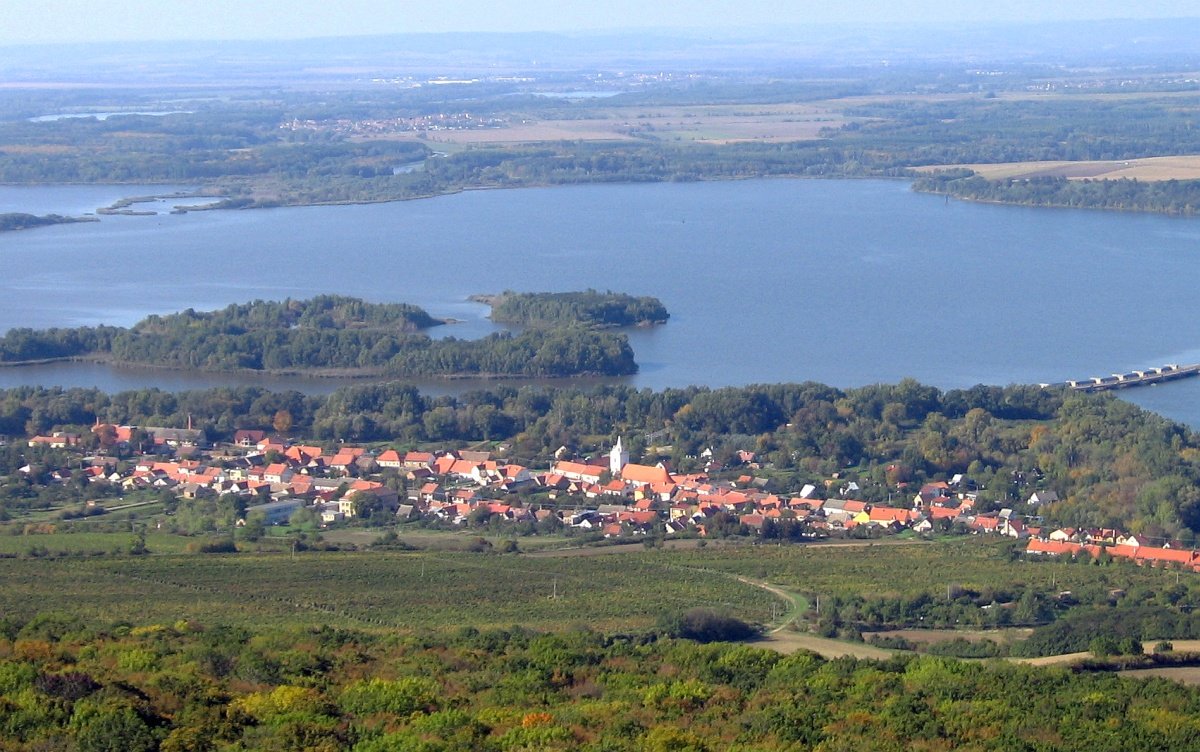
Near a Moravian village in the Czech Republic, a Gravettian campsite has yielded the oldest fired ceramic object in human history — the Venus of Dolni Vestonice — along with the world’s first known kiln and the earliest evidence of woven textiles.
At a glance
Near the village of Dolni Vestonice in South Moravia, in the hills above the Dyje River, a Gravettian culture campsite occupied approximately 29,000-25,000 BC has produced a series of discoveries that fundamentally revised the understanding of Upper Palaeolithic cognitive and technological capabilities. The site, excavated from 1924 onward by Karel Absolon of the Moravian Museum, yielded the Venus of Dolni Vestonice — a fired clay female figurine dated to approximately 29,000-25,000 BC and the oldest known fired ceramic object in human history — as well as what appears to be the world’s oldest kiln and fabric impressions in fired clay representing the earliest known evidence of woven textiles. The Venus of Dolni Vestonice is displayed in the Moravian Museum in Brno; the site itself is preserved partly as an archaeological park.
Key facts
- Culture: Gravettian (Upper Palaeolithic), c. 29,000-25,000 BC
- Key find: Venus of Dolni Vestonice — oldest known fired ceramic object in human history
- Figurine dimensions: 11 cm high; clay-mammoth bone mixture fired at c. 700-800 degrees C
- First kiln: Domed clay structure c. 1 m diameter containing thousands of fired figurine fragments
- Textile evidence: Fabric impressions in fired clay c. 27,000 BC — 15,000 years earlier than previously documented
- Excavations: Karel Absolon (Moravian Museum) from 1924; over four decades of systematic work
- Venus in museum: Moravian Museum (Zemske muzeum), Brno
History
The Gravettian culture — named after the site of La Gravette in France — was a pan-European Upper Palaeolithic complex characterised by distinctive blade tools, communal mammoth hunting, and an explosion of symbolic behaviour including portable figurines, personal ornaments, and site-marking structures. The Dolni Vestonice site was a seasonal or semi-permanent encampment on a Moravian hillside, probably occupied during autumn and winter mammoth-hunting expeditions; faunal remains indicate intensive hunting of mammoth, reindeer, horse, fox, and other species. Excavations beginning in 1924 by Karel Absolon revealed dense occupation deposits spanning several thousand years of Gravettian use.
The discovery of the Venus figurine transformed understanding of Gravettian technology: the deliberate firing of a clay-and-bone-dust mixture at temperatures of 700-800 degrees C — confirmed by analysis — was not a primitive accident but an intentional technological process, predating the independent development of ceramic pottery in Japan by approximately 10,000 years. The associated domed clay structure containing thousands of shattered figurine fragments confirmed the existence of a purpose-built kiln; the shattering of the figurines may represent a ritual action rather than kiln failure. Fabric impressions in fired clay from the same deposits, analysed by Olga Soffer and colleagues in the 1990s, extended the known history of woven textiles by approximately 15,000 years.
What you see
The Dolni Vestonice site is located in agricultural countryside below the Palava Hills near the border with Austria and Slovakia; some portions of the excavated area are preserved as an open archaeological park with interpretive panels, though access to the active excavation zones is restricted. The landscape itself — gentle loess-covered hills above a river valley — helps visitors understand the Gravettian choice of campsite: a sheltered position with commanding views over the floodplain mammoths would have used for seasonal movement, with good stone raw materials available nearby.
The principal objects from Dolni Vestonice — the Venus figurine, animal figurines, fired clay fragments, ornamental items including pierced animal teeth and shells, and bone tools — are displayed in the Moravian Museum (Zemske muzeum) in Brno, approximately 40 km north of the site. The museum’s prehistoric galleries present the Dolni Vestonice material in the context of the wider Moravian Gravettian, with comparisons to the closely contemporary Predmosti and Pavlov sites nearby. The Venus of Dolni Vestonice is one of the most reproduced objects in European prehistory; seeing the original in Brno reveals its small scale and the surface texture of the fired clay.
Practical information
- Site access: Open-air archaeological park elements accessible; interior excavation zones restricted
- Principal collection: Moravian Museum (Zemske muzeum), Mendlovo namesti 1, Brno — recommended as primary destination
- Moravian Museum hours: Tue-Sun; check current schedule at mzm.cz
- Nearby Palava region: Offers wine tourism, limestone hills, and the Mikulov historic town — good base for multi-day visit
- Photography: Permitted at archaeological park; check museum rules for collections galleries
Getting there
Dolni Vestonice village is located approximately 40 km south of Brno in the South Moravian Region, close to the towns of Mikulov and Pasohlavky on the Novomlynske reservoir. From Brno, the site is accessible by car in approximately 45 minutes (take the D2 motorway toward Bratislava, exit toward Mikulov). Public transport connections to the village itself are limited; Mikulov is a better base with regular bus links from Brno. The Moravian Museum in Brno — where the Venus figurine is displayed — is directly accessible from Brno city centre. Brno is served by regular rail and bus connections from Prague (approximately 2.5 hours), Vienna (approximately 1.5 hours), and Bratislava (approximately 1 hour).
Nearby
- Pavlov archaeological site — a closely contemporary Gravettian campsite approximately 5 km from Dolni Vestonice, associated with a rich assemblage of mammoth bone constructions and further Venus figurines
- Predmosti site area — another major Gravettian site near Prerov, approximately 80 km north, associated with a mass mammoth bone burial and among the largest Gravettian sites known
- Mikulov — a well-preserved historic town with a Baroque castle and an important Jewish heritage quarter, 15 km from Dolni Vestonice
- Lednice-Valtice Cultural Landscape — UNESCO World Heritage Site approximately 20 km south; an 18th-19th century designed landscape with two aristocratic palaces connected by a network of follies
Sources
- Absolon, K. — excavation reports, Moravian Museum, Brno, from 1924
- Vandiver, P.B. et al. — The Origins of Ceramic Technology at Dolni Vestonice, Czechoslovakia, Science 246 (1989)
- Soffer, O. et al. — The Venus Figurines: Textiles, Basketry, Gender, and Status, Current Anthropology 41 (2000)
- Wikipedia — Dolni Vestonice (en.wikipedia.org/wiki/Dolni_Vestonice)
- Moravian Museum (Zemske muzeum Brno) — permanent collection documentation
Find it on the map
See this place and what’s around it →📷 Become a Cultural Heritage Online photographer
Share your photos of places: they stay published under your name as the author. The more they're seen, the more you get noticed — and soon a contest will reward the most appreciated photos.
Log in or sign up free to add a photo