
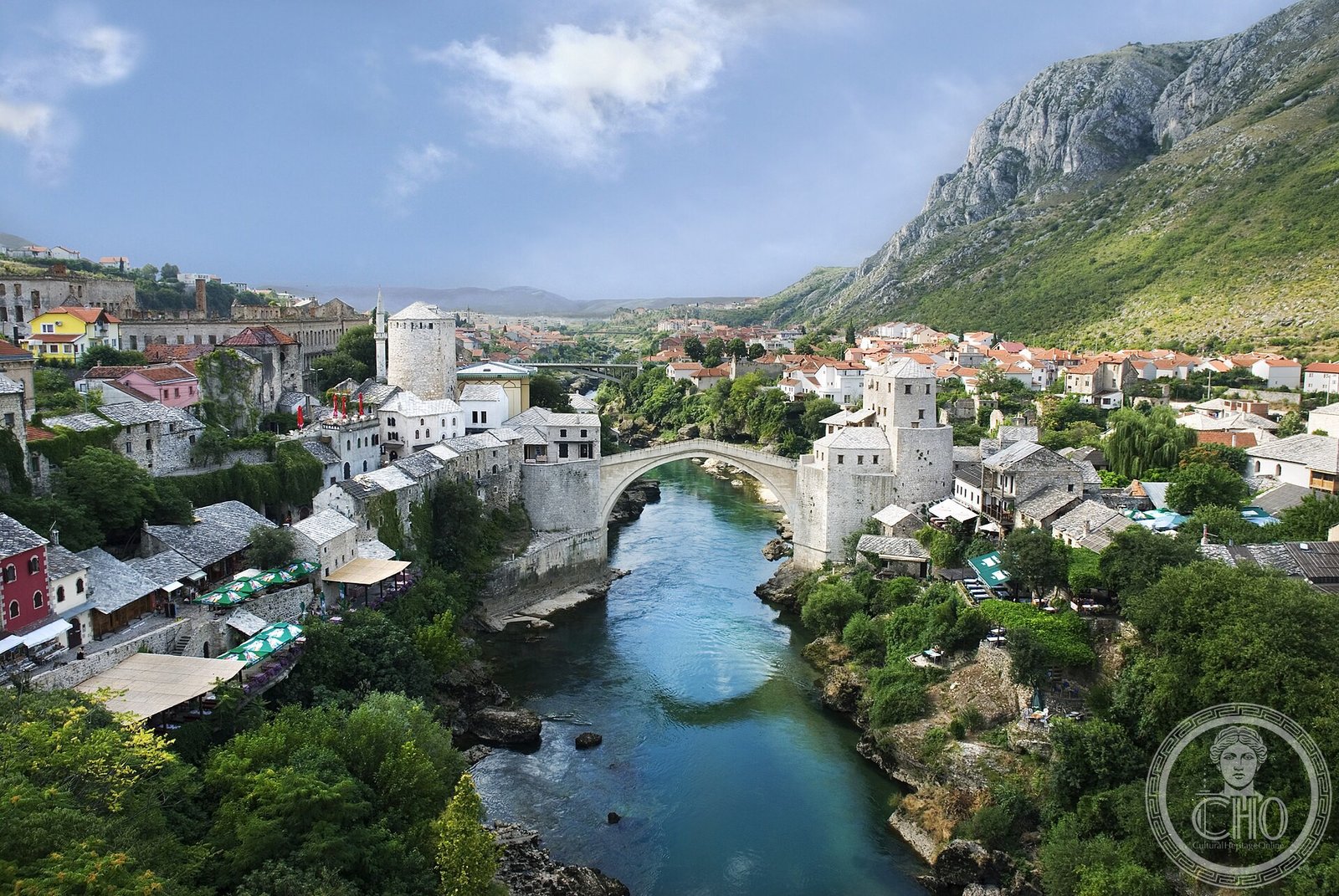
A masterpiece of Ottoman engineering spanning the Neretva River, this iconic bridge has stood as a symbol of connection and resilience through centuries of conflict and reconstruction.
At a glance
Stari Most is a rebuilt 16th-century Ottoman bridge that crosses the Neretva River in Mostar, connecting the city’s eastern and western quarters. Commissioned by Suleiman the Magnificent in 1557, it exemplifies Balkan Islamic architecture at its finest. The city itself is named after the mostari—the bridge keepers who guarded this structure during Ottoman rule.
History
Mimar Hayruddin, a student and apprentice of the renowned architect Mimar Sinan, designed the bridge for Suleiman the Magnificent in 1557. For over four centuries, it served as the vital artery connecting Mostar’s communities.
During the Croat–Bosniak War, the Army of the Republic of Bosnia and Herzegovina used the bridge as a military supply line. In response, the Croatian Defence Council shelled and destroyed it on 9 November 1993. The bridge was subsequently reconstructed and reopened on 23 July 2004. In 2017, the International Criminal Tribunal for the former Yugoslavia (Appeals Chamber) found that the bridge had constituted a military target at the time of its destruction.
What you see
The Old Bridge represents an exemplary piece of Balkan Islamic architecture. Its distinctive design showcases Ottoman engineering principles adapted to the Neretva’s challenging terrain and currents. The reconstruction faithfully recreated the original form, restoring its architectural integrity.
Cultural significance
Beyond its architectural merit, Stari Most embodies the layered history of the Balkans—a structure born under Ottoman patronage that became central to Mostar’s identity and multiethnic character. Its destruction and reconstruction transformed it into a powerful symbol of both conflict and reconciliation in post-war Bosnia and Herzegovina.
Key facts
- Country: Bosnia and Herzegovina
- City: Mostar
- Coordinates: 43.337277777778°N, 17.815027777778°E
- Original commission: 1557 by Suleiman the Magnificent
- Designer: Mimar Hayruddin
- Destroyed: 9 November 1993
- Reopened: 23 July 2004
Practical information & getting there
Mostar is accessible by car, bus, and train from major cities in the region. The Old Bridge is located in the heart of the Old City and is freely accessible to the public. The surrounding area includes museums, galleries, and traditional Turkish houses that merit exploration.
Sources & resources
Find it on the map
See this place and what’s around it →📷 Become a Cultural Heritage Online photographer
Share your photos of places: they stay published under your name as the author. The more they're seen, the more you get noticed — and soon a contest will reward the most appreciated photos.
Log in or sign up free to add a photoIs this page about you?
This page is read by travellers and heritage enthusiasts who find it on Google. Tell us how you are connected to this place and we will take it from there.