
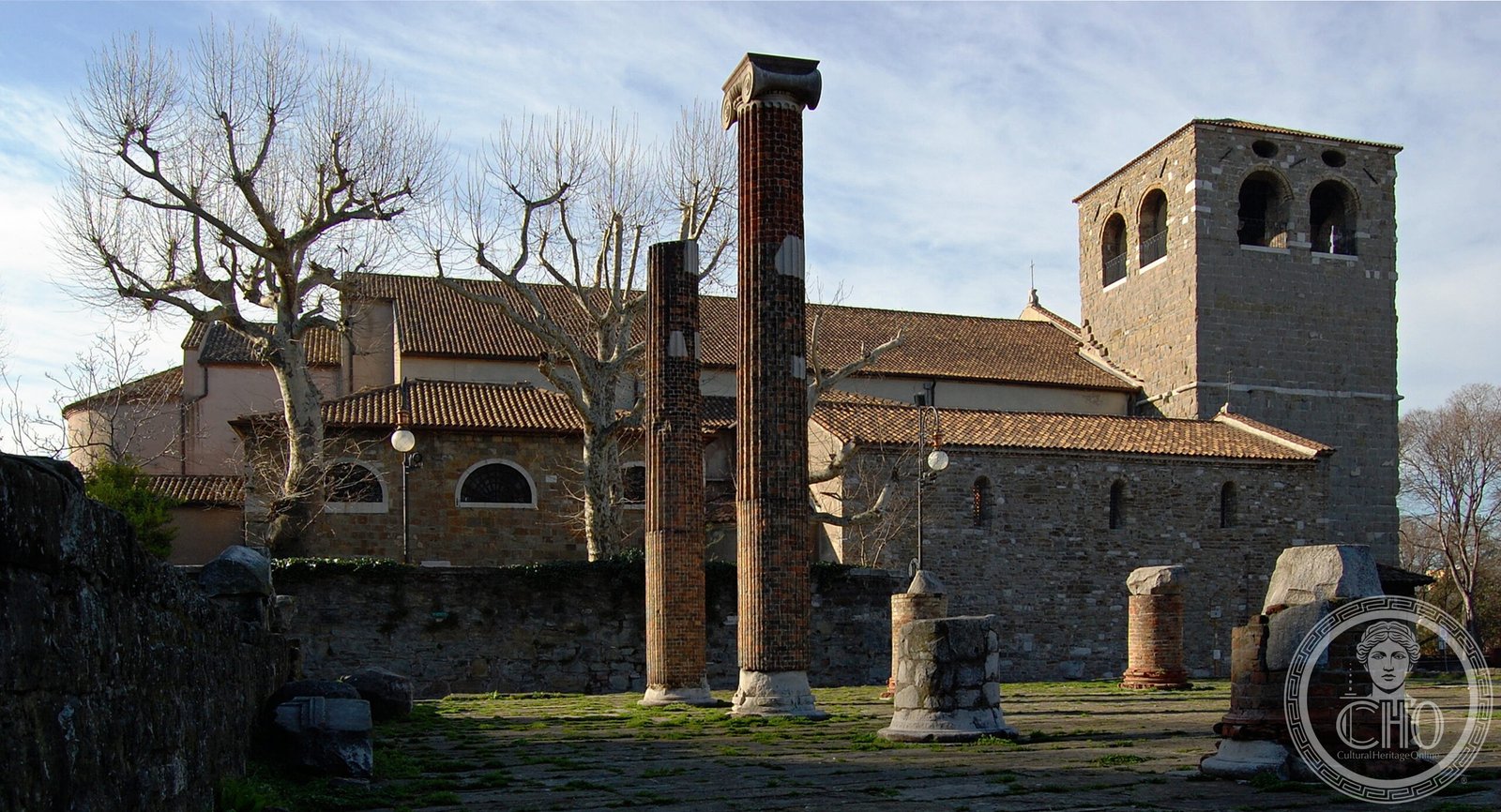
Trieste’s principal Catholic cathedral crowns a hilltop overlooking the city, its unified structure born from the merger of two medieval churches in the early 14th century.
At a glance
The Cathedral Basilica of San Giusto stands as the main religious building in Trieste, dominating the skyline from its elevated position. Created by combining two pre-existing churches, it represents a landmark act of ecclesiastical consolidation and urban renewal.
History
Bishop Rodolfo Pedrazzani da Robecco unified the churches of Santa Maria and San Giusto between 1302 and 1320, bringing them under a single roof to establish an imposing cathedral for the city. The first documented reference appears in 1337, when the bell tower of the former Santa Maria church received reinforcement to support the new structure.
Construction advanced through the 14th century. The bell tower work concluded in 1343, though the broader building campaign continued until century’s end. In 1422, lightning damaged and shortened the original bell tower to its present height.
Following Trieste’s formal submission to Austrian rule in 1382, Emperor Leopold III appointed Enrico de Wildenstein as the city’s first German bishop. On 27 November 1385, he consecrated the cathedral’s main altar. Nearly five centuries later, in November 1899, Pope Leo XIII elevated the cathedral to the rank of minor basilica.
What you see
The cathedral’s most distinctive feature is its dual structure, visible in the unified façade that accommodates the merged churches of Santa Maria and San Giusto. The bell tower, though reduced in height after the 1422 lightning strike, remains a defining element of Trieste’s urban profile. The architectural layers reflect centuries of Triestine history and the evolving styles of medieval religious construction.
Cultural significance
The cathedral embodies Trieste’s complex political and religious history, marking the transition from independent city-state to Austrian dominion. The union of two churches under one roof symbolizes both civic consolidation and ecclesiastical authority. Its elevation to basilica status by the papacy underscored its importance within the Catholic Church and the region’s spiritual identity.
Key facts
- Address: Piazza della Cattedrale, 2, 34121 Trieste
- Coordinates: 45.6464071, 13.7726008
- Region: Friuli Venezia Giulia
Getting there
The cathedral occupies Piazza della Cattedrale on San Giusto Hill, overlooking central Trieste. Public transport and local signage direct visitors to the piazza; the elevated position offers views across the city and Adriatic coastline.
Sources & resources
Find it on the map
See this place and what’s around it →📷 Become a Cultural Heritage Online photographer
Share your photos of places: they stay published under your name as the author. The more they're seen, the more you get noticed — and soon a contest will reward the most appreciated photos.
Log in or sign up free to add a photoIs this page about you?
This page is read by travellers and heritage enthusiasts who find it on Google. Tell us how you are connected to this place and we will take it from there.