
Teramo
An Adriatic city whose layered history spans from Piceni settlements through Roman prosperity to medieval prominence, housing treasures from multiple epochs within its urban fabric.
At a glance
Teramo stands as a regional cultural and ecclesiastical center in northern Abruzzo. The city preserves Roman foundations, medieval landmarks, and Renaissance heritage, with particular richness in its cathedral architecture and archaeological remains.
History
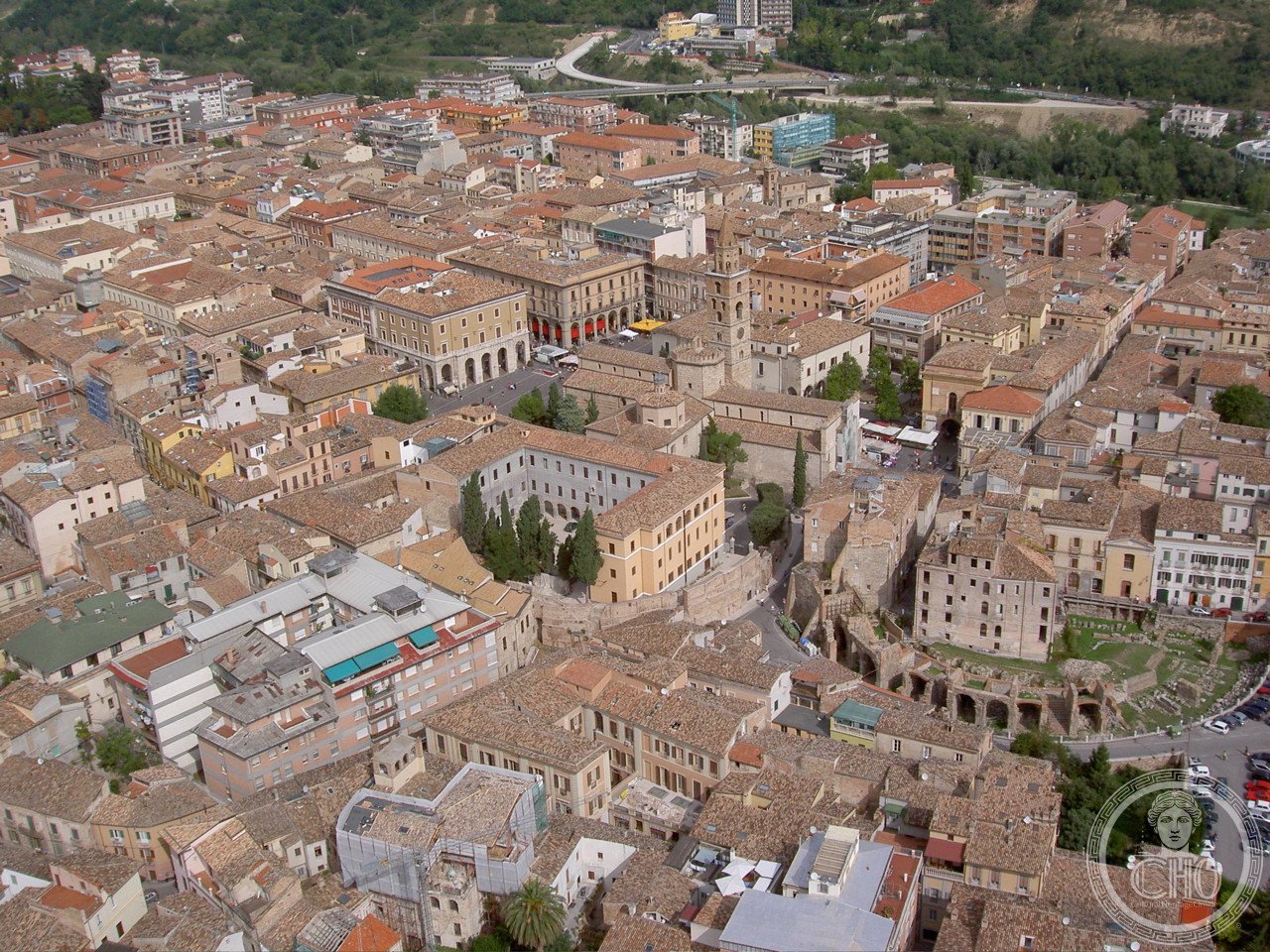
The Piceni and Pretuzi peoples inhabited the region of Aprutium until the third century BC, establishing the foundation from which the name Abruzzo derives. Roman rule brought urban development, evident in the 1st-century amphitheater and theater that once served the prosperous city of Urbs Interamnia.
The medieval period saw Teramo flourish as an autonomous district capital under Angevin rule from the late 13th century, with powerful local families like the Melatino wielding considerable influence. This prosperity extended through the Aragonese period into the 15th century, though the city later became the district capital of Abruzzo Ultra following Frederick II of Swabia’s reorganization in 1233.
Between the eighteenth and nineteenth centuries, Teramo emerged as an important cultural hub, producing notable intellectuals including Melchiorre Delfico and Francesco Savini.
What you see
The Cathedral of Santa Maria Assunta dominates Piazza Orsini with its 12th-century presence, constructed partly from materials salvaged from the Roman amphitheater and theater that once occupied the site. This architectural layering exemplifies Teramo’s relationship with its past.
Recent excavations in Largo Sant’Anna have uncovered significant Roman artifacts, while the restoration of the historic Cathedral of Santa Maria in Aprutiensis—now known as Sant’Anna dei Pompetti—has recovered important medieval structures previously obscured by urban development.
Cultural significance
Teramo embodies the continuous habitation and cultural transformation of the Adriatic interior. Its monuments chronicle the transition from Roman civic life through medieval autonomy to Renaissance intellectual achievement. The city’s archaeological layers provide material evidence of economic vitality across centuries.
Key facts
- Address: 64100 Teramo, Abruzzo, Italy
- Coordinates: 42.6611431, 13.6987
- Official website: http://www.comune.teramo.it/
- Cathedral of Santa Maria Assunta: 12th century
- Status: University and bishopric center
Practical information
Hours of access and admission fees are not listed; consult the official municipality website for current information on visiting the Cathedral and archaeological sites.
Getting there
Teramo is located in northern Abruzzo at 42.6611431, 13.6987. The city is served by regional road and rail connections to other Abruzzo centers.
Sources & resources
- Comune di Teramo: http://www.comune.teramo.it/
- Cultural Heritage Online: https://culturalheritageonline.com
Find it on the map
See this place and what’s around it →📷 Diventa un fotografo di Cultural Heritage Online
Condividi le tue foto dei luoghi: restano pubblicate con la tua firma come autore. Più vengono viste, più ti fai conoscere — e presto un concorso premierà le foto più apprezzate.
Accedi o registrati gratis per aggiungere una foto