
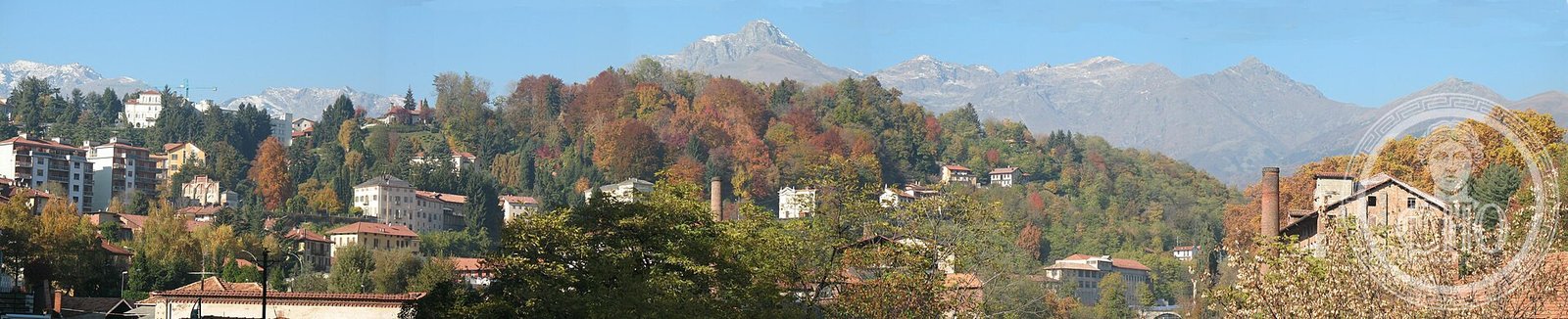
Biella
An Alpine city transformed from medieval bishopric to 19th-century industrial powerhouse, Biella preserves layers of history spanning from Neanderthal hunters to Renaissance palaces.
At a glance
Biella stands at the foot of the Biellese Alps in northern Italy, its documented history reaching back to the early Middle Ages. Once governed by the bishops of Vercelli, it passed to the Savoy family in 1379. The city rose to prominence during the nineteenth century as a major center of textile manufacturing. Today it retains significant architectural monuments—cathedral, baptistery, bell tower of Santo Stefano—alongside numerous villas and palaces that testify to its prosperous past.
History
Human presence in the Biella area extends far deeper than medieval records. Neanderthal hunters and gatherers inhabited the region between 120,000 and 35,000 years ago, while Homo sapiens arrived during the Upper Palaeolithic, around 35,000 years ago—evidenced by discoveries on the Bric Burcina, a site straddling modern Biella and Pollone.
Protohistoric settlement during the Bronze and Iron Ages left work tools and jewelry, including finds uncovered in 1959 on what is now Parco della Burcina. The Victimuli people exploited rich gold deposits in the Bessa area, washing them from the Elvo stream—a practice that continued through Roman times and survives as a modern hobby.
Medieval Biella emerged under ecclesiastical authority before entering the Savoy domain in 1379, a shift that shaped its governance for centuries. Nineteenth-century industrialization transformed the settlement into a thriving textile hub, driving urban expansion and establishing the economic foundation that remains significant today.
What you see
The cathedral and baptistery represent Biella’s spiritual heritage, anchoring the city center’s religious architecture. The bell tower of Santo Stefano rises as a landmark silhouette. Renaissance and later villas and palaces distributed throughout the city showcase the wealth accumulated during the industrial boom, their facades and gardens reflecting centuries of architectural taste.
Cultural significance
Biella’s importance lies in its dual identity: a repository of prehistory and a showcase of medieval-to-modern urban evolution. The archaeological record—from Neanderthal tools to Iron Age jewelry—places the region within broader European settlement patterns. Its transformation into a textile center demonstrates how Alpine geography and industrial enterprise reshaped Italian society in the modern era.
Key facts
- Address: Via Battistero 4, 13900 Biella
- Coordinates: 45.5588678, 8.0485272
- Website: www.comune.biella.it
- Phone: +39 015 35071
Practical information
Opening hours for monuments and civic spaces are not listed; check the official municipal website or contact the city directly for current access details.
Getting there
Biella is situated in Piemonte in the foothills of the Alps, approximately 80 kilometers north of Turin. The city is accessible by road and rail connections from major regional centers. Consult local transit providers for routes and schedules that suit your travel dates.
Sources & resources
Find it on the map
See this place and what’s around it →Historical events at this place (1)
📷 Diventa un fotografo di Cultural Heritage Online
Condividi le tue foto dei luoghi: restano pubblicate con la tua firma come autore. Più vengono viste, più ti fai conoscere — e presto un concorso premierà le foto più apprezzate.
Accedi o registrati gratis per aggiungere una foto