
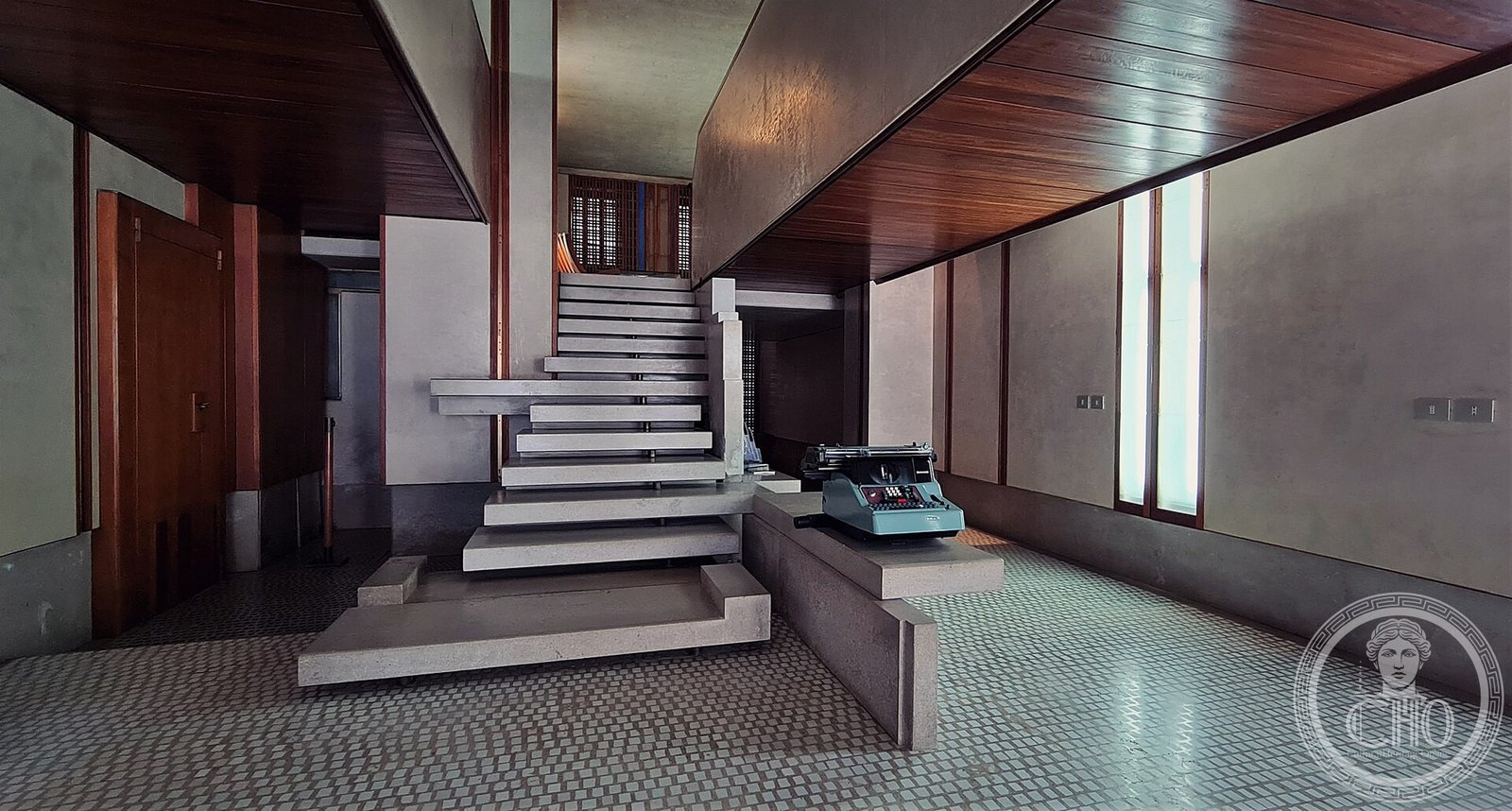
Venice’s engagement with modernity has always been oblique: the city’s Byzantine-Gothic fabric resisted wholesale transformation, but the Lido seafront accommodated the Belle Époque’s grandest hotel architecture, the Biennale gardens grew into a living encyclopedia of twentieth-century pavilion design, and Carlo Scarpa spent a career demonstrating that new materials could speak to old stones.
At a glance
Venice is not a primary centre of Art Nouveau production — its lagoon setting, conservation pressures and deep architectural identity made wholesale stylistic transformation impossible. But at its periphery the city engaged with modernity fully. The Lido seafront, developed from the 1890s as a luxury bathing resort, received the Grand Hotel des Bains (1900) and the Hotel Excelsior (1907) in the eclectic-orientalist style that characterised high-end Adriatic resort architecture. The Biennale, established in 1895, built national pavilions in the Castello Giardini from the 1900s through the 1950s — a compressed architectural history from Liberty to Rationalism to Brutalism within a single park. Carlo Scarpa’s interventions — most accessibly the Negozio Olivetti (1957–1958) in the Procuratie Vecchie — demonstrated the most nuanced modernist practice in the city: precise, tactile, historically informed.
Key facts
- Country: Italy (Veneto)
- Key periods: Lido Belle Époque (1890s–1920s); Biennale pavilion architecture (1895–present); Scarpa modernism (1950s–1978)
- Key figure: Carlo Scarpa (1906–1978) — Venetian architect and designer; Negozio Olivetti, Brion Cemetery, Fondazione Querini Stampalia
- Essential sites: Negozio Olivetti (Piazza San Marco), Grand Hotel des Bains (Lido), Biennale pavilions (Castello), Casa dei Tre Oci (Giudecca), Fondazione Querini Stampalia (Scarpa garden)
- UNESCO heritage: Venice and its Lagoon (World Heritage since 1987)
History
Carlo Scarpa was born in Venice in 1906 and trained at the Accademia di Belle Arti. His career was almost entirely confined to the Veneto: he redesigned the Gallerie dell’Accademia installation (1945), created the Negozio Olivetti showroom in the Procuratie Vecchie (1957–1958), renovated the Fondazione Querini Stampalia with a ground-floor canal-level garden and exhibition space (1961–1963), designed the Venice Biennale’s Venezuelan Pavilion (1954–1956), and in his final decade completed the Brion Funerary Complex in San Vito d’Altivole (1969–1978), widely regarded as his masterpiece. His materials — poured concrete, Venetian stucco, mosaic, water — were the materials of Venice; his details — the chamfered corner, the poured shadow-gap, the brass insert — were precise to the millimetre.
The Lido seafront was developed from 1895 by the Compagnia Italiana dei Grandi Alberghi as a luxury destination separate from the historic city. The Grand Hotel des Bains (Lungomare Marconi 17, 1900) — where Thomas Mann set Death in Venice and the opening scenes of Visconti’s film adaptation were shot — was one of the first great Adriatic resort hotels; closed and under conversion since 2010. The Hotel Excelsior (Lungomare Marconi 41, 1907), in Moorish-eclectic style designed by Giovanni Sardi, remains open and hosts the Venice Film Festival red carpet. The Biennale national pavilions in the Giardini, growing from a single structure in 1895 to over thirty by 1960, include the British Pavilion (1909, Edwin Rickards), the German Pavilion (1909, Daniele Donghi, rebuilt 1938), and Scarpa’s Venezuelan Pavilion (1954–1956), the only building in the gardens designed entirely as an outdoor sculpture court.
What you see
The Negozio Olivetti (Piazza San Marco 101, under the Procuratie Vecchie arcade) is operated by FAI and open as a museum of Scarpa’s design and Olivetti’s corporate culture: the marble floor with its abstract pattern, the staircase with its suspended treads and water channel at the base, and the showcases of Olivetti typewriters and computers are intact from the 1958 fit-out. Entry fee applies; book at fondoambiente.it.
The Biennale Giardini (Castello) are freely accessible during the Biennale (May–November in odd years for the Art Biennale, even years for Architecture); outside exhibition periods, the gardens and their pavilion facades can be visited. The Fondazione Querini Stampalia (Santa Maria Formosa) is open Tue–Sun and includes Scarpa’s ground-floor renovation as a permanent installation. The Casa dei Tre Oci (Giudecca 43) — a 1913 proto-modernist palazzo by Mario De Maria — is now a photography museum and regularly accessible from the Palanca vaporetto stop.
Practical information
- Negozio Olivetti: Tue–Sun 10:00–18:00; fondoambiente.it (FAI)
- Fondazione Querini Stampalia: Tue–Sun 10:00–18:00; querinistampalia.org
- Biennale Giardini: accessible during Biennale exhibitions; labiennale.org
- ACTV vaporetto day pass: covers all water buses including Lido line 5.2
- Time needed: half-day for Scarpa city-centre sites; half-day for Lido Belle Époque; full day for Biennale during exhibition
Getting there
Marco Polo Airport (VCE) is on the mainland lagoon shore; Alilaguna water bus reaches San Marco in 70 minutes (€15), or ACTV bus plus people mover reaches Piazzale Roma in 30 minutes (€8). From Piazzale Roma, vaporetto line 1 (Grand Canal) or line 2 (fast) reaches San Marco in 30–50 minutes. The Lido is served by vaporetto line 5.1/5.2 from San Zaccaria (San Marco). For the Biennale Giardini, take line 1 or 4.2 to the Giardini Biennale stop.
Related in CHO
- Esposizione Internazionale d’Arte — Biennale 2026
- Palazzo Ducale — Venezia
- Milano — Liberty, Rationalism and Design
Sources
Find it on the map
See this place and what’s around it →📷 Become a Cultural Heritage Online photographer
Share your photos of places: they stay published under your name as the author. The more they're seen, the more you get noticed — and soon a contest will reward the most appreciated photos.
Log in or sign up free to add a photo