
Finnish modernism rejected the machine aesthetic’s abstraction and returned architecture to natural materials, organic curves and the particular quality of Nordic light. Alvar Aalto shaped that tradition into a body of work — buildings, furniture and glass — whose warmth distinguishes it from every other strand of the modern movement.
At a glance
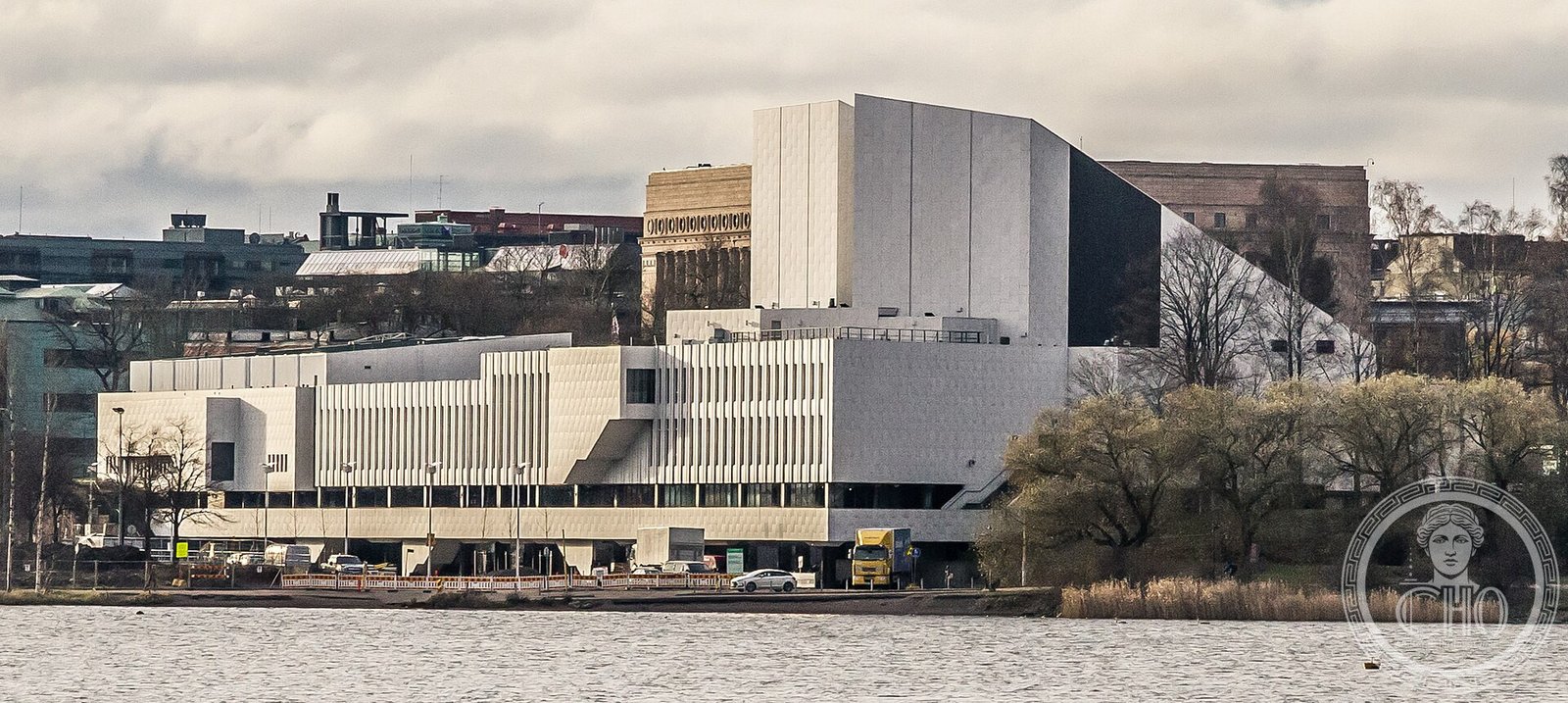
Helsinki is the city most associated with Alvar Aalto’s architectural maturity, though his influence extends far beyond any single location. The Finlandia Hall (1971) on the Töölönlahti bay foreshore — white Carrara marble cladding over a concrete frame, a roofline of interlocking wedge forms, sited in a park as a civic monument — is the most-photographed of Aalto’s late works and the closest thing Helsinki has to a public symbol of Finnish modernism. But the city also preserves his domestic work (the Aalto House, 1936, in the Munkkiniemi suburb) and his commercial interiors (the Academic Bookstore, 1969, in the city centre), offering an unusually complete cross-section of one architect’s evolution over four decades.
Key facts
- Country: Finland
- Key period: 1930s–1976 (Nordic Functionalism / Organic Modernism)
- Key figure: Alvar Aalto (1898–1976) — architect and designer, Finlandia Hall, Aalto House, Paimio Sanatorium, Viipuri Library
- Essential sites: Finlandia Hall, Aalto House (Riihitie 20), Studio Aalto (Tiilimäki 20), Academic Bookstore / Akateeminen Kirjakauppa, Kulttuuritalo / House of Culture
- Design legacy: Aalto’s bentwood furniture (artek.fi) and Iittala glassware remain in production; the Aalto vase (1936) is Finland’s most exported design object
- Annual anniversaries: Aalto nascita 3 febbraio, Aalto morte 11 maggio
History
Alvar Aalto was born in Kuortane, Finland, on 3 February 1898 and studied architecture at the Helsinki University of Technology. His early work followed Neoclassical conventions; the turn to Functionalism came after a visit to the 1929 Barcelona International Exhibition, where he encountered Mies van der Rohe’s German Pavilion. The Paimio Sanatorium (1929–1933, southwest of Turku) is his first masterpiece in the new mode: a building conceived as a therapeutic instrument, with sun terraces, colour-coded corridors and furniture — the Paimio Chair — designed to ease breathing for tuberculosis patients.
Aalto and his first wife Aino Marsio designed their house in Munkkiniemi in 1936: a white-rendered concrete building that integrates a studio, garden and domestic spaces with characteristic Finnish informality. In the same year he designed the Aalto vase for the Milan Triennale — a free-form blown glass vessel whose undulating silhouette was inspired by the shoreline of Finnish lakes. The vase entered mass production through the Iittala glassworks and has not left it since.
The Finlandia Hall (1971–1975) was Aalto’s final major work in Helsinki; he died on 11 May 1976, eighteen months after its completion. The building was intended as the anchor of a grand civic park extending around the Töölönlahti bay — a project Aalto had proposed as early as 1961 — but only the concert and congress hall was built. The Carrara marble cladding, subjected to Helsinki’s freeze-thaw cycles, has required repeated restoration and remains a technically controversial choice, which Aalto’s admirers consider evidence of his willingness to subordinate engineering prudence to aesthetic vision.
What you see
The Finlandia Hall (Mannerheimintie 13e) is open for guided tours and events; the exterior is freely visible from the Töölönlahti park path, which offers the best view of the white marble facades reflecting the bay. The Aalto House (Riihitie 20, Munkkiniemi) opens for public visits through the Alvar Aalto Foundation — a 90-minute guided tour that takes in both the house and the adjacent studio (Tiilimäki 20, built 1955). The Academic Bookstore (Pohjoisesplanadi 39, city centre) is the most accessible Aalto interior in daily use: three levels of books under prismatic skylights, the shelving and counters designed by Aalto in 1969.
The Kulttuuritalo / House of Culture (Sturenkatu 4) is a 1958 Aalto building with an audaciously curved brick facade — red handmade bricks laid in a fan pattern following the contour of the main hall within. Originally built for the Finnish Communist Party, it is now a concert and events venue and can be visited on performance evenings.
Practical information
- Finlandia Hall: guided tours available; event programme at finlandiatalo.fi
- Aalto House & Studio: advance booking required; alvaraalto.fi/en/homes/aalto-house/
- Academic Bookstore: open Mon–Fri 09:00–21:00, Sat 10:00–18:00; free entry
- Helsinki Card: covers public transport and many museum admissions
- Time needed: half-day for Finlandia + bookstore; full day adding Aalto House + Studio in Munkkiniemi
Getting there
Helsinki-Vantaa Airport (HEL) is 19 km north of the city centre; trains I and P run direct to Helsinki Central Station in 29 minutes. From Central Station, tram 4 or 10 reaches Finlandia Hall (Ooppera stop) in 10 minutes. The Aalto House in Munkkiniemi is served by tram 4 (Laajalahden aukio stop, 20 min from centre). Bus and train connections exist to Turku for the Paimio Sanatorium day trip.
Related in CHO
- Anniversario nascita: Alvar Aalto — 3 febbraio 1898
- Anniversario morte: Alvar Aalto — 11 maggio 1976
- Vienna — Capital of the Vienna Secession
- Chicago — Wright, Mies and the Architecture of Modernity
Sources
Find it on the map
See this place and what’s around it →Events here — now on & upcoming
- Anniversario nascita: Alvar Aalto — 3 febbraio 189803 Feb 2027See the event →
- Anniversario morte: Alvar Aalto — 11 maggio 197611 May 2027See the event →
📷 Diventa un fotografo di Cultural Heritage Online
Condividi le tue foto dei luoghi: restano pubblicate con la tua firma come autore. Più vengono viste, più ti fai conoscere — e presto un concorso premierà le foto più apprezzate.
Accedi o registrati gratis per aggiungere una foto