
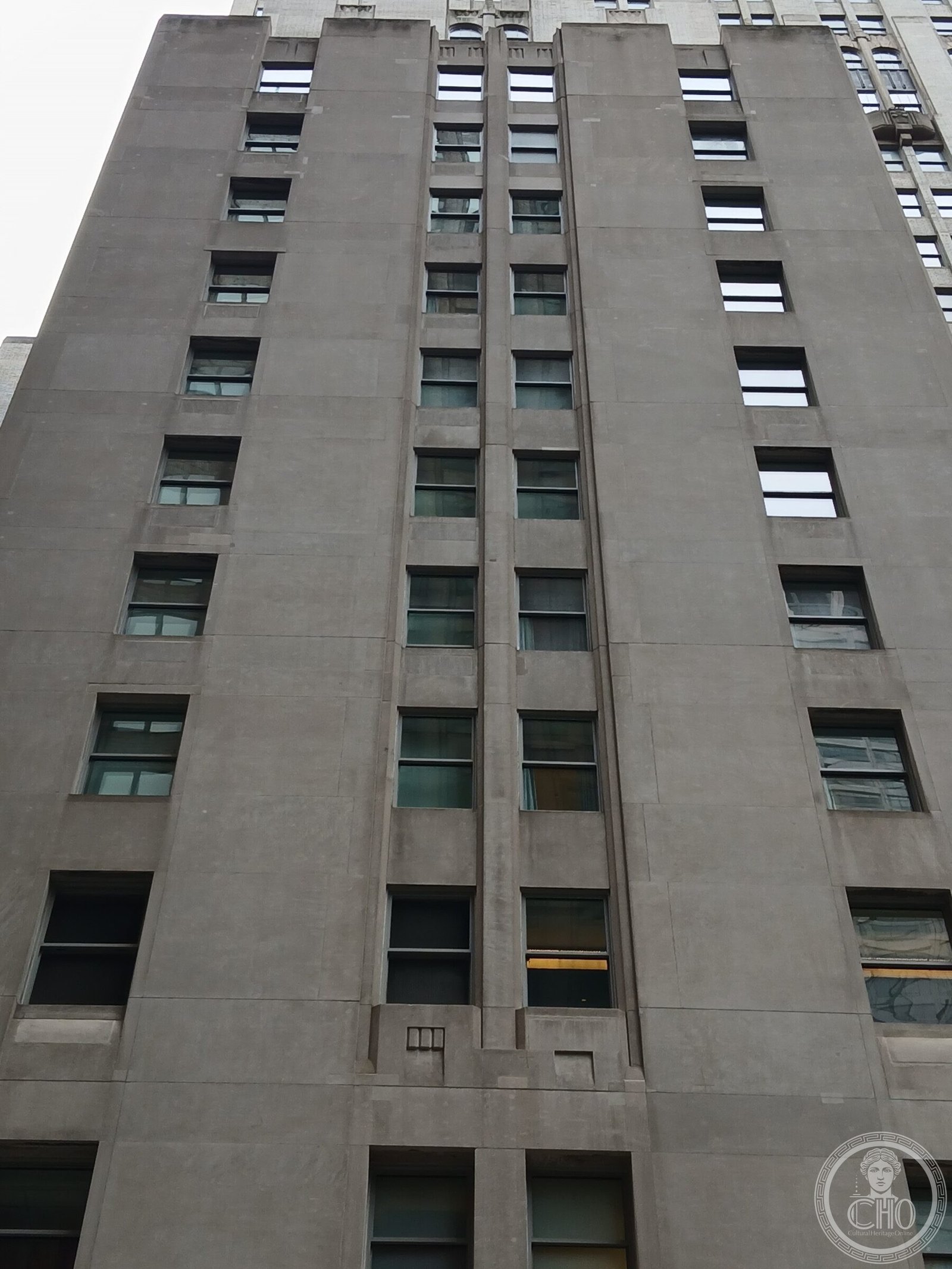
Schultze & Weaver’s twin-towered 1931 Art Deco masterpiece on Park Avenue was the largest hotel in the world at its opening and has hosted every American president since Herbert Hoover; reopened in July 2025 after a transformation into residences and a smaller hotel.
At a glance
The Waldorf Astoria opened on 1 October 1931 at 301 Park Avenue, replacing an earlier Waldorf Astoria on Fifth Avenue whose site the Empire State Building now occupies. Schultze & Weaver — the firm responsible for the Pierre and the Sherry-Netherland on the park — designed a 47-story building whose twin towers and stepped limestone facade define a full city block between 49th and 50th Streets. With 2,253 guest rooms on opening, the Waldorf was the tallest and largest hotel in the world, and for decades it defined what luxury hospitality meant in the United States. The building was sold in 2014 to the Anbang Insurance Group for $1.95 billion — the highest price ever paid for a hotel — and closed on 1 March 2017 for a renovation that created 375 condominiums above a hotel of 375 rooms, which reopened on 15 July 2025.
Key facts
- Opened: 1 October 1931
- Architects: Schultze & Weaver (Leonard Schultze and S. Fullerton Weaver)
- Style: Art Deco — twin towers, stepped limestone massing, geometric ornament
- Height: 625 feet (190 m); 47 floors
- Original capacity: 2,253 guest rooms — the tallest and largest hotel in the world at opening (tallest until 1957)
- Address: 301 Park Avenue, New York, NY 10022 (between 49th and 50th Streets)
- GPS: 40.7564°N, 73.9752°W
- Status: New York City Landmark (exterior 1993, interiors 2017); hotel reopened July 2025
History
The Waldorf Astoria’s history begins not on Park Avenue but on Fifth Avenue and 34th Street, where two earlier hotels — the Waldorf (1893) and the Astoria (1897), both owned by feuding branches of the Astor family — had combined to form the original Waldorf-Astoria. That building was demolished in 1929 to make way for the Empire State Building. The Lucius Boomer-led ownership commissioned Schultze & Weaver to design a replacement on the site then occupied by the New York Central Railroad’s freight sidings along Park Avenue — a location that required engineering the building over the railroad’s underground tracks.
The new hotel opened during the depth of the Depression, a timing that echoed the Civic Opera House in Chicago (which opened the week of the stock market crash) and the Paramount Theatre in Oakland (which opened as unemployment rose above 15%). The 1930s Depression context gave the Waldorf an air of defiance: its ballrooms became a stage for an American luxury that was performing confidence as much as experiencing it. Every American president from Herbert Hoover onward has stayed or held official events at the hotel; it served for decades as the official temporary residence of the United States Ambassador to the United Nations, who occupied a suite on the 42nd floor.
The hotel was sold by the Hilton chain to the Chinese Anbang Insurance Group in 2014 for $1.95 billion, and closed on 1 March 2017 for a renovation that turned the upper floors into 375 condominiums, restored the historic public spaces and kept a hotel of 375 rooms on the lower floors; the hotel reopened on 15 July 2025.
What you see
The Park Avenue elevation is a masterclass in Art Deco tower composition: twin setback towers rising from a broad base that fills the block between 49th and 50th Streets. The facade is Indiana limestone, articulated by continuous vertical piers that compress the horizontal mass into upward movement. At the summit, the twin towers carry stepped pyramidal crowns that read differently from different distances — from the Queensboro Bridge they appear as a single silhouette; from 50th Street below they frame a narrow slice of sky. The Art Deco ornament is concentrated at the building’s transitions: lobby entrances, tower bases, the lanterns at the corner turrets.
The lobby interior — protected as an interior landmark since 2017 — is the building’s public masterwork: a double-height hall in marble and bronze, with a Mosaic of Genius floor, original tapestries and a Cole Porter concert grand piano. The Peacock Alley corridor connects the Park and Lexington Avenue lobbies through a procession of display cases, portrait paintings and Art Deco metalwork. The Grand Ballroom, on the third floor, can accommodate 1,500 guests beneath a gilded coffered ceiling supported by fluted pilasters.
Practical information
- Current status: the hotel reopened on 15 July 2025 after the renovation; check the official site for access to the public rooms
- Exterior: the Park Avenue and Lexington Avenue facades remain accessible and viewable from the street at all times
- Address: 301 Park Avenue, New York NY 10022 — between E 49th and E 50th Streets
- Transit: Lexington Avenue / 51st Street station (4/5/6 trains), one block north; E/M trains at 5th Ave / 53rd St, two blocks west
- Time needed: 15–30 minutes for exterior exploration
Getting there
The Waldorf Astoria sits on the mid-Midtown Park Avenue corridor, equidistant between Grand Central Terminal (four blocks south on 42nd Street) and Rockefeller Center (four blocks north on 50th Street). JFK Airport is approximately 16 miles southeast via the A train to the AirTrain — 50–65 minutes by transit. Newark Liberty Airport is approximately 16 miles west via the NJ Transit–Penn Station link. The Lexington Avenue line (4/5/6) stops one block north at 51st Street; the E/M stop at Fifth Avenue and 53rd Street is two short blocks west. On foot, the Chrysler Building is seven blocks south on Lexington Avenue at 42nd Street; St. Patrick’s Cathedral is two blocks north on Fifth Avenue.
Nearby
- Chrysler Building (1930) — William Van Alen’s stainless-steel Art Deco crown at 42nd and Lexington, seven blocks south-southeast — the Waldorf’s nearest Art Deco rival in scale and ambition. See the CHO guide.
- General Electric Building (1931) — Cross & Cross’s crenellated “electrical crown” at 570 Lexington Avenue, two blocks north — built the same year as the Waldorf (1931) by Cross & Cross, the building was later renamed for its principal tenant, General Electric. See the CHO guide.
- St. Patrick’s Cathedral (1878) — James Renwick Jr.’s Gothic Revival counterpoint to the Waldorf across 51st Street on Fifth Avenue.
- 30 Rockefeller Plaza (1933) — The central tower of Rockefeller Center, four blocks northwest; its observation deck looks directly south to the Waldorf’s twin towers. See the CHO guide.
Sources
- The Waldorf Astoria New York official site — history and renovation updates
- New York City Landmarks Preservation Commission: exterior designated 1993, interiors 2017
- The New York Times archives — opening coverage (1931), sale to Anbang (2014), closure announcement (2017)
- Carol Highsmith / Library of Congress — photographic documentation of the public interiors
- Kenneth Frampton, Modern Architecture: A Critical History — Art Deco hotel context
Find it on the map
See this place and what’s around it →📷 Become a Cultural Heritage Online photographer
Share your photos of places: they stay published under your name as the author. The more they're seen, the more you get noticed — and soon a contest will reward the most appreciated photos.
Log in or sign up free to add a photoIs this page about you?
This page is read by travellers and heritage enthusiasts who find it on Google. Tell us how you are connected to this place and we will take it from there.