
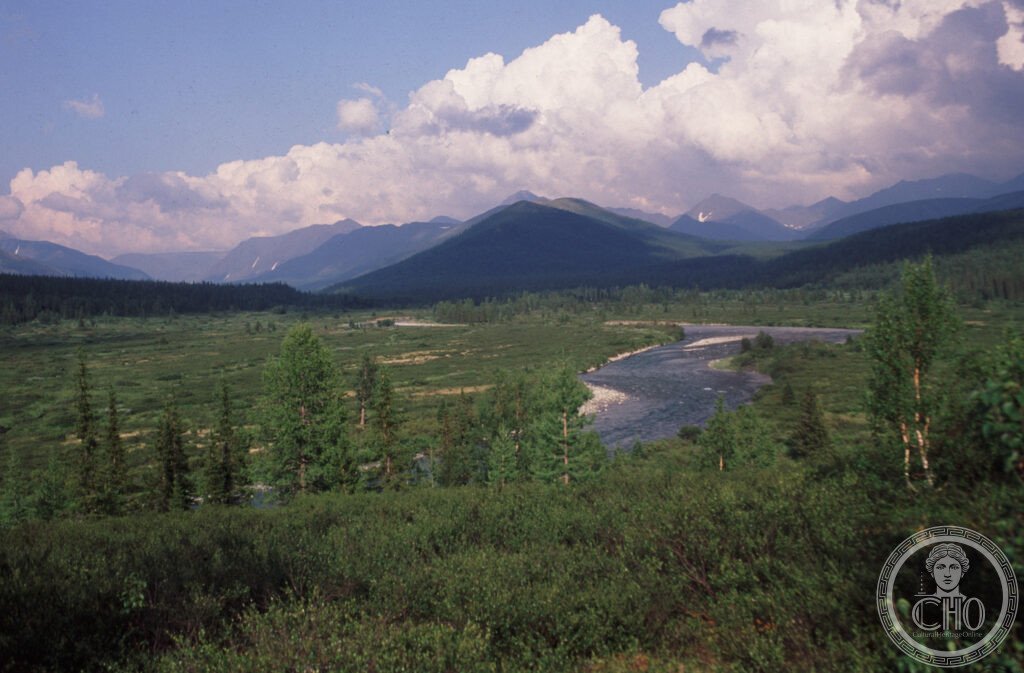
The Virgin Komi Forests form the largest expanse of untouched boreal forest left in Europe, a taiga wilderness in the western Ural Mountains that has grown undisturbed since the last Ice Age. Its rivers, fed by mountain snowmelt with no farmland or industry upstream, remain among the cleanest in the continent.
At a glance
The inscription covers roughly 3.28 million hectares, an area larger than Belgium, spanning two protected zones: the Pechoro-Ilychsky Nature Reserve in the south, the oldest protected area in the region, and the Yugyd Va National Park to the north, named Light Water in the Komi language for the clarity of its streams. The forest is boreal taiga, dominated by Siberian spruce, fir, larch and pine, with some trees two to three centuries old in the least disturbed stands. The forest floor is carpeted with mosses, lichens, bilberry, crowberry and Labrador tea.
Key facts
- Extent: about 3.28 million hectares across the Pechoro-Ilychsky Reserve and Yugyd Va National Park.
- Rivers: the Pechora River rises in the Urals and flows north to the Barents Sea; its entire upper watershed lies within the protected area, with no agriculture, industry or urban settlement upstream.
- Vegetation: Siberian spruce, Siberian fir, Siberian larch and Siberian pine dominate the taiga canopy.
- Recognition: inscribed as a UNESCO World Heritage Site in 1995, Russia’s first natural inscription.
- Ongoing threat: gold mining licences granted within the national park led UNESCO to add the site to the List of World Heritage in Danger in 1999; the threat has recurred since, including further prospecting and extraction attempts.
History
The Komi people, a Finno-Ugric group related to the Finns and Estonians, have lived in the Pechora basin forests for thousands of years, sustaining themselves through hunting, fishing, reindeer herding and gathering in close adaptation to the boreal ecology. Soviet collectivisation in the 1930s disrupted this traditional economy, and the Pechoro-Ilychsky Nature Reserve, established in 1930, was created partly to study the forest with a view to eventual forestry use.
Since the end of the Soviet period, the forest has been caught between the Russian state’s interest in extracting oil, gas and gold, and its status as a protected UNESCO site. Gold mining licences granted inside Yugyd Va National Park in 1998, in breach of Russian law barring mining in national parks, led to the World Heritage in Danger listing the following year. The Russian government disputed the violation, and although the licence was cancelled by 2004, further mining attempts in subsequent years have kept the question of a new Danger listing alive.
What you see
Komi is one of the most remote and logistically demanding UNESCO sites in Europe. The southern Pechoro-Ilychsky Reserve is reached from Syktyvkar by a long combination of road and river travel, with no road for the final stretch, requiring a helicopter or a river boat along the Pechora. The northern Yugyd Va National Park is approached instead through the towns of Vuktyl or Inta.
Visitors who reach the accessible fringes of the park find fishing for Siberian grayling and taimen, one of the world’s largest salmonid fish, rafting on the Ilych River, and the chance of sighting brown bear, Eurasian elk, wolverine or grey wolf. Above the treeline in the northern Urals the forest gives way to open alpine tundra with reindeer moss, crowberry and dwarf birch.
Practical information
- Season: the park is accessible from June to September; July is the busiest month but also the peak of mosquito and blackfly activity, so full-cover clothing and insect repellent are essential.
- Organisation: visits require arranging a specialist operator based in Syktyvkar; the regional tourism authority can provide contacts.
- Infrastructure: there is no tourist infrastructure inside the park beyond a handful of ranger stations, so tents, cold-rated sleeping bags and all food must be carried in.
- Documentation: travellers from most countries will need a Russian visa or e-visa; check current requirements with official Russian consular channels before travelling.
Getting there
Syktyvkar, the capital of the Komi Republic, is the usual starting point, reached by air from Moscow and other Russian cities. From there the southern reserve is reached by a long stretch of road followed by helicopter or river boat, since no road covers the final approach; the northern national park is reached instead via Vuktyl or Inta. International visitors typically connect through Moscow.
Nearby
- Ural Mountains — form the eastern boundary of the protected area and mark the traditional divide between Europe and Asia; the highest peaks within the inscribed area rise to around 1,600 metres.
- Syktyvkar — the regional capital, home to the Komi National Museum and its ethnographic collection of traditional Komi culture.
- Old Believers’ communities — Komi’s forests sheltered Russian Orthodox Old Believers who fled persecution after refusing the seventeenth-century liturgical reforms; a prayer house survives as a trace of this history.
Sources
- Wikipedia, Virgin Komi Forests
- Wikipedia, Komi people
- Wikipedia, Pechora River
- UNESCO, Virgin Komi Forests
Find it on the map
See this place and what’s around it →📷 Become a Cultural Heritage Online photographer
Share your photos of places: they stay published under your name as the author. The more they're seen, the more you get noticed — and soon a contest will reward the most appreciated photos.
Log in or sign up free to add a photo