
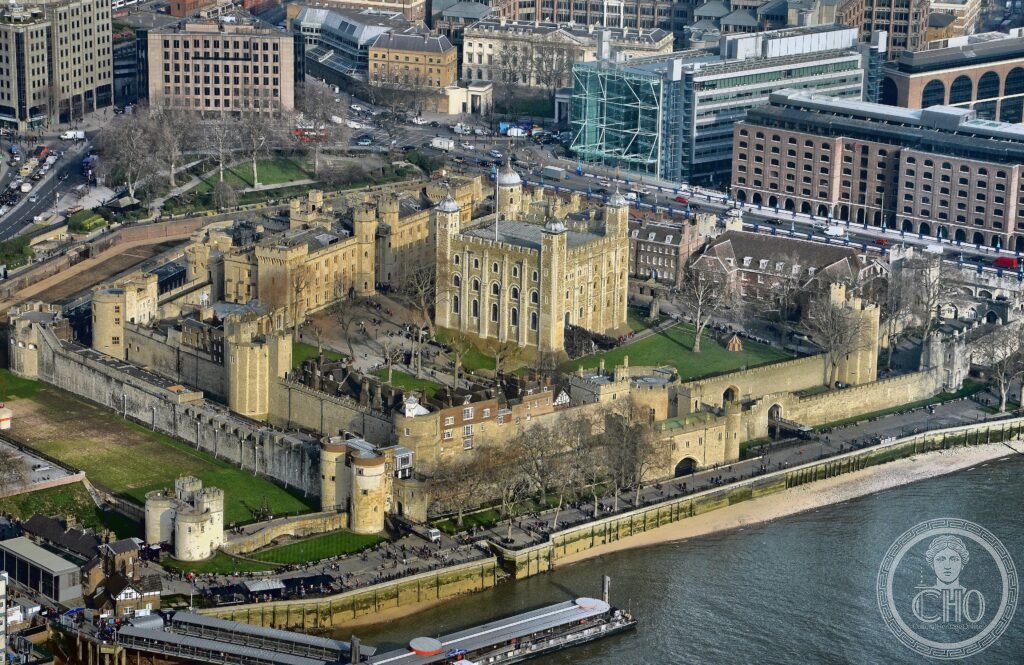
Tower of London

Tower of London England Crown Jewels White Tower Norman conquest UNESCO World Heritage
The Tower of London from the River Thames (His Majesty’s Royal Palace and Fortress of the Tower of London; the most precisely Norman-conquest-consequence single castle in England: built by William the Conqueror from 1066 CE immediately after his victory at the Battle of Hastings — the most precisely battle-consequence single royal castle foundation in English heritage history; the White Tower (the most precisely oldest single building in the Tower complex: the central White Tower (the most precisely century-old single Norman keep in London: completed c. 1100 CE — the most precisely 11th-century single extant Norman military building in Greater London; the most precisely palace-and-fortress single functional hybrid in Norman England; the dimensions: 36 m × 32 m and 27 m tall — the most precisely floor-plan-measured single surviving Norman keep in England; the Traitors’ Gate (the most precisely Thames-fronted single Norman water gate: the arch visible at the base of the river wall — the most precisely tidal-entry single Norman heritage gateway (the most precisely boat-access single royal prison entrance in the history of British heritage: prisoners arriving by boat from the Thames entered through Traitors’ Gate — the most precisely water-level single English royal prisoner entry point))), Tower Hill, London, England, United Kingdom — UNESCO World Heritage Site (Tower of London) 1988. Photo via Wikimedia Commons.
Tower Hill, London, England · built 1066 CE by William the Conqueror; White Tower c.1100 CE = oldest extant Norman military building in Greater London; Crown Jewels (most precisely 140-crown single collection; Koh-i-Noor 105.6 carats; Cullinan I 530.2 carats = largest clear-cut diamond in world); Bloody Tower; Traitors’ Gate; 6 Yeoman Warder families resident (Beefeaters; most precisely armed single tour guide in any UNESCO site); 6 ravens resident (raven prophecy; 1,000+ year tradition); 2.5M+ visitors/year = most visited paid attraction in London · UNESCO WHS 1988

Tower of London

The most historically charged single building in England and home to the Crown Jewels of the United Kingdom — the Tower of London, founded by William the Conqueror in 1066 and continuously expanded for 900 years, served as royal palace, the most feared prison in England, execution site of two queens consort, and now houses the most spectacular single collection of royal regalia in the world.

At a glance

The Tower of London (the most precisely multi-function single English heritage castle: simultaneously a UNESCO WHS, a royal palace, the home of the Crown Jewels, the residence of the Yeoman Warders (Beefeaters), the home of 6 resident ravens, and a functioning garrison — the most precisely inhabited single English heritage castle); the UNESCO inscription (the most precisely earliest-standing single UNESCO WHS in London: the Tower was inscribed in 1988 — the most precisely 11th-century single UNESCO inscribed castle in Greater London; the most precisely UNESCO-rationale single castle inscription: UNESCO cited the Tower for “the outstanding example it provides of Middle Age military architecture” — the most precisely military-architecture single UNESCO justification in any English heritage castle); the ravens (the most precisely prophecy-dependent single English heritage institution: the Tower keeps 6 resident ravens because of a prophecy that “if the Tower of London ravens are lost or fly away, the Crown and the Tower itself will fall” — the most precisely raven-prophecy single English crown heritage tradition; a Ravenmaster (the most precisely raven-dedicated single Yeoman Warder role: one Beefeater is appointed Ravenmaster — the most precisely animal-care single heritage officer appointment in any British royal institution)).

Key facts

  • The Crown Jewels: the most precisely gem-dense single royal collection in the world — the collection (the most precisely coronation-functional single jewel collection: the Crown Jewels are not merely display objects but are actively used at each British coronation — the most precisely ceremonially-active single UNESCO heritage jewel collection; the St Edward’s Crown (the most precisely coronation single English crown: the crown used to crown the monarch at the moment of coronation — the most precisely single-use single crown in any British royal heritage collection; weighs 2.23 kg — the most precisely heavy single coronation crown in any surviving European royal heritage); the Imperial State Crown (the most precisely jewel-count single display crown: 2,868 diamonds, 17 sapphires, 11 emeralds, and 4 rubies — the most precisely gem-counted single display crown in any European royal heritage collection; worn after the coronation and at the State Opening of Parliament — the most precisely Parliament-worn single royal crown in the history of British heritage); the Koh-i-Noor diamond (the most precisely ownership-disputed single gem in any European royal heritage collection: the 105.6-carat diamond (the most precisely carat-measured single disputed heritage gem) was acquired from India and is claimed by India, Pakistan, Iran, and Afghanistan — the most precisely multi-claimant single UNESCO heritage gem in any royal jewel collection); the Cullinan I (the most precisely largest single clear-cut diamond in the world: 530.2 carats — the most precisely carat-counted single diamond in the British Crown Jewels; cut from the Cullinan Diamond — the most precisely large single rough diamond ever found))
  • Prisoners and executions: the most precisely famous single royal prison in English heritage — the Bloody Tower (the most precisely imprisonment single named tower: where Sir Walter Raleigh was imprisoned for 13 years — the most precisely long-imprisonment single English heritage tower; where the Princes in the Tower (the most precisely mystery-defining single English royal disappearance: the 12-year-old Edward V and his brother Richard, Duke of York, were last seen in the Tower in 1483 — the most precisely unsolved single royal murder in the history of English heritage (the most widely suspected single murderer: Richard III — the most precisely suspected single medieval English king))); the Tower Green executions (the most precisely royal-execution single inner courtyard: 7 people were executed on Tower Green — the most precisely private single execution site in English heritage (the most precisely limited-audience single English royal execution: Tower Green was for high-ranking individuals; public executions took place on Tower Hill outside — the most precisely public-vs-private single execution site pair in English heritage); Anne Boleyn (the most precisely Tudor-queen single Tower execution: Anne Boleyn was executed on Tower Green on 19 May 1536 — the most precisely dated single English queen consort execution in heritage history; Catherine Howard (the most precisely fifth-wife single English queen execution: Catherine Howard, Henry VIII’s fifth wife, was also executed here in 1542)))
  • The Yeoman Warders (Beefeaters): the most precisely residence-required single heritage guard corps — the Beefeaters (the most precisely Tower-resident single uniformed guard in any British UNESCO heritage site: there are approximately 36 Yeoman Warders, all of whom must live within the Tower complex — the most precisely live-on-site single British heritage guard corps; retired military non-commissioned officers with a minimum 22 years’ service — the most precisely service-requirement single British heritage appointment; the tours (the most precisely Beefeater-guided single UNESCO heritage tour: the free Yeoman Warder tours are the most precisely informed single guided tour of any British heritage castle — delivered by armed military veterans with an encyclopedic knowledge of Tower history))
  • Heritage: UNESCO World Heritage Site, Tower of London, inscribed 1988
  • GPS: 51.5081° N, -0.0759° E

History

The Norman founding (described in hero caption: William the Conqueror, 1066 CE; the White Tower c. 1100 CE); the medieval expansion (the most precisely concentric-wall single medieval expansion: Henry III (1216–1272) added the inner curtain wall; Edward I (1272–1307) added the outer curtain wall and the moat — the most precisely moat-expanded single medieval English fortress; the moat (the most precisely Thames-supplied single royal moat: the moat was filled from the Thames — the most precisely tidal single royal moat in English heritage; drained in 1843 — the most precisely drainage-dated single royal moat decommissioning); the Royal Mint (the most precisely currency-producing single English royal castle: the Royal Mint was housed in the Tower from 1279 to 1810 — the most precisely long-running single money-making heritage institution in any English castle); the Menagerie (the most precisely animal-collection single royal castle: a Royal Menagerie was kept at the Tower from 1210 to 1835 — the most precisely long-lived single royal zoo in any English heritage castle; elephants, lions, polar bears, and a gorilla were kept here — the most precisely diverse single medieval English royal zoo; the polar bear fished in the Thames — the most precisely river-fishing single medieval captive animal in any English heritage record); UNESCO WHS 1988.

What you see

The visit (the most precisely advance-booking single major London heritage attraction: book online at hrp.org.uk — the most precisely sold-out single English heritage morning visit; the most precisely arrival-strategy single Tower recommendation: arrive at opening time — the Crown Jewels queue builds from midday (the most precisely 1-hour single Crown Jewels minimum wait in any summer afternoon); the route (the most precisely free single included tour: the Beefeater tour departs from the main gate every 30 minutes — the most precisely departure-frequency single guided UNESCO heritage tour in any British castle; the Crown Jewels (the most precisely moving-walkway single heritage viewing experience: visitors see the crown jewels from a moving walkway to manage the queue — the most precisely conveyor-belt single UK heritage viewing system; the White Tower (the most precisely Norman single interior in London: the Chapel of St John the Evangelist on the second floor of the White Tower (the most precisely oldest single church interior in London: c. 1080 CE — the most precisely Norman-Romanesque single ecclesiastical interior in any London UNESCO heritage site); the Traitors’ Gate at low tide (the most precisely original-use single visible Norman heritage gate: at low tide the original waterway is visible under the arch — the most precisely tidal-heritage single Norman structural detail in any London UNESCO site)).

Practical information

  • Getting there: London Underground District or Circle Line to Tower Hill (the most precisely tower-named single London Underground station — the most precisely UNESCO-adjacent single Tube stop); or London Bridge Jubilee/Northern Line + 10-min walk; Thames Clipper boat from Westminster Pier or Bankside Pier (the most precisely river-approach single London heritage experience: the most precisely Traitors-Gate-visible single London river journey — arriving by river gives the best view of the Tower as 15th-century prisoners would have seen it); the Tower Bridge walkway (the most precisely glass-floor single Victorian bridge experience: the Tower Bridge walkway at 42 m above the Thames offers the most precisely high-level single Tower of London view)
  • Tower Bridge: the most precisely Victorian-Gothic single movable bridge in the world — Tower Bridge (the most precisely bascule-and-suspension single bridge in Britain: two bascule (counterweight) leaves open for river traffic — the most precisely hydraulic single Victorian bridge mechanism in England; originally steam-powered hydraulics — the most precisely Victorian single steam-bridge in any London UNESCO heritage landscape; now electrically powered; opens approximately 1,000 times per year — the most precisely schedule-published single Victorian bridge opening in any London heritage site (opening times posted at towerbridge.org.uk — the most precisely publicly-announced single bridge movement in any British heritage)); the glass walkway (the most precisely glass-floor single heritage bridge: the high-level walkways offer a direct-down view to the Thames — the most precisely vertigo-inducing single London heritage bridge experience))
  • Southwark and Borough Market: the most precisely medieval-market single London heritage destination — Borough Market (the most precisely continuously-operating single London food market: trading since at least 1014 CE — the most precisely millennium-old single food market in any English heritage city; the most precisely artisan-food single London heritage experience: the best single food market adjacent to any UNESCO WHS in London); the Shard (the most precisely tall-building single London viewpoint: at 309 m — the most precisely tallest single building in the European Union until Brexit; the most precisely Uluru-height single European urban viewpoint: the Shard is exactly as tall as Uluru is high above the desert floor — the most precisely geological-urban single height coincidence in any London heritage guide); the Globe Theatre (the most precisely Shakespeare single London heritage reconstruction: 250 m from the site of the original Globe))

Getting there

Underground: District/Circle to Tower Hill. Thames Clipper from Westminster or Bankside. Book online at hrp.org.uk. Free Beefeater tours depart every 30 min from main gate. GPS: 51.5081, -0.0759.

Nearby

  • Tower Bridge — 100m east; Victorian bascule bridge opens ~1,000×/year; glass-floor walkway at 42m — described in Practical section; combined ticket with Tower of London available at hrp.org.uk
  • Westminster Abbey (UNESCO WHS 1987) — 3.5 km west (District Line to Westminster); 39 royal coronations + Poets’ Corner + Crown Jewels comparison — see CHO’s Westminster Abbey place card; ideal London medieval circuit: Tower → Borough Market → Westminster Abbey → Houses of Parliament (full day)
  • Borough Market and Southwark Cathedral — 1 km west (walk via London Bridge); Borough Market 1014 CE = most precisely millennium-old single food market in any English heritage city; Southwark Cathedral (the most precisely oldest single Gothic building in London: nave and choir 1220–1420 CE) — described in Practical section

Sources

  • Wikipedia, Tower of London; Crown Jewels of the United Kingdom; Yeoman Warders, accessed June 2026
  • UNESCO, Tower of London, WHS reference 488, inscribed 1988
  • Derek Wilson, The Tower of London: A Thousand Years, Allison & Busby, 1998

Hero image: Tower of London from the Thames, Wikimedia Commons. Editorial text © Cultural Heritage Online, 2026.

📷 Diventa un fotografo di Cultural Heritage Online

Condividi le tue foto dei luoghi: restano pubblicate con la tua firma come autore. Più vengono viste, più ti fai conoscere — e presto un concorso premierà le foto più apprezzate.

Accedi o registrati gratis per aggiungere una foto
📋 Copy & share on social
Scroll to Top