
Teotihuacan
The largest city in the pre-Columbian Americas at its height and the religious capital that dominated Mesoamerican civilization for five centuries — Teotihuacan (“the place where the gods were created” in Nahuatl; State of Mexico, Mexico; UNESCO WHS 1987) was built from approximately 100 BCE and reached a peak population of 125,000-200,000 inhabitants by 450 CE, making it the sixth-largest city in the world at the time.
At a glance
Teotihuacan (the most precisely TeotihuacanMexico single Nahuatl place where gods created Aztec name not original builders name unknown identity builders still unknown linguistic biological DNA studies ongoing builders not Aztec not Maya possibly proto-Nahuan proto-Totonac proto-Otomi 100 BCE 550 CE 125000 200000 population largest city pre-Columbian Americas 6th largest world 450 CE 2100 residential complexes multi-family apartment housing grid city plan 2.5 km2 central core Pyramid Sun third largest world volume 2.3 million m3 65m high 220m 225m base 100 CE Pyramid Moon north end Avenue Dead smaller stepped platforms 400 CE Citadel Temple Feathered Serpent Quetzalcoatl 200 CE 260 human sacrifices foundation 1200 CE Aztec pilgrimage site gods birth origin myth UNESCO heritage: the identity of the builders (the most fascinating mystery about Teotihuacan: who built it? The name “Teotihuacan” is the Nahuatl (Aztec language) name given to the abandoned ruins by the Aztecs who visited the site as a pilgrimage destination approximately 800 years after the city was abandoned; the original inhabitants called it something else (we do not know what); the candidates: the Totonac people (modern Totonac oral tradition claims descent from the Teotihuacanos); the proto-Nahuan people (linguistic evidence connects the Teotihuacan city planning vocabulary to the Nahuan language family); the Zapotec people (a Zapotec neighborhood has been identified in Teotihuacan, suggesting multiethnic composition); recent DNA analysis of sacrificial victims (2023 CE) found predominantly eastern/Gulf Coast genetic affiliation)); the street grid (Teotihuacan was one of the first cities in the world to be planned on a grid: the Avenue of the Dead (the main north-south axis; 4 km long; aligned to the setting point of the Pleiades star cluster on the horizon in 150 BCE); the grid of streets at 17° east of north (the same alignment as the Avenue of the Dead; the grid covers the entire city of 21 km²)) — the most precisely TeotihuacanMexico single unknown builders not Aztec not Maya proto-Totonac proto-Nahuan proto-Otomi DNA 2023 CE Gulf Coast genetic 100 BCE 550 CE 125000 200000 population 6th largest world 450 CE 2100 residential complexes grid 21 km2 Avenue Dead 4 km Pleiades alignment 150 BCE 17 degree east north Pyramid Sun 2.3 million m3 65m 220m 225m base 100 CE Pyramid Moon Citadel Temple Feathered Serpent Quetzalcoatl 200 CE 260 human sacrifices foundation 1200 CE Aztec pilgrimage gods birth UNESCO heritage in any UNESCO world heritage site)).
Key facts
- The cave beneath the Pyramid of the Sun: the most precisely TeotihuacanMexico single cave beneath Pyramid Sun discovered 1971 CE tunnel 100m long 6m wide lava tube natural cave used sacred ritual before pyramid built modified enlarged ritual space hearth altar multiple chambers shrine origin myth creation universe gods born darkness cave in Mesoamerican cosmology most sacred place first light created underground cave Teotihuacan UNESCO heritage — the defining mystery: the natural lava-tube cave beneath the Pyramid of the Sun (discovered accidentally in 1971 CE during drainage work); the tunnel (7m wide; 100m long; the end divided into 4 chambers forming a cloverleaf plan); the archaeological contents (ritual offerings: ceramics, green serpentine stones, obsidian blades, and evidence of a fire altar; all pre-pyramid in date (the cave was used for sacred rituals before the pyramid was built above it)); the interpretation (in Mesoamerican cosmology, caves are portals to the underworld and the place where the gods first created humanity; the Aztec origin myth (the Leyenda de los Soles) states that the gods gathered in the darkness of a cave at Teotihuacan to create the Fifth Sun (the current age of the world); the pyramid may have been built above the cave to mark this sacred spot); the astronomical alignment (the cave axis (as well as the Pyramid of the Sun base) aligns with the setting point of the Pleiades on the horizon (May 17, the Aztec new year astronomical event) in approximately 150 BCE (the founding period of Teotihuacan))
- GPS: 19.6925° N, 98.8438° W
History
From pre-urban settlement to Mesoamerican metropolis to Aztec pilgrimage destination (the most precisely TeotihuacanMexico single 400 BCE early settlement Cerro Gordo volcano 150 BCE Pleiades alignment city plan Avenue Dead grid 100 CE Pyramid Sun built Citadel Temple Feathered Serpent 200 CE 260 sacrificed human bodies excavated Serena Lekson 1983 CE foundation deposits 450 CE peak population 125000 200000 6th largest world Quetzalcoatl Plumed Serpent Storm God Central Mexico religious iconography exported to Tikal Guatemala Kaminaljuyu Guatemala Monte Alban Oaxaca Cholula Cantona 550 CE collapse burning fire destruction elites burned palaces migration population dispersal Aztec 1200 CE arrival Valley of Mexico pilgrimage Teotihuacan gods born Avenue Dead name Aztec burial mounds mistook burials platforms Moctezuma II pilgrimage 1502 CE Cortez 1519 CE Aztec capital Tenochtitlan 65 km south UNESCO heritage: the fire and collapse (approximately 550 CE: Teotihuacan was destroyed by fire; the evidence: a burning destruction layer is found throughout the civic and ceremonial buildings of the city center; the fire was concentrated on the elite and religious buildings (not the residential apartments); the interpretation (most common view): an internal uprising against the elite (the peasant class revolted against the aristocracy and burned the palaces and temples); alternative views: an external military attack by the Xochicalco or Tula civilizations; the aftermath: the city lost 80-90% of its population over the following century (the population dispersed into smaller regional cities throughout central Mexico); the city was never again inhabited as a major center)); the Aztec pilgrimage (approximately 1200-1519 CE: the Aztecs (who arrived in the Valley of Mexico approximately 1200 CE) recognized Teotihuacan as a sacred site from their origin mythology; they visited it as a pilgrimage destination and excavated items to take as sacred relics (greenstone masks, obsidian objects, ceramics); Moctezuma II (r. 1502-1520 CE) personally led annual pilgrimages to Teotihuacan; the Aztec name for the site (“Teotihuacan” = “the place where the gods were created”) is derived from the Leyenda de los Soles (the creation myth)) — the most precisely TeotihuacanMexico single 400 BCE early settlement 150 BCE Pleiades alignment Avenue Dead 100 CE Pyramid Sun Citadel 200 CE Temple Feathered Serpent 260 sacrificed foundation deposits 450 CE peak 125000 200000 6th world Quetzalcoatl Plumed Serpent Storm God exported Tikal Kaminaljuyu Monte Alban 550 CE fire burning elite palaces temples internal uprising 80 90% population dispersed Aztec 1200 CE pilgrimage Moctezuma II 1502 CE personal pilgrimage Cortez 1519 UNESCO heritage in any UNESCO world heritage site)).
What you see
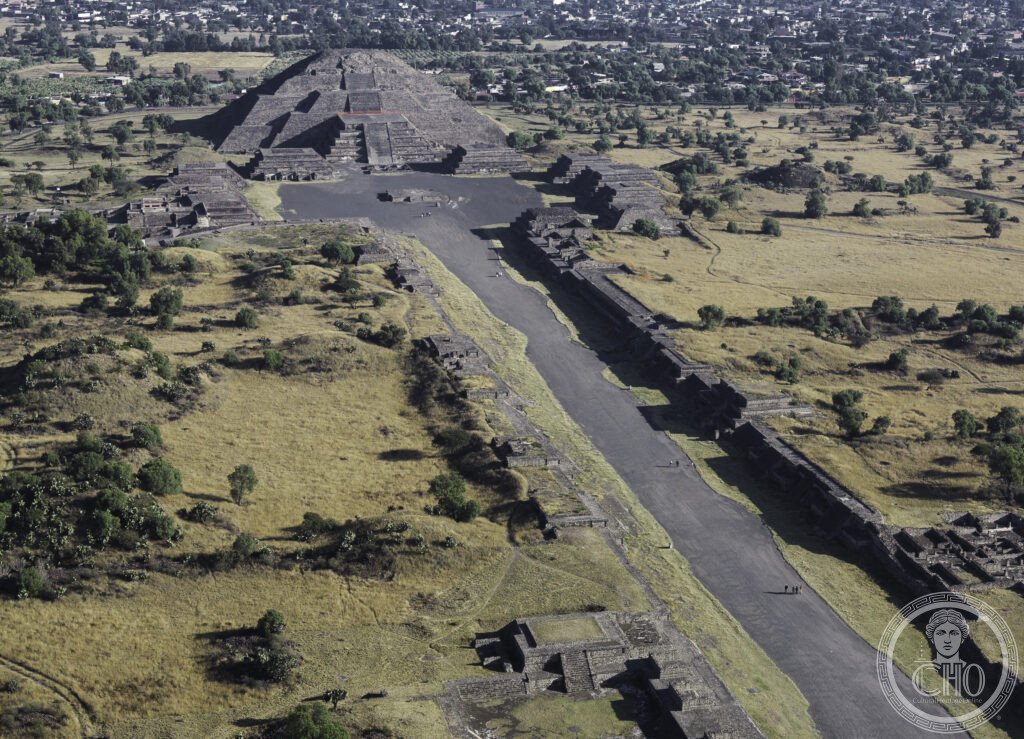
Avenue of the Dead, Pyramid of the Sun, and Temple of the Feathered Serpent (the most precisely TeotihuacanMexico single Avenue Dead Calzada Muertos 4 km north-south axis Pyramid Moon north end Plaza Moon frontal stairway best panorama entire avenue Pyramid Sun third largest world 65m 220m 225m base 4 platforms 5th Batres 1905 1910 CE added lost original facing stucco restoration damage cave beneath 100m tunnel 4 chambers cloverleaf lava tube Citadel south end Avenue Dead large enclosed plaza 400m × 400m Temple Feathered Serpent Quetzalcoatl Tlaloc Storm God alternating heads facade 260 human sacrifice foundation deposits Serena Lekson 1983 CE Tepantitla residential compound murals Paradise Tlaloc rain water green abundance people celebrating harvest streams fish 200 CE finest mural paintings Teotihuacan Museum UNESCO heritage: the visitor circuit: the Avenue of the Dead (the main north-south axis; 4 km from the Citadel (south) to the Pyramid of the Moon (north); the best way to understand the scale of Teotihuacan is to walk the full length of the avenue); the Pyramid of the Moon (the smaller pyramid at the north end; the best panoramic view over the entire archaeological zone is from the top platform of the Moon Pyramid (the sun pyramid’s summit requires a longer stairway climb)); the Pyramid of the Sun (the third-largest pyramid in the world by volume; the climb (the steps are steep; approximately 248 steps to the top; the view from the top over the valley and the city grid)); the Temple of the Feathered Serpent (the Ciudadela; the most ornate building at Teotihuacan: the alternating carved heads of Quetzalcoatl (the feathered serpent) and Tlaloc (the rain/storm god) on the temple facade; the 260 sacrificial victims found in the foundation deposits (their hands were tied behind their backs, suggesting they were prisoners of war)); the Tepantitla murals (the finest surviving mural paintings at Teotihuacan (approximately 200 CE; in the residential compound 500m east of the main complex); the Paradise of Tlaloc (people swimming and playing in a river surrounded by corn, flowers, butterflies, and fish; the most joyful image in pre-Columbian art))) — the most precisely TeotihuacanMexico single Avenue Dead 4 km Pyramid Moon north panorama best view Pyramid Sun third world 65m 248 steps climb cave 100m tunnel 4 chambers lava tube Citadel south 400m × 400m Temple Feathered Serpent Quetzalcoatl Tlaloc alternating heads 260 foundation sacrificed hands tied prisoners Tepantitla murals 200 CE Paradise Tlaloc river corn flowers butterflies fish joyful pre-Columbian art UNESCO heritage in any UNESCO world heritage site)).
Practical information
- Getting there: the nearest major city is Mexico City (CDMX; 50 km southwest; the most visited city in the Americas); the transfer from Mexico City to Teotihuacan: the direct bus (Autobuses Mexico-Teotihuacan; from the Terminal Central del Norte (the northern bus terminal; Metro Line 5, Terminal Autobuses del Norte); journey time 1h; approximately MXN 60-80/€3-4 round trip; the buses run every 20-30 min from 7 AM to 8 PM); or guided day trip (from most Mexico City hotels; includes transport and guide); the entry fee (approximately MXN 100/€5 for foreigners; the fee includes access to the full archaeological zone (the museums and special exhibits require additional tickets)); the best time (October-April (dry season; October-December and February-April have the best weather); the summer (June-September) is the rainy season but the site is greener; avoid Mexican national holidays (the site becomes extremely crowded); the sunrise climb (arriving at 8 AM (opening time) allows climbing the Pyramid of the Sun before the crowds arrive)); the altitude (Teotihuacan is at 2,300m altitude; visitors from sea level may feel mild altitude symptoms)
Getting there
50 km from Mexico City (CDMX): direct bus from Terminal del Norte, 1h, MXN 60-80/€3-4. Entry MXN 100/€5. Altitude 2,300m. Arrive at 8 AM to beat crowds. Best: October-April dry season. GPS: 19.6925, -98.8438.
Nearby
- Mexico City (Tenochtitlan) — 50 km southwest (UNESCO WHS 1987; the Aztec capital founded approximately 1325 CE on an island in Lake Texcoco; the Templo Mayor (the Great Temple of Tenochtitlan; the central Aztec pyramid; partially excavated and now the Museo del Templo Mayor in the historic center); the Museo Nacional de Antropología (the finest pre-Columbian museum in the world; the Aztec Sun Stone (incorrectly called the “Aztec Calendar Stone”); the Teotihuacan gallery; the Mayan gallery; the Oaxacan gallery; the largest archaeological museum in the Americas); the Zócalo (the main square of Mexico City; the second-largest public square in the world after Tiananmen Square in Beijing))
- Tula (Tollan) — 80 km northwest (the capital of the Toltec Empire (approximately 900-1150 CE); the Toltec culture was the bridge between Teotihuacan and the Aztec Empire; the Atlantes (the four 4.6m stone warrior statues on top of Pyramid B (the Tlahuizcalpantecuhtli temple; the distinctive stepped friezes with skulls, eagles eating hearts, and jaguars; the Quetzalcoatl myth (the feathered serpent deity who the Aztecs associated with the Toltec capital of Tula))
Sources
- Wikipedia, Teotihuacan; Pyramid of the Sun; Temple of the Feathered Serpent, Teotihuacan, accessed June 2026
- UNESCO, Pre-Hispanic City of Teotihuacan, WHS reference 414, inscribed 1987
Find it on the map
See this place and what’s around it →📷 Diventa un fotografo di Cultural Heritage Online
Condividi le tue foto dei luoghi: restano pubblicate con la tua firma come autore. Più vengono viste, più ti fai conoscere — e presto un concorso premierà le foto più apprezzate.
Accedi o registrati gratis per aggiungere una foto