
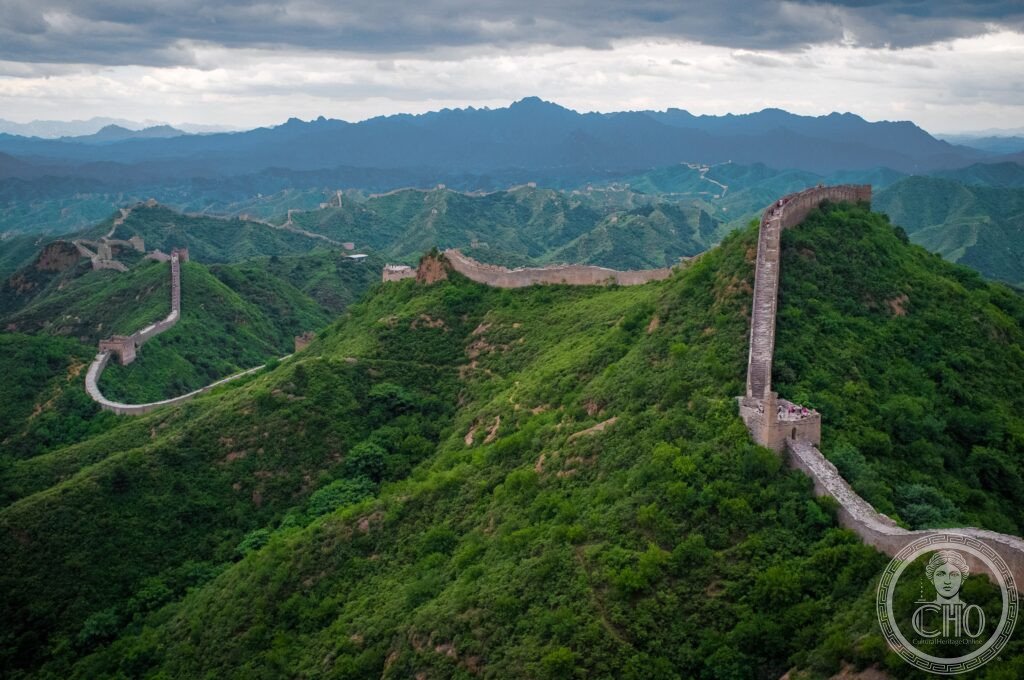
Great Wall of China
The largest military construction in human history and the defining image of Chinese civilization — the Great Wall of China (Wanli Changcheng, “Ten-Thousand-Li Long Wall”; UNESCO WHS 1987) is a series of walls built, rebuilt, and extended from the 7th century BCE to the 17th century CE, totalling 21,196 km of walls, trenches, and natural barriers when all sections are counted together, and reaching its architectural peak during the Ming Dynasty (1368-1644 CE).
At a glance
The Great Wall of China (the most precisely GreatWallChina single Wanli Changcheng Ten-Thousand-Li Long Wall total 21196 km walls trenches natural barriers all sections counted Qin 221 206 BCE Qin Shi Huang first emperor unified separate northern walls connected labor 300000 soldiers farmers 500000 died construction Han 206 BCE 220 CE extended west Gobi Desert Jade Gate Yumenguan Sui 581 618 CE rebuilt Wei Jin Northern Wei Northern Qi Tang 618 907 CE short walls Ming 1368 1644 CE most recognizable famous sections today Badaling Mutianyu Simatai Jinshanling Juyongguan Pass total Ming 8850 km Badaling 70 km northwest Beijing tourist most visited 10 million per year Mutianyu 90 km northeast Beijing best preserved architecture double crenellations watchtowers 1567 CE Qi Jiguang general rebuilt Simatai 110 km northeast Beijing wildest unrestored remote ISS visible myth mythbusted Yang Liwei 2003 CE Chinese astronaut confirmed cannot see naked eye UNESCO heritage: the myth of visibility from space (the most famous myth about the Great Wall: “The Great Wall is the only man-made structure visible from space (or from the Moon).” The truth: the myth originated in a 1932 CE Ripley’s Believe It Or Not entry; the Great Wall is typically 4-8m wide — far too narrow to be seen by the naked eye from the International Space Station at 400 km altitude (the wall subtends an angle of approximately 0.001° at ISS altitude); Yang Liwei (the first Chinese astronaut; Shenzhou 5 mission, October 2003 CE) specifically looked for the Great Wall from orbit and could not see it; NASA has confirmed the Great Wall is not visible from space with the naked eye under normal conditions)) — the most precisely GreatWallChina single total 21196 km Qin Shi Huang 221 206 BCE unified separate walls Han 206 BCE 220 CE extended Jade Gate Ming 1368 1644 CE 8850 km most recognizable Badaling 70 km 10 million per year Mutianyu 90 km double crenellations 1567 CE Qi Jiguang rebuilt Simatai wildest unrestored Yang Liwei 2003 CE myth space not visible UNESCO heritage in any UNESCO world heritage site)).
Key facts
- Ming construction (1368-1644 CE) — the wall you see today: the most precisely GreatWallChina single Ming Dynasty 1368 1644 CE 8850 km total brick stone tamped earth most sections brick stone construction previous Qin Han dynasties tamped rammed earth pise no longer visible eroded Qi Jiguang 1567 CE general Yan Qi 9 years rebuilt Mutianyu Juyongguan Simatai Jinshanling strongest architectural sections watchtowers 2 storey dormitory garrison soldiers smoke signal communication fire beacon day smoke night relay station 150 km per hour message Beijing enemy spotted UNESCO heritage — the Ming construction: the Great Wall that tourists visit today is almost entirely the Ming Dynasty wall (the Qin and Han walls were built of rammed earth and have mostly eroded); the Ming used kiln-fired bricks (a major technological upgrade; the bricks are bonded with a mortar made of sticky rice flour and calcium carbonate (slaked lime) (the sticky rice mortar is stronger than modern Portland cement for compressive strength)); the watchtower system (the Ming watchtowers are spaced 150m-500m apart; each tower could communicate with the next via smoke (day) or fire beacon (night); a message could travel 150 km/h across the Wall from the frontier to Beijing; the Ming army could mobilize a response within hours of an enemy sighting); General Qi Jiguang (the most celebrated Ming military commander; rebuilt the Mutianyu, Juyongguan, Simatai, and Jinshanling sections between 1567-1576 CE; standardized the watchtower design and the brick construction specifications)
- GPS: 40.4319° N, 116.5704° E (Mutianyu section)
History
From Warring States earthworks to Ming brick fortress (the most precisely GreatWallChina single 7th century BCE Warring States period Chu State first wall Qi State 650 BCE Qin Shi Huang 221 206 BCE unified empire connected existing walls 300000 workers 500000 died construction pushed north Xiongnu Mongolian nomads Han 206 BCE 220 CE expanded west Silk Road Jade Gate Yumenguan Dunhuang 6000 km longest Han wall Gobi Desert Jin Dynasty 1115 1234 CE Jurchen northern wall Genghis Khan 1213 CE Mongol conquest defeated Ming 1368 CE kicked Mongols Zhu Yuanzhang founder Hongwu Yongle Xuande Jiajing Longqing Wanli emperors rebuilt extended major construction 1368 1640 CE Manchu Qing 1644 CE conquest Beijing conquered Great Wall breach Shanhai Pass gate surrendered Wu Sangui Ming general Nurhaci Qing army entered China end Ming UNESCO heritage: the Qin construction (221-206 BCE: Qin Shi Huang (the First Emperor of China) unified the Seven Warring States (221 BCE) and immediately began connecting the separate northern walls into a single continuous barrier against the Xiongnu (the Mongolian nomadic confederation); the labor force: approximately 300,000 soldiers + an estimated 500,000 forced laborers (farmers, convicts, prisoners of war); the estimated death toll: 400,000-500,000 dead during the Qin wall construction (many died of exhaustion, disease, or cold; the bodies were buried within the wall according to some ancient sources (modern archaeology has found no systematic evidence of this, but scattered human remains have been found within the rammed earth))); the Ming construction (1368-1644 CE: the Hongwu Emperor (r. 1368-1398 CE) began construction of the Ming wall to protect against Mongol raids; successive Ming emperors rebuilt and extended the wall until approximately 1640 CE; the total cost of the Ming wall: approximately 6 million taels of silver (the equivalent of the entire state revenue for approximately 2 years))); the Wall’s failure (the Great Wall never fully stopped a major invasion: the Mongols under Altan Khan raided and sacked the suburbs of Beijing in 1550 CE despite the Wall; the Manchu (Qing Dynasty) entered China through the Shanhaiguan pass (the eastern terminus of the Ming Wall) in 1644 CE when the Ming general Wu Sangui deliberately opened the gate to the Qing forces (preferring Qing rule to the rebel leader Li Zicheng who had captured Beijing))) — the most precisely GreatWallChina single 7th century BCE Warring States Qin Shi Huang 221 206 BCE 300000 soldiers 500000 laborers 400000 500000 died rammed earth Han 206 BCE extended Jade Gate Gobi 6000 km Ming 1368 1644 CE brick kiln-fired sticky rice mortar lime stronger cement Qi Jiguang 1567 1576 CE standardized watchtower brick construction 1644 CE Shanhaiguan breach Wu Sangui opened gate Qing army UNESCO heritage in any UNESCO world heritage site)).
What you see
Badaling, Mutianyu, and the wild wall sections (the most precisely GreatWallChina single Badaling 70 km northwest Beijing easiest access cable car most visited 10 million per year restored 1950s CE crowded summer weekends Mutianyu 90 km northeast Beijing best preserved architecture double crenellations both inner outer parapet 22 watchtowers cable car chairlift toboggan down less crowded Badaling Simatai 110 km northeast Beijing wildest unrestored steep natural forest remote few visitors night wall torchlit tour Jinshanling adjacent Simatai 120 km northeast best photography light watchtowers connected ridge visible Gubeikou 150 km northeast unrestored wild crumbling earth brick no tourists Juyongguan Pass 60 km northwest Beijing Qin Shi Huang gateway UNESCO heritage: the visitor experience: Badaling (the most visited; 70 km from Beijing; the fully restored section (pristine and can be very crowded in summer); cable car available; not recommended on weekends May-October)); Mutianyu (the recommended tourist section; 90 km from Beijing; the best architectural quality (the double crenellations; the 22 watchtowers; the densest tower spacing of any accessible section); less crowded than Badaling; cable car up, toboggan down the mountain)); Simatai (the wildest accessible section; 110 km from Beijing; steep climbs (the wall follows an extremely steep ridge); partly unrestored; the night-wall experience (torchlit walk available in summer); the best section for feeling the military function of the Wall)); Jinshanling (adjacent to Simatai; the section most used for photography (the watchtowers connected by a long undulating ridge section; the best light (early morning from the east, late afternoon from the west)))) — the most precisely GreatWallChina single Badaling 70 km northwest most visited 10 million cable car crowded summer Mutianyu 90 km northeast best architecture double crenellations 22 watchtowers cable car toboggan less crowded Simatai 110 km northeast wildest unrestored steep night wall torchlit Jinshanling 120 km best photography watchtowers ridge light Juyongguan Pass 60 km Qin gateway UNESCO heritage in any UNESCO world heritage site)).
Practical information
- Getting there: fly to Beijing Capital (PEK; the main international hub with connections worldwide) or Beijing Daxing (PKX; the new airport south of Beijing); the transfer to Mutianyu (the recommended section): bus 916 from Dongzhimen bus terminal (metro Line 2/13) to Huairou (1h30m; CNY 12/€1.50) + local transfer to Mutianyu (minibus or taxi CNY 25-40/€3-5; 30 min); or direct tourist bus from Dongzhimen (weekends and holidays; CNY 65 round trip/€8); taxi from Beijing center (approximately CNY 300-400/€37-49 one way; 1.5-2h); the entry fee (Mutianyu: CNY 65/€8; cable car round trip CNY 140/€17; toboggan down CNY 100/€12); the best time (September-November (autumn colors in the mountains; clear air; the wall covered in red and yellow leaves); April-May (spring; green mountains; cherry blossoms at Mutianyu))
Getting there
Mutianyu (recommended): bus 916 from Dongzhimen (1h30m, CNY 12) + local transfer (CNY 25-40). Entry CNY 65/€8, cable car CNY 140. Best: September-November (autumn). Avoid Badaling on summer weekends. Beijing airports: PEK or PKX. GPS: 40.4319, 116.5704.
Nearby
- Ming Tombs — 50 km northwest of Beijing (UNESCO WHS 2003; the burial complex of 13 of the 16 Ming Dynasty emperors (1368-1644 CE); the Spirit Way (the 7 km ceremonial approach road lined with 18 pairs of stone figures (military officials, civil officials, and animals)); the Changling Tomb (the largest; the tomb of the Yongle Emperor (r. 1402-1424 CE), the builder of the Forbidden City and the moving of the capital to Beijing); the underground Dingling Tomb (the excavated tomb of the Wanli Emperor (r. 1572-1620 CE; the only excavated Ming imperial tomb; open to visitors; the jade burial suits and gold artifacts on display))
- Forbidden City (Palace Museum) — 70 km south (UNESCO WHS 1987; the imperial palace of the Ming and Qing dynasties (1420-1912 CE); 980 buildings; 8,728 rooms; the largest ancient palace complex in the world; book tickets online weeks in advance)
Sources
- Wikipedia, Great Wall of China; Mutianyu; Qi Jiguang; Qin Shi Huang, accessed June 2026
- UNESCO, The Great Wall, WHS reference 438, inscribed 1987
Find it on the map
See this place and what’s around it →📷 Diventa un fotografo di Cultural Heritage Online
Condividi le tue foto dei luoghi: restano pubblicate con la tua firma come autore. Più vengono viste, più ti fai conoscere — e presto un concorso premierà le foto più apprezzate.
Accedi o registrati gratis per aggiungere una foto