
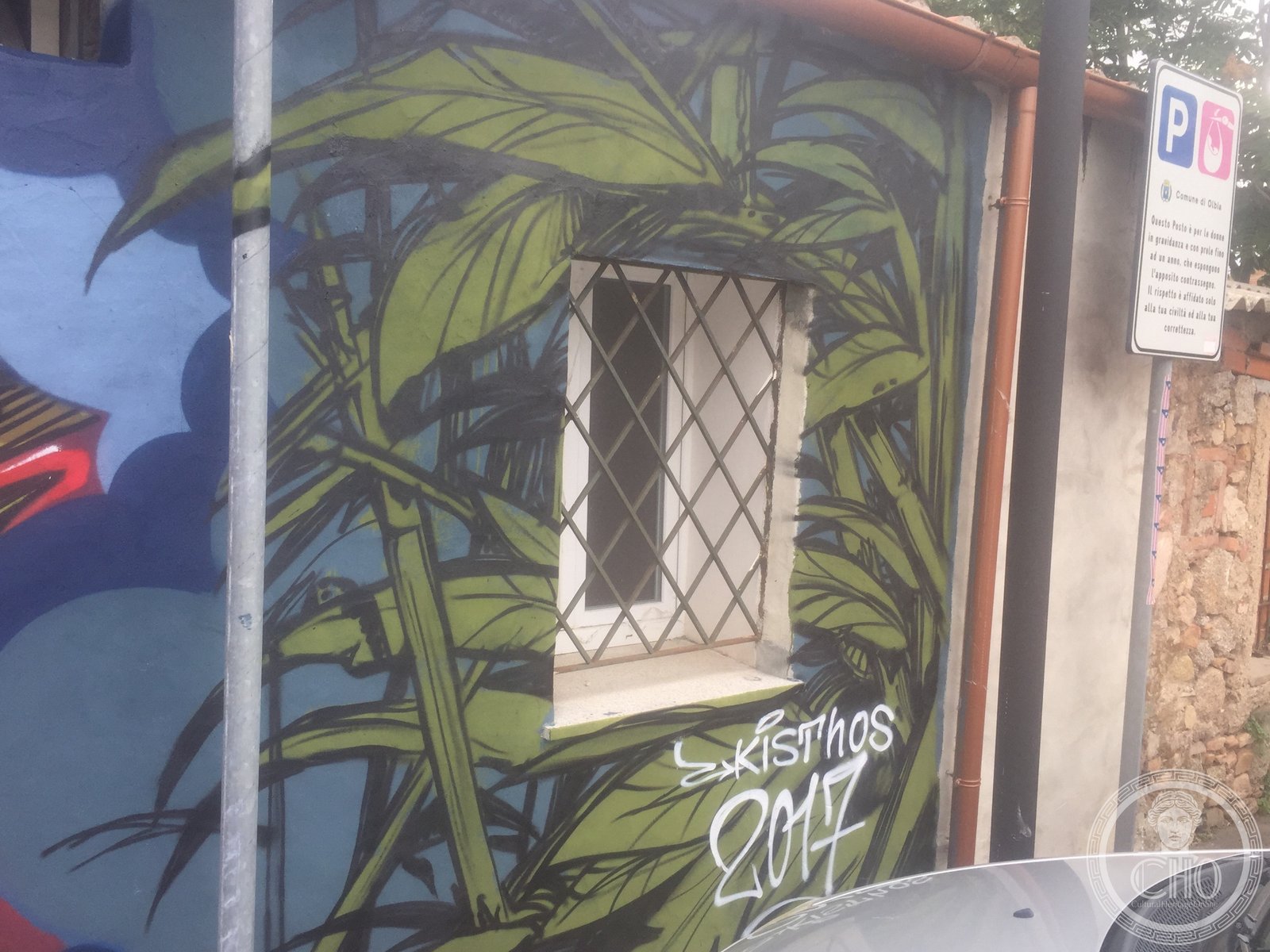
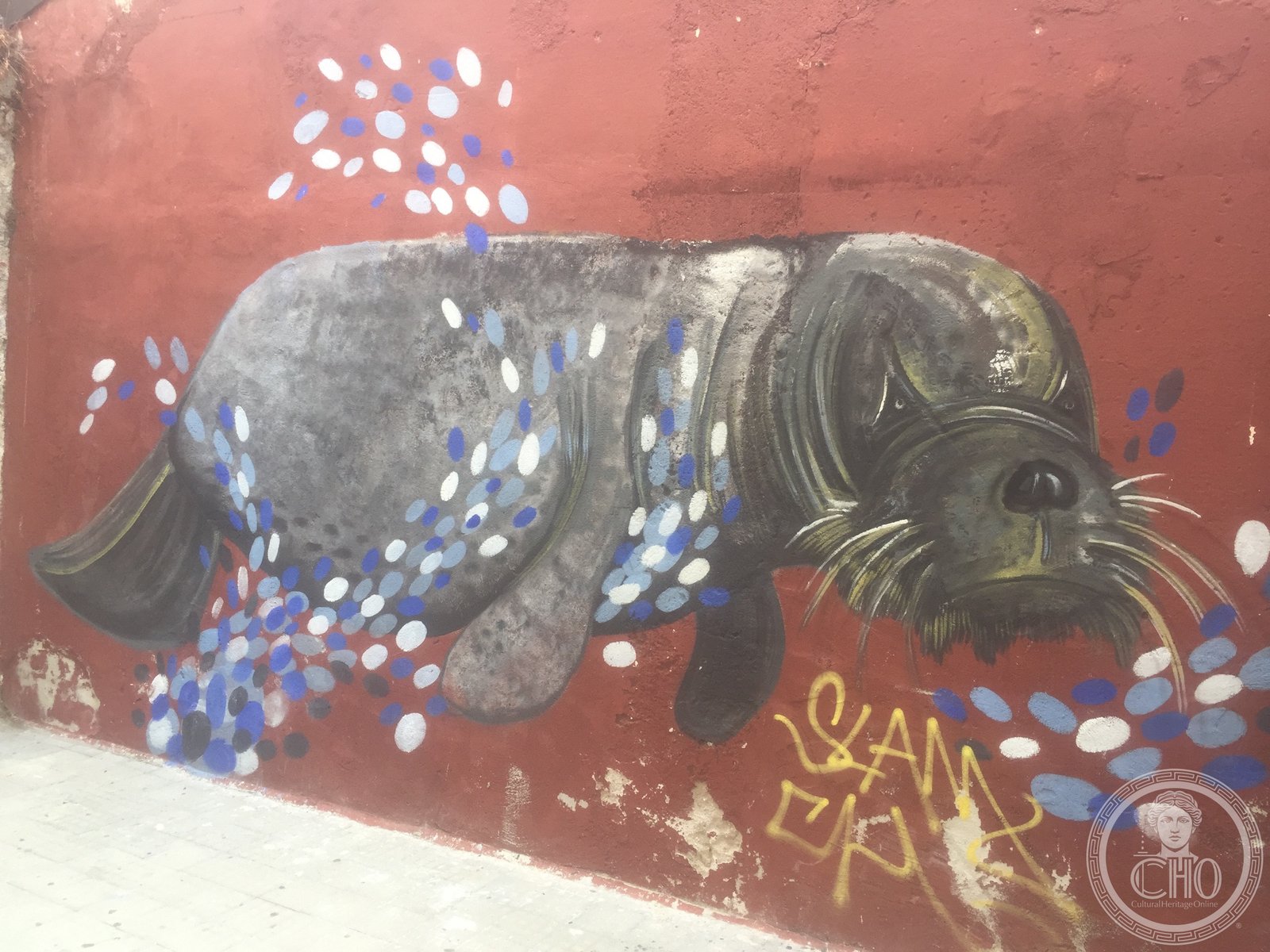
Olbia's medieval street grid has become a canvas for large-format urban murals. The walls within a few blocks of the Basilica di San Simplicio carry the most concentrated collection, visible to anyone crossing the old town on foot.
At a glance
Olbia is best known as Sardinia's northern ferry port and the main entry point for visitors to the Costa Smeralda. Its old town, however, is a compact historic centre with a 2,000-year urban history, from its Phoenician and Roman foundations through medieval and Aragonese layers to the present. In recent years, the municipality has supported an open-air mural programme that brings large-format figurative and abstract works onto the plaster and stone surfaces of the old town's narrow streets. Most pieces are concentrated around Via Acquedotto, Via delle Terme, and the lanes immediately south of San Simplicio.
Key facts
- Location: Old town of Olbia, northern Sardinia, near Basilica di San Simplicio
- Coordinates: 40.9245° N, 9.4992° E
- Format: Open-air murals; no admission, no fixed hours
- Best access: Walking; the old town is pedestrianised in its core
- Nearest landmark: Basilica di San Simplicio (4th–5th century AD), 200 m
History
Olbia was founded as Olbia by the Phoenicians and became a Roman municipium under the name Civitas Olbiae. Its importance as a port on the Tyrrhenian routes made it one of the key Sardinian cities through late antiquity. The medieval urban fabric survives in the narrow street pattern of the old town, even where the individual buildings have been rebuilt over centuries. The Basilica di San Simplicio, dating to the 4th–5th century AD, anchors the spiritual centre of the old town and overlies an early Christian necropolis.
The mural programme belongs to a Mediterranean-wide movement of using urban art to activate historic peripheries and attract visitors beyond the ferry terminal and the tourist strip.
What you see
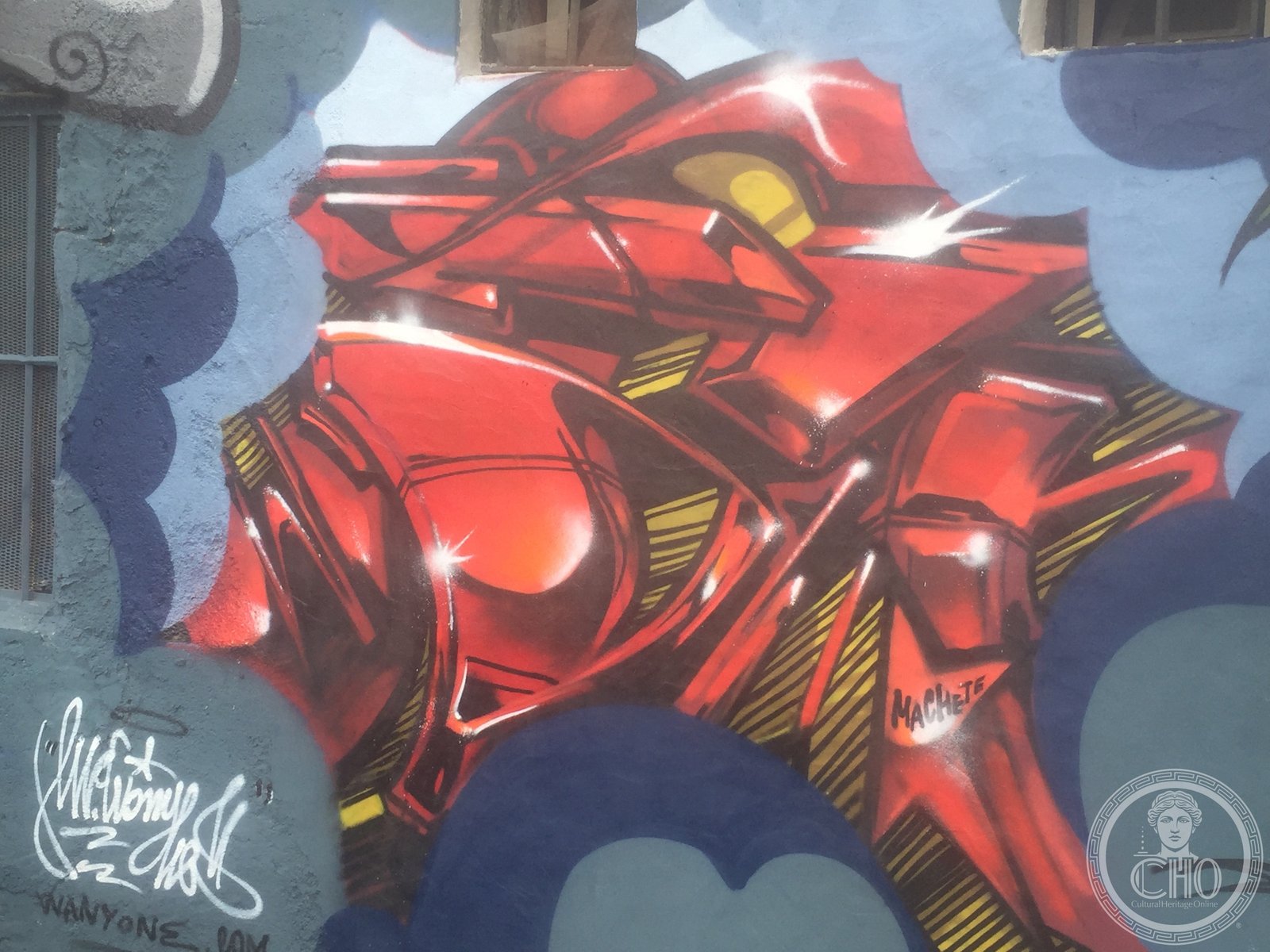
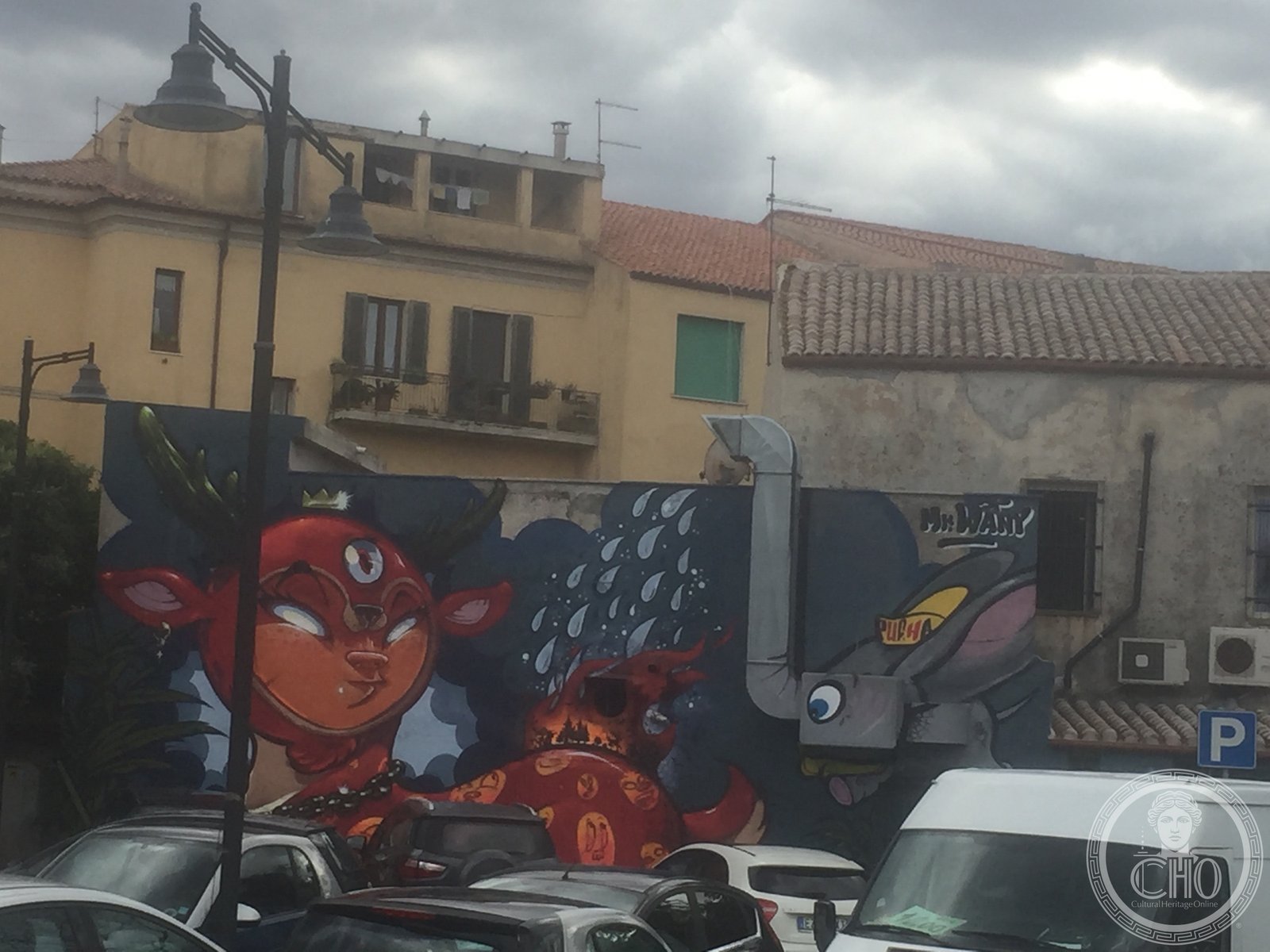
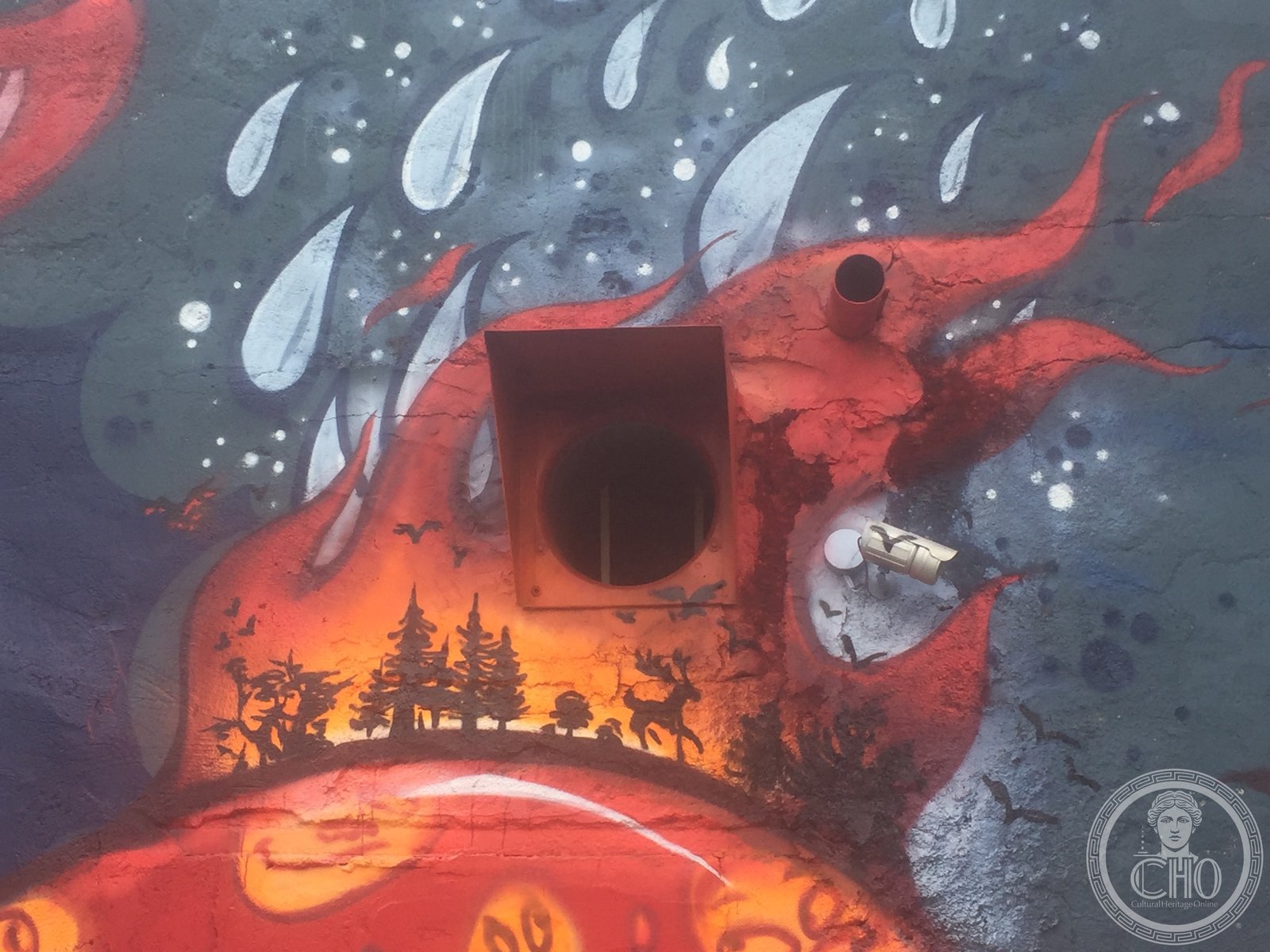
The murals range from civic realism — portraits of Olbians past and present, references to Sardinian pastoral culture and cork production — to abstract compositions that play with the irregular geometry of the old building facades. The work is executed at a scale suited to the narrow streets: the viewer encounters these pieces at close range and from the side before seeing them frontally. Several pieces incorporate the architectural features of the wall — windows, doorframes, utility meters — into the composition.
Photography here requires patience with the light: the deep, narrow streets read well in the diffuse light of morning or overcast days; direct midday sun creates high contrast that flattens the images.
Practical information
- No admission fee; accessible at all hours
- The old town core is a 10-minute walk from Olbia train station and ferry terminal
- Combine with the Basilica di San Simplicio and its adjacent Necropolis (200 m)
- National Archaeological Museum of Olbia: 300 m south (recommended in the same visit)
Getting there
Olbia Costa Smeralda Airport (OLB) is 3 km from the city centre; taxi takes 10 minutes. The train station (Trenitalia Sardegna) is adjacent to the old town. Ferry terminal Olbia is 1 km from the centre. From the terminal, the basilica and mural area are reachable on foot in 15 minutes.
Nearby
- Basilica di San Simplicio (200 m) — Romanesque basilica, 4th–5th century AD, with early Christian necropolis beneath
- National Archaeological Museum of Olbia (300 m) — Phoenician, Roman and medieval collections
- Necropolis under the Basilica of San Simplicio (200 m) — excavated early Christian burial ground
Sources & resources
Gallery
Photographed by Luigi De Marchi.
Find it on the map
See this place and what’s around it →📷 Become a Cultural Heritage Online photographer
Share your photos of places: they stay published under your name as the author. The more they're seen, the more you get noticed — and soon a contest will reward the most appreciated photos.
Log in or sign up free to add a photo