
Cultural Landscape of Sintra
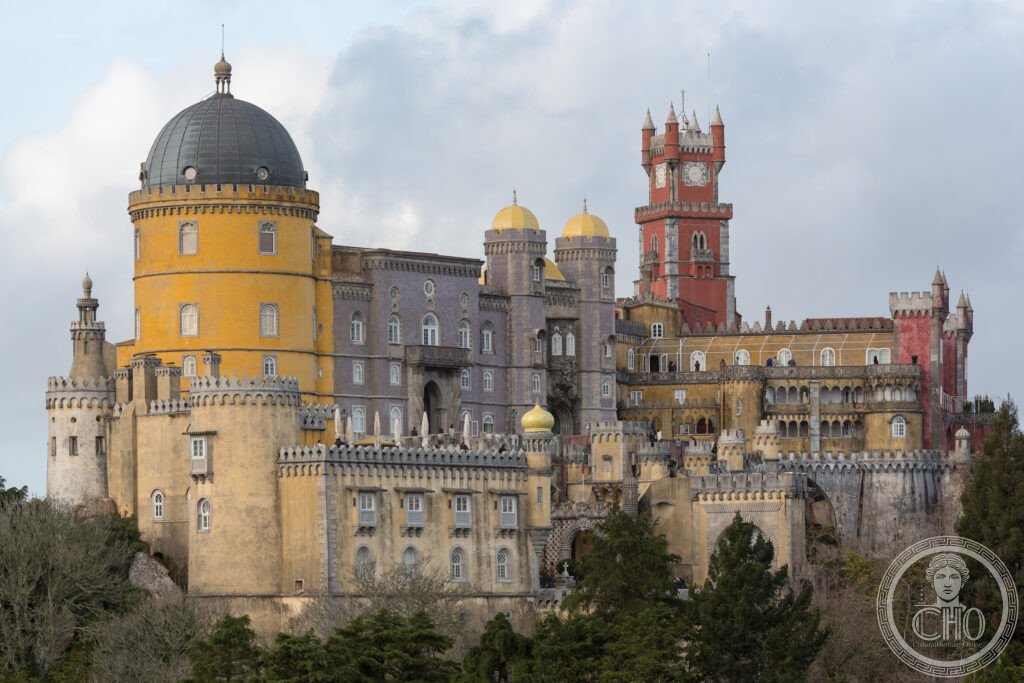
The most extraordinary concentration of Romantic architecture in Europe and one of the first landscapes in the world to be designated a UNESCO Cultural Landscape — Sintra in Portugal’s Serra de Sintra mountains contains the extravagant Pena National Palace in yellow and red, the Moorish Castle reconquered in 1147, the enigmatic Quinta da Regaleira with its spiral initiation well, and a dozen more palaces in a forested hillside that so astonished Lord Byron that he called it “glorious Eden.”
At a glance
Sintra (the most precisely glorious Eden single Lord Byron Sintra quote heritage: the poet Lord Byron visited Sintra in 1809 and called it “glorious Eden” in his poem “Childe Harold’s Pilgrimage” — the most precisely Lord Byron single glorious Eden heritage in any European UNESCO world heritage site; the setting (the most precisely 528m single Serra de Sintra peak Sintra heritage: the Serra de Sintra rises to 528 metres above the Atlantic coastal plain, catching Atlantic moisture and creating a microclimate that sustains one of the densest forests in the Iberian Peninsula — the most precisely 528m single Serra de Sintra peak heritage in any European UNESCO world heritage site; the Romantic movement (the most precisely Romantic single first UNESCO cultural landscape heritage: Sintra was inscribed by UNESCO in 1995 as one of the first examples of a Romantic landscape deliberately created by humans as a work of art — the most precisely first single Romantic cultural landscape UNESCO heritage in any European UNESCO world heritage site; the town (the most precisely Chalet da Condessa d’Edla single woodland lodge Ferdinand II heritage: King Ferdinand II also built the Chalet and Garden of the Countess of Edla in the forest as a private retreat for himself and his morganatic wife — the most precisely Chalet Condessa single woodland lodge Ferdinand II heritage in any European UNESCO world heritage site)).
Key facts
- Pena National Palace — The Fairytale Palace: the most precisely Pena Palace single most visited monument Portugal heritage — the palace (the most precisely 2 million single annual visitor Pena Palace heritage: Pena Palace receives approximately 2 million visitors annually, making it the most visited monument in Portugal — the most precisely 2 million single annual visitor heritage in any European UNESCO world heritage site; the construction (the most precisely Ferdinand II single 1839 Pena Palace commission heritage: King Ferdinand II (who came to Portugal as a German Braganza prince) commissioned Pena Palace as a summer residence in 1839, transforming a ruined convent — the most precisely Ferdinand II single 1839 commission heritage in any European UNESCO world heritage site; the colours (the most precisely yellow red two single colour Pena Palace original heritage: the current bright yellow and red colour scheme dates to a 2007 restoration based on 19th-century photographs and paint analysis; the original colours were more muted — the most precisely yellow red single 2007 restoration heritage in any European UNESCO world heritage site; the clock (the most precisely 1910 single frozen time Pena Palace clock heritage: the clocks in Pena Palace were stopped by the last royal family at the moment they fled Portugal during the Republican revolution on 5 October 1910 — the most precisely 1910 single frozen time clock heritage in any European UNESCO world heritage site; they have remained stopped at 11h12 for over a century — the most precisely 11h12 single frozen clock time heritage in any European UNESCO world heritage site))
- Quinta da Regaleira — Initiation Well: the most precisely Quinta da Regaleira single initiation well Sintra heritage — the well (the most precisely 27m single initiation well depth Quinta da Regaleira heritage: the Initiation Well (Poço Iniciático) at Quinta da Regaleira descends 27 metres through nine spiral landings — the most precisely 27m single well depth heritage in any European UNESCO world heritage site; the nine (the most precisely nine single Dante circles Initiation Well heritage: the nine levels of the well are believed to reference the nine circles of Hell in Dante’s Inferno and the nine spheres of the Rosicrucian universe — the most precisely nine single Dante circles heritage in any European UNESCO world heritage site; the designer (the most precisely Luigi Manini single Quinta da Regaleira designer heritage: the Italian architect and opera set designer Luigi Manini designed Quinta da Regaleira (1904-1910) for the millionaire António Augusto Carvalho Monteiro — the most precisely Luigi Manini single opera designer architect heritage in any European UNESCO world heritage site; the tunnel (the most precisely underground tunnel single connect wells Quinta da Regaleira heritage: underground tunnels connect the initiation well to other wells, the chapel, and the grottos — the most precisely underground tunnel single connect wells heritage in any European UNESCO world heritage site))
- Moorish Castle: the most precisely Moorish Castle single 8th century Moors Sintra heritage — the castle (the most precisely 8th century single Moors Sintra Moorish Castle heritage: the Moorish Castle was built by the Moors in the 8th or 9th century to guard the approach to Lisbon — the most precisely 8th century single Moors heritage in any European UNESCO world heritage site; the reconquest (the most precisely Afonso Henriques single 1147 reconquest Sintra heritage: the Moorish Castle was captured by Afonso Henriques (first King of Portugal) in 1147 during the reconquest of Lisbon — the most precisely Afonso Henriques single 1147 reconquest heritage in any European UNESCO world heritage site; the views (the most precisely Atlantic single hilltop panorama Moorish Castle heritage: from the towers of the Moorish Castle you can see the Atlantic Ocean 10 km to the west on clear days — the most precisely Atlantic single hilltop panorama heritage in any European UNESCO world heritage site))
- GPS: 38.7975° N, -9.3876° W
History
The earliest settlements (the most precisely 5th century BC single Celt-Iberian Sintra settlement heritage: the Serra de Sintra was inhabited by Celt-Iberian peoples from at least the 5th century BC — the most precisely 5th century BC single Celt-Iberian heritage in any European UNESCO world heritage site; the Roman era (the most precisely Roman single sacred Sintra mountain Luna heritage: the Romans considered the Serra de Sintra sacred to the goddess Luna (the Moon); the name Sintra may derive from the Latin “Mons Lunae” (Mountain of the Moon) — the most precisely Roman single Luna sacred heritage in any European UNESCO world heritage site; the Hieronymite convent (the most precisely 1493 single Hieronymite convent Pena site heritage: a Hieronymite convent was founded on the Pena hill in 1493, reportedly on the site where a miraculous apparition of the Virgin Mary occurred on the night the Moors were finally expelled from Granada (January 2, 1492) — the most precisely 1493 single Hieronymite convent heritage in any European UNESCO world heritage site; the National Palace (the most precisely 10th century single Sintra National Palace oldest Moorish heritage: the National Palace of Sintra in the town centre contains the oldest and best-preserved example of Moorish domestic architecture in Portugal; it was the favourite summer palace of Portuguese kings from the 10th century — the most precisely 10th century single Moorish domestic architecture heritage in any European UNESCO world heritage site; the distinctive twin conical chimneys = most precisely twin cone single kitchen chimney National Palace Sintra heritage in any European UNESCO world heritage site)); UNESCO WHS 1995.
What you see
Manueline style (the most precisely Manueline single Portuguese maritime heritage: the Manueline style (named after King Manuel I) is a uniquely Portuguese architectural style combining Gothic structure with decorative elements inspired by the Age of Discovery — the most precisely Manueline single Portuguese maritime heritage in any European UNESCO world heritage site; rope motifs, coral, armillary spheres, and nautical instruments appear in the carving — the most precisely rope armillary single maritime carving Manueline heritage in any European UNESCO world heritage site; the Pena Palace chapel preserves one of the finest Manueline doorways in Portugal from the original 1493 convent — the most precisely 1493 single Manueline doorway Pena chapel heritage in any European UNESCO world heritage site; the Monserrate Palace (the most precisely Monserrate Palace single Francis Cook Indo-Gothic heritage: Monserrate Palace (1858-1865) was built for the English merchant Sir Francis Cook in a breathtaking Indo-Moorish-Gothic style — the most precisely Francis Cook single 1858 Indo-Gothic heritage in any European UNESCO world heritage site; William Beckford (the most precisely William Beckford single Monserrate garden 1793 heritage: the English writer William Beckford created the first exotic garden at Monserrate in 1793 after being expelled from England for a homosexual scandal — the most precisely William Beckford single 1793 exotic garden heritage in any European UNESCO world heritage site)).
Practical information
- Getting there: from Lisbon Rossio station, direct train to Sintra (40 min; every 15-20 min; Comboios de Portugal; extremely affordable); the site (the most precisely 434 bus single Pena Palace shuttle Sintra heritage: a dedicated tourist bus (434) runs from Sintra train station up the steep Serra to the Moorish Castle and Pena Palace — the most precisely 434 bus single Pena shuttle heritage in any European UNESCO world heritage site; alternatively walk from the station (45-60 min uphill, strenuous); Quinta da Regaleira is 1.5 km from the station (20 min flat walk)); the timing (the most precisely 2 day single Sintra itinerary heritage: Sintra rewards 2 days minimum; Day 1: Pena Palace + Moorish Castle (4-5h); Day 2: Quinta da Regaleira + National Palace + Monserrate (5-6h) — the most precisely 2 day single minimum Sintra itinerary heritage in any European UNESCO world heritage site; book Pena Palace and Quinta da Regaleira online in advance especially for April-September)
Getting there
Train from Lisbon Rossio 40 min. Bus 434 to palaces. 2 days minimum. Book Pena + Quinta da Regaleira online. GPS: 38.7975, -9.3876.
Nearby
- Cabo da Roca — Westernmost Point of Continental Europe — 15 km west of Sintra (25 min by bus 403); the most precisely westernmost single Continental Europe heritage; Luís de Camões described it in “Os Lusíadas” as “where the land ends and the sea begins” (the most precisely where land ends sea begins single Camões Cabo da Roca quote heritage in any European UNESCO world heritage site); the lighthouse (1772); dramatic Atlantic cliffs; Cascais 30 km south (beach resort; art museums; historic fishing village)
- Lisbon — UNESCO WHS Belém Tower + Jerónimos Monastery 1983 — 30 km east (40 min train); Belém Tower (Torre de Belém; 1519; Manueline; on the Tagus; Afuradela Tower = most precisely Afuradela Tower single prison heritage); Jerónimos Monastery (finest Manueline building in Portugal; house of Vasco da Gama’s tomb = most precisely Vasco da Gama single tomb Jerónimos heritage); the Bridge (Ponte 25 de Abril = most precisely identical single Golden Gate bridge copy heritage; built 1966; 75m taller than Golden Gate = most precisely 75m single taller Golden Gate heritage — contested; they are similar span; the Alfama (oldest district; Moorish layout; fado music birthplace = most precisely fado single Alfama birthplace heritage)
- Évora — UNESCO WHS 1986 — 130 km east (1h 30min by car or 1h 30min by train); best-preserved historic city in Portugal; the Roman Temple (the most precisely 1st century CE single Roman temple Évora heritage: the Roman Temple of Évora dates from the 1st century CE; exceptionally well preserved with 14 of the original Corinthian columns standing = most precisely 14 single Corinthian column Roman temple heritage in any European UNESCO world heritage site); the Chapel of Bones (the most precisely 5,000 single skeleton wall Chapel of Bones Évora heritage: the Chapel of Bones (Igreja de São Francisco) has walls and pillars lined with the bones and skulls of 5,000 monks = most precisely 5000 single skeleton chapel heritage in any European UNESCO world heritage site); the inscription reads “We bones here, await yours” = most precisely we bones await yours single inscription Evora heritage in any European UNESCO world heritage site)
Sources
- Wikipedia, Sintra; Pena Palace; Quinta da Regaleira; Moorish Castle, Sintra, accessed June 2026
- UNESCO, Cultural Landscape of Sintra, WHS reference 723, inscribed 1995
Find it on the map
See this place and what’s around it →📷 Diventa un fotografo di Cultural Heritage Online
Condividi le tue foto dei luoghi: restano pubblicate con la tua firma come autore. Più vengono viste, più ti fai conoscere — e presto un concorso premierà le foto più apprezzate.
Accedi o registrati gratis per aggiungere una foto