
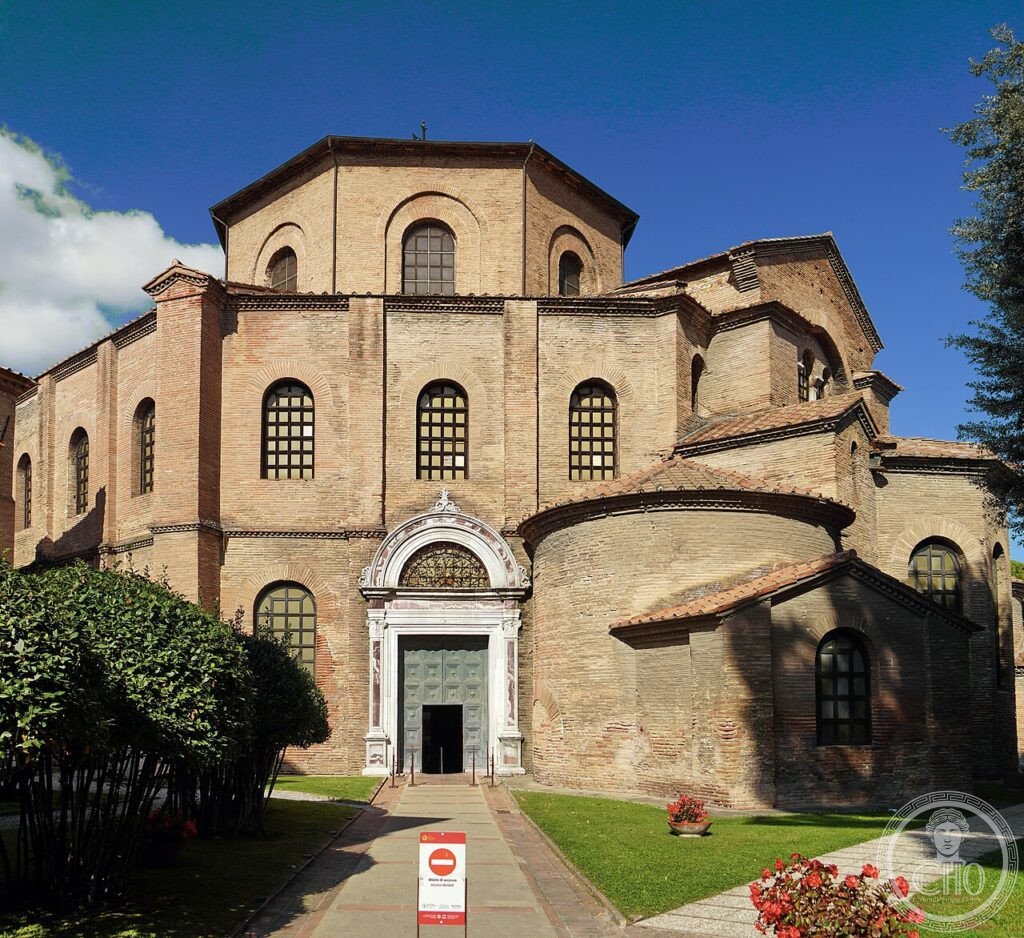
Monumenti Paleocristiani e Bizantini di Ravenna (IV-VI sec. d.C.): San Vitale (547 d.C.) e l’Apse di Giustiniano e Teodora, Sant’Apollinare in Classe e i Mosaici della Capitale dell’Occidente (UNESCO 1996)
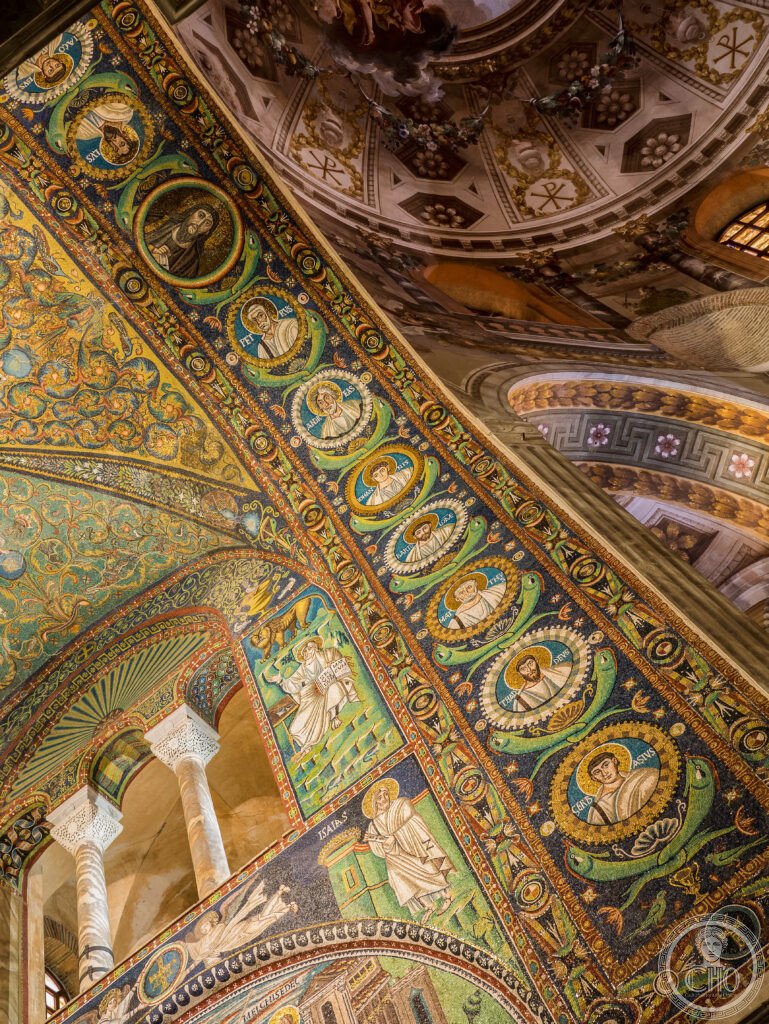
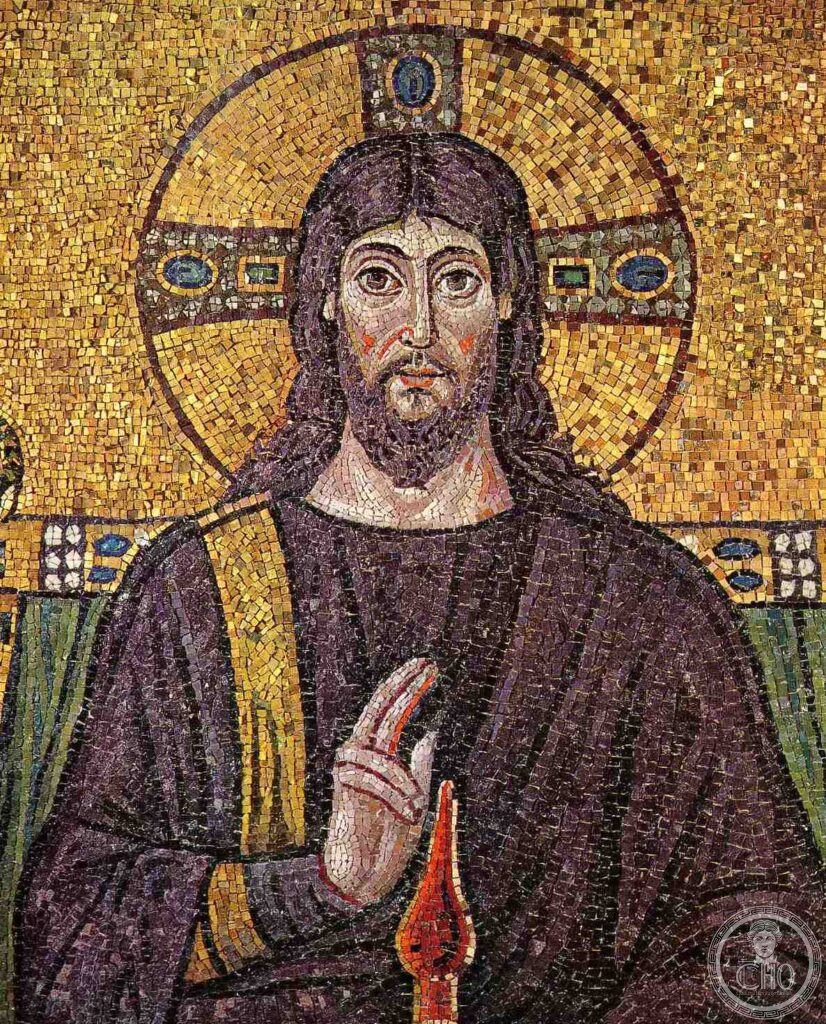
The eight early Christian and Byzantine monuments of Ravenna — the city that served as the capital of the Western Roman Empire (402-476 CE), then of the Ostrogoth Kingdom of Italy (493-540 CE), then of the Byzantine Exarchate of Italy (540-751 CE) — preserve the largest and most complete cycle of early Christian mosaic art surviving in the world: approximately 1,800 square metres of in-situ gold-ground mosaic from the 5th and 6th centuries, in a range of theological programmes and stylistic approaches unequalled anywhere.
At a glance
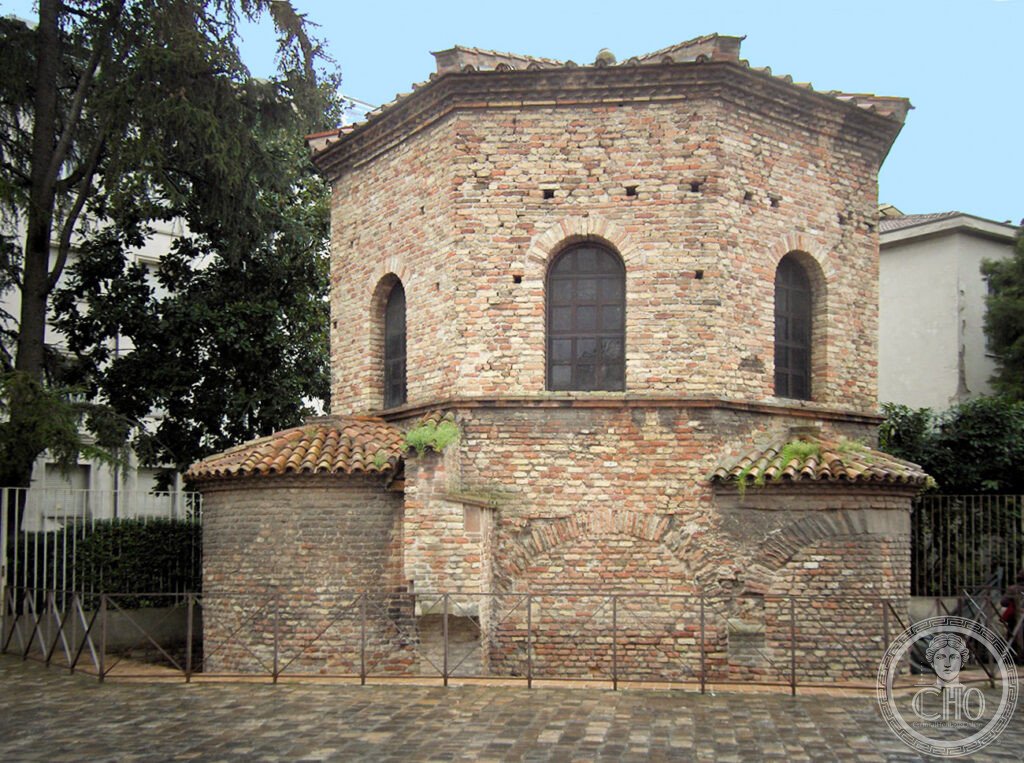
Ravenna (province of Ravenna, Emilia-Romagna; UNESCO 1996, ref. 788) was inscribed for eight early Christian and Byzantine monuments of the 5th and 6th centuries CE, each of which preserves exceptional mosaic decoration: the Mausoleo di Galla Placidia (c. 430 CE, the earliest and most intimate of the eight, with a dark blue ceiling mosaic of stars and the oldest surviving gold-ground mosaic composition in the West); the Battistero Neoniano (c. 458 CE, octagonal baptistery with the earliest surviving mosaic of the Baptism of Christ in a dome); the Battistero degli Ariani (c. 500 CE, built by the Ostrogoth King Theodoric for his Arian Christian court, with a similar baptism mosaic in a slightly different theological tradition); the Cappella Arcivescovile di Sant'Andrea (c. 494-519 CE, private palace chapel with a Christ in the character of a Roman emperor/warrior); the Mausoleo di Teodorico (c. 520 CE, unique in being built of ashlar stone rather than brick, with the famous 300-tonne Istrian limestone monolithic lid of the tomb); Sant'Apollinare Nuovo (c. 504-519 CE, with the famous processions of saints and martyrs in two long mosaic registers along the nave walls); San Vitale (547 CE, the most sophisticated architectural and mosaic composition, with the Justinian and Theodora panels); and Sant'Apollinare in Classe (549 CE, 9 km south of the city, with the finest single apse mosaic in the Western world).
Key facts
- San Vitale (547 CE): The principal building of the Ravenna complex; an octagonal central-plan church (84 m diameter) with a complex system of semicircular exedrae (niches opening off the octagonal nave) creating a dynamic spatial experience unlike any other late antique building in Italy; the apse mosaics show (on the left) Emperor Justinian I with the Archbishop Maximian of Ravenna and the court, and (on the right) Empress Theodora with her ladies-in-waiting; these are the most important surviving portraits of any historical figures from the 6th century and the defining images of Byzantine court representation. The building was commissioned by the banker Julianus Argentarius (a private sponsor) and consecrated by Archbishop Maximian in 547 CE, but its architectural design derives from the imperial church-building programme of Justinian in Constantinople (the architects were probably from the capital)
- Sant'Apollinare in Classe (549 CE): A basilica 9 km south of Ravenna (in what was the ancient port of Classis, now a village in the flat coastal plain); the apse mosaic (the only original surviving element; the nave mosaics were replaced in later medieval campaigns) is the largest and most complex single apse mosaic composition surviving in the West: approximately 170 m² of mosaic on the conch and side walls of the apse, showing the first bishop of Ravenna (St Apollinaris) in a formal landscape (green meadows, stylized trees, lambs, birds) flanked by the Transfiguration of Christ above and the portraits of later Ravenna bishops in the register below; the gold background is the first fully developed gold-ground mosaic in the West (predating the gold grounds of Constantinople by several decades)
- Mausoleo di Galla Placidia (c. 430 CE): The oldest of the eight UNESCO monuments; a small cross-plan mausoleum (12 m × 10 m) built for the Western Roman regent Galla Placidia (daughter of Theodosius I, mother of Valentinian III, sister of Honorius, the most powerful woman in the 5th-century West); the interior, entirely covered in mosaic on a deep midnight-blue ground (ultramarine), includes the earliest Western gold-ground image (a lunette with the Good Shepherd — a young clean-shaven figure in gold and purple, unprecedented in 5th-century iconography) and the finest surviving Roman stellar ceiling (the barrel vault over the cross-arm with hundreds of gold stars on blue)
- UNESCO: 1996, ref. 788
- GPS: 44.4217, 12.1977 — Google Maps (San Vitale)
History
Ravenna became the capital of the Western Roman Empire in 402 CE when Emperor Honorius transferred the court from Milan (the previous de facto capital for northern Italy) to Ravenna, which was protected by marshes and lagoons and had direct sea access through the port of Classis. The city retained this imperial status through the fall of the Western Empire in 476 CE; the Ostrogoth King Theodoric (who ruled Italy 493-526 CE from Ravenna) was the most culturally sophisticated of the Germanic rulers and maintained the Roman administrative structure while building churches for both Catholic (Arian) and Orthodox Nicene traditions. After the Byzantine reconquest of Italy under Justinian (540-554 CE), Ravenna became the seat of the Byzantine Exarchate (the administrative centre of Byzantine Italy) until the Lombard conquest of the exarchate in 751 CE. The intensive building programme of both the Ostrogoth and Byzantine periods (roughly 400-600 CE) produced the eight UNESCO monuments and the surviving mosaic cycle.
What you see
The eight monuments are distributed across two main areas: seven are within or near the historic centre of Ravenna (walkable from the train station), and one (Sant'Apollinare in Classe) is 9 km south by bus or taxi. A combined ticket (available from any of the eight sites) covers entry to all eight with a single purchase.
The recommended sequence within Ravenna is: Mausoleo di Galla Placidia first (the smallest and most intimate; arrive when it opens to get the famous blue-gold-light effect in the tiny interior without crowds); then San Vitale next door (the most architecturally complex; the Justinian/Theodora panels are in the apse, which you can only see from the nave or from behind in the presbytery); then Sant'Apollinare Nuovo (the longest nave with the mosaic processions — 22 martyrs and 22 virgins walking toward the central figure of Christ and the Virgin from the city panoramas of Ravenna and Classis); then Battistero Neoniano (below street level, octagonal, with the Baptism dome). Sant'Apollinare in Classe is a separate trip: the basilica interior is almost entirely stripped of decoration except for the apse, which makes the 170 m² mosaic all the more overwhelming.
Gallery
Practical information
- Combined ticket (Ravenna UNESCO monuments): Available at all eight sites; full price ~€11.50 (covers 5 main sites); individual sites ~€3.50 each. Sant'Apollinare in Classe requires a separate ticket (~€3.50). Open daily 9:30-17:00 (winter), 9:00-19:00 (summer). Note: the Mausoleo di Galla Placidia has limited capacity at peak times and entry may require a timed-entry supplement (~€2) in July-August.
- Photography: Permitted without flash in most sites; the Mausoleo di Galla Placidia bans all photography (the blue mosaic walls are extremely sensitive to flash damage and even the heat of camera lights). Sant'Apollinare in Classe allows photography freely.
- Duration: 3-4 hours for the 7 Ravenna sites; add 1.5 hours for Sant'Apollinare in Classe (including travel).
Getting there
Via Argentario 22, Ravenna (RA), Emilia-Romagna (San Vitale). GPS 44.4217, 12.1977. By train: Trenitalia from Bologna (1h15-1h30, regional; or 1h by intercity); from Rimini (1h, regional); from Ferrara (1h20, regional with change at Bologna). The train station is 10-15 minutes on foot from San Vitale and the Mausoleo di Galla Placidia. By car: from Bologna, A14 east to Ravenna exit (85 km, 1h); from Rimini, A14 north to Ravenna exit (50 km, 40 min).
Nearby
- Ferrara — 75 km north; (CHO card: Ferrara Renaissance UNESCO 1995-1999); the Este Renaissance city with the Palazzo dei Diamanti and the Estense Castle; UNESCO 1995+1999 (ref.733)
- Rimini — 50 km south; the ruins of the Roman Arco d'Augusto (27 BCE, the oldest surviving Roman triumphal arch in Italy still standing in its original position) and Ponte di Tiberio (14 CE, still carrying traffic); the Tempio Malatestiano (Leon Battista Alberti, 1450-1468, the first Renaissance church in Italy built as a complete redesign of an existing Gothic building)
- Comacchio e Delta del Po — 40 km north; the Po Delta landscape (UNESCO 1999, as extension of the Ferrara inscription: ref.733); the Valle di Comacchio lagoon (the largest brackish lagoon in Italy, with migratory bird habitat and a traditional eel-fishing industry dating to Roman times); the ancient port of Spina (Etruscan city of the 6th-3rd century BCE, excavated under the delta)
Sources
- UNESCO: whc.unesco.org/en/list/788
- Wikipedia EN: Ravenna
- Deichmann, Friedrich Wilhelm: Ravenna, Hauptstadt des spätantiken Abendlandes, Steiner, 1969-1989
- Comune di Ravenna, mosaici: ravennamosaici.it
Find it on the map
See this place and what’s around it →📷 Diventa un fotografo di Cultural Heritage Online
Condividi le tue foto dei luoghi: restano pubblicate con la tua firma come autore. Più vengono viste, più ti fai conoscere — e presto un concorso premierà le foto più apprezzate.
Accedi o registrati gratis per aggiungere una foto