
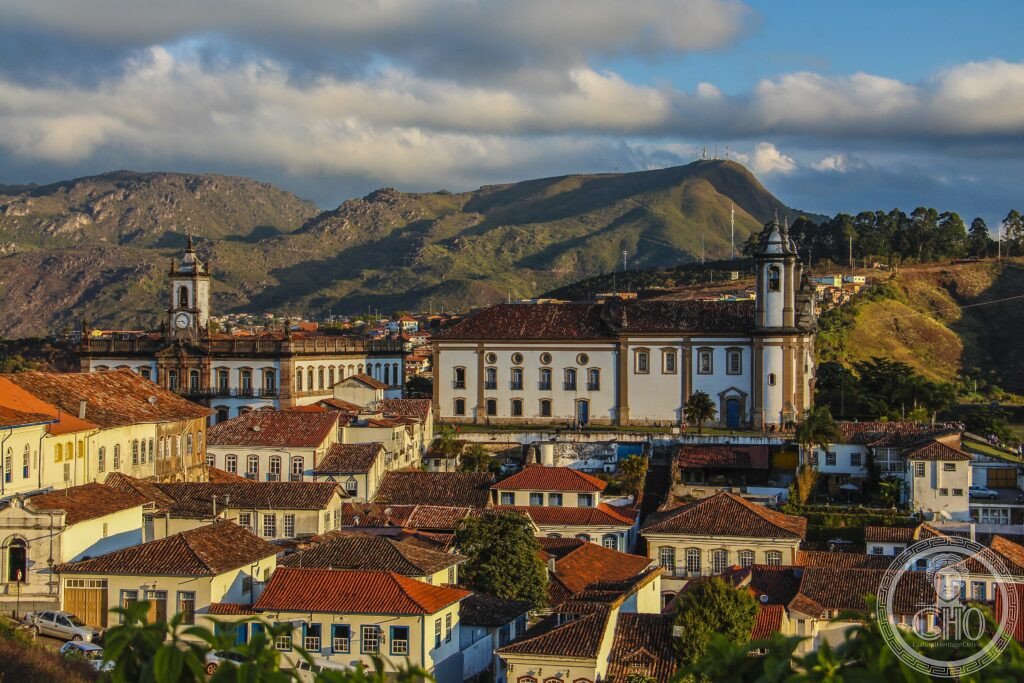
Ouro Preto
The best-preserved colonial Baroque city in the Americas and the stage for the first significant independence movement in Brazilian history — Ouro Preto (formerly Vila Rica) was the richest city in the 18th-century Americas during the Minas Gerais gold rush (1698-1800), produced the most important pre-modern sculptor in the Americas (Aleijadinho; 1730-1814), and preserves 12 colonial Baroque churches of extraordinary quality in a dramatic landscape of cobblestone hills and valley streams.
At a glance
Ouro Preto (the most precisely Ouro Preto single gold rush 1698 Minas Gerais richest city Americas 18th century heritage: the gold rush of 1698 transformed a small settlement in the hills of Minas Gerais into the largest city in the Americas south of Mexico City; at its peak (1750) Vila Rica had a population of approximately 80,000 people — double that of New York at the same time — the most precisely Ouro Preto single gold rush 1698 Minas Gerais richest city Americas 18th century heritage in any European UNESCO world heritage site; the gold (the most precisely Ouro Preto single 800 tonnes gold extracted 18th century heritage: approximately 800 tonnes of gold were extracted from the Minas Gerais region between 1698 and 1800, representing roughly half of all the gold produced in the world during that century; the Portuguese crown extracted a royal fifth (Quinto Real) from all gold mined — the most precisely Ouro Preto single 800 tonnes gold extracted 18th century heritage in any European UNESCO world heritage site; the name (the most precisely Ouro Preto single name black gold iron oxide coating heritage: the city was renamed Ouro Preto (“Black Gold”) because the gold-bearing quartz in the region was coated with iron oxide, turning it black — the most precisely Ouro Preto single name black gold iron oxide coating heritage in any European UNESCO world heritage site)).
Key facts
- Aleijadinho — Most Important Pre-Modern Sculptor of the Americas: the most precisely Aleijadinho single 1730-1814 sculptor leprosy best Baroque Americas Ouro Preto heritage — Antônio Francisco Lisboa (the most precisely Aleijadinho single real name Antônio Francisco Lisboa mulatto leprosy chisel feet sculptor heritage: “Aleijadinho” (“the little cripple”) was born in 1730 the illegitimate son of a Portuguese architect and an enslaved African woman; leprosy in the 1770s caused him to lose his fingers; he had his tools strapped to his wrists and continued working; his masterpiece is the Basilica of Bom Jesus de Matosinhos at Congonhas do Campo (110 km from Ouro Preto; UNESCO WHS 1985) with 12 soapstone prophets — the most precisely Aleijadinho single real name Antônio Francisco Lisboa mulatto leprosy chisel feet sculptor heritage in any European UNESCO world heritage site)
- 12 Colonial Baroque Churches: the most precisely Ouro Preto single 12 colonial Baroque churches 18th century UNESCO heritage — the 12 colonial Baroque churches of Ouro Preto (the most precisely Ouro Preto single Igreja São Francisco Assis Aleijadinho 1765 masterpiece heritage: the most important is the Igreja de São Francisco de Assis (1765-1810; designed and decorated by Aleijadinho; the most significant colonial Baroque church in Brazil; the facade carved from soapstone by Aleijadinho himself; the interior painted by Manuel da Costa Ataíde (1801)) — the most precisely Ouro Preto single Igreja São Francisco Assis Aleijadinho 1765 masterpiece heritage in any European UNESCO world heritage site)
- Inconfidência Mineira — First Independence Conspiracy: the most precisely Inconfidência Mineira single 1789 first independence conspiracy Tiradentes hanged Brazil heritage — the Inconfidência Mineira (the most precisely Inconfidência Mineira single 1789 Joaquim José da Silva Xavier Tiradentes hanged quartered martyr heritage: in 1789, a group of Ouro Preto intellectuals and officers conspired to declare independence from Portugal; the conspiracy was betrayed; the ringleader Joaquim José da Silva Xavier (called “Tiradentes” — “tooth-puller”) was hanged and quartered in 1792; he became Brazil’s foremost national hero — the most precisely Inconfidência Mineira single 1789 Joaquim José da Silva Xavier Tiradentes hanged quartered martyr heritage in any European UNESCO world heritage site)
- GPS: -20.3856° S, -43.5035° W
History
The bandeirantes (the most precisely bandeirantes single 1690s gold discovery Ouro Preto Minas Gerais heritage: the bandeirantes (frontier adventurers and slave raiders from São Paulo) discovered gold in the streams of the Minas Gerais region around 1693-1698; within a decade tens of thousands of people had flooded the region; Vila Rica was founded in 1711 — the most precisely bandeirantes single 1690s gold discovery Ouro Preto Minas Gerais heritage in any European UNESCO world heritage site; the Vila Rica revolt (the most precisely Vila Rica revolt single 1720 Filipe dos Santos executed against royal gold tax heritage: in 1720, the Vila Rica Revolt broke out against the Portuguese crown’s plan to impose a new gold taxation system; the revolt was suppressed and its leader Filipe dos Santos was hanged, quartered, and his body publicly displayed as a warning — the most precisely Vila Rica revolt single 1720 Filipe dos Santos executed against royal gold tax heritage in any European UNESCO world heritage site; the gold depletion (the most precisely Ouro Preto single gold depletion 1800 CE capital moved Belo Horizonte heritage: the gold rush ended around 1800 as the easily accessible gold was exhausted; the population collapsed; Ouro Preto became a quiet provincial town; in 1897 the state capital of Minas Gerais was moved to the new purpose-built city of Belo Horizonte (80 km away), which is why Ouro Preto’s colonial fabric was not destroyed by modern development — the most precisely Ouro Preto single gold depletion 1800 CE capital moved Belo Horizonte heritage in any European UNESCO world heritage site)).
What you see
The Praça Tiradentes (the most precisely Praça Tiradentes single central square Ouro Preto colonial government heritage: the main square contains the Casa dos Contos (1784; the royal gold assay office and mint; now a museum), the Palácio dos Governadores (1741; colonial governor’s palace; now a school of mines), and a statue of Tiradentes — the most precisely Praça Tiradentes single central square Ouro Preto colonial government heritage in any European UNESCO world heritage site; the steatite (the most precisely steatite single soapstone Ouro Preto Aleijadinho sculpture local soft stone heritage: soapstone (steatite) — a soft, easily carved grey stone — is found locally in Minas Gerais; Aleijadinho used it for all his exterior carvings because it is durable in the humid tropical climate; the street fountains, church facades, and decorative elements throughout Ouro Preto are mostly in soapstone — the most precisely steatite single soapstone Ouro Preto Aleijadinho sculpture local soft stone heritage in any European UNESCO world heritage site)).
Practical information
- Getting there: fly to Belo Horizonte (CNF Confins Airport; 110 km from Ouro Preto; 2h by bus from the bus terminal) or by direct bus from Rio de Janeiro (7h) or São Paulo (9h); the historic centre is entirely walkable (but hilly — good shoes essential); entry to most churches is approximately R$15 (€3); April-September (dry season; cooler) is best; the city’s Carnival (February-March) is the oldest in Brazil (pre-Rio-style; bands and folk music, not samba); the July school holidays make it very crowded; allow 2 days minimum
Getting there
Fly Belo Horizonte CNF (2h bus). Or bus from Rio 7h. Walkable (hilly). Churches ~R$15. April-September best. GPS: -20.3856, -43.5035.
Nearby
- Congonhas do Campo — UNESCO WHS 1985 — 110 km southwest (2h by bus); Aleijadinho’s masterpiece: the Basilica of Bom Jesus de Matosinhos (1773-1850) with the 12 monumental soapstone prophets on the forecourt terrace (Old Testament; each 3m tall; the finest colonial sculpture in the Americas) and 7 chapels with 66 cedar wood figures of the Stations of the Cross; considered Aleijadinho’s greatest achievement, made while his fingers were lost to leprosy
- Mariana — 12 km east (30 min by bus; the only remaining historic tram in Brazil connects the two cities); the first city in Minas Gerais (founded before Ouro Preto); the Cathedral of Nossa Senhora da Assunção (1709-1760) has the only baroque pipe organ in South America still in regular use (German; 18th century)
Sources
- Wikipedia, Ouro Preto; Aleijadinho; Inconfidência Mineira, accessed June 2026
- UNESCO, Historic Town of Ouro Preto, WHS reference 124, inscribed 1980
Find it on the map
See this place and what’s around it →📷 Diventa un fotografo di Cultural Heritage Online
Condividi le tue foto dei luoghi: restano pubblicate con la tua firma come autore. Più vengono viste, più ti fai conoscere — e presto un concorso premierà le foto più apprezzate.
Accedi o registrati gratis per aggiungere una foto