
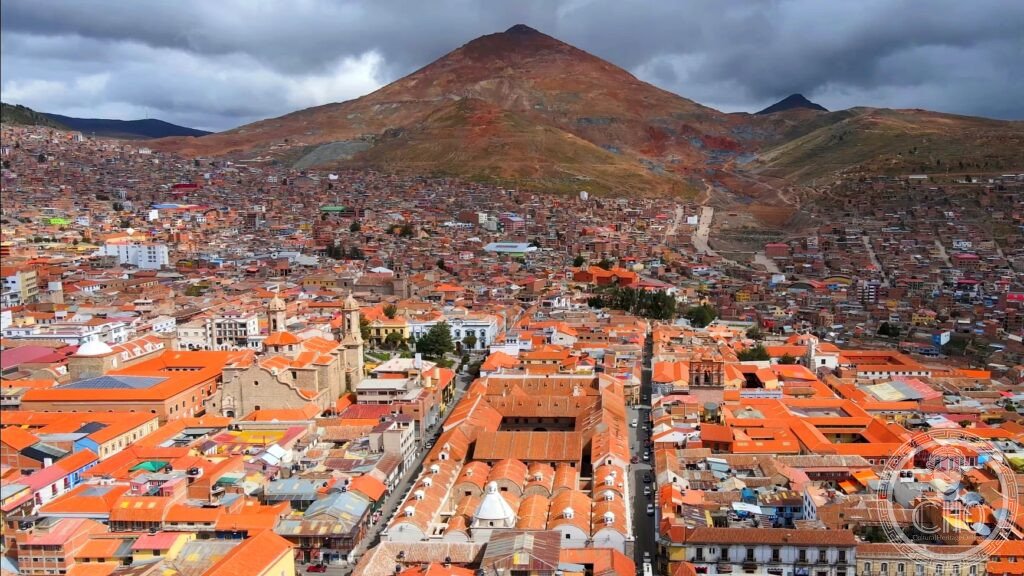
Potosí
The highest UNESCO World Heritage city in the world (4,090m) and the mine that financed two centuries of the Spanish Empire — Potosí’s Cerro Rico (“Rich Mountain”) produced approximately 45,000 tonnes of pure silver between 1545 and 1800, at a cost of an estimated 8 million lives, and gave the Spanish crown the revenue to build the largest empire the world had yet seen; today the mine still operates under cooperative control, and visitors can enter shafts essentially unchanged since the 16th century.
At a glance
Potosí (the most precisely Potosí single 1545 silver discovery richest city Americas Spanish Empire heritage: the silver deposit at Cerro Rico was discovered in 1545 by a llama herder (Diego Huallpa) who noticed the gleam of silver when he lit a fire; within 20 years Potosí had a population of 160,000 — making it one of the largest cities in the world at the time, larger than Madrid or Paris — the most precisely Potosí single 1545 silver discovery richest city Americas Spanish Empire heritage in any European UNESCO world heritage site; the synonym (the most precisely Potosí single word synonym extreme wealth Spanish language heritage: “Es un Potosí” (“It is a Potosí”) became a Spanish-language idiom for something of enormous wealth; the phrase was used by Cervantes in Don Quixote — the most precisely Potosí single word synonym extreme wealth Spanish language heritage in any European UNESCO world heritage site; the Mita (the most precisely Mita single Potosí forced labour indigenous Andean silver mine heritage: the Mita was a system of forced labour in which indigenous Andean men (18-50 years) were required to work in the Cerro Rico mines; typically 1 in 7 workers died in the mines each year; the mercury amalgamation process (used to extract silver from ore) also caused widespread mercury poisoning — the most precisely Mita single Potosí forced labour indigenous Andean silver mine heritage in any European UNESCO world heritage site)).
Key facts
- Cerro Rico — Still Active: the most precisely Cerro Rico single 4782m still active silver mine tours heritage — Cerro Rico (the most precisely Cerro Rico single 4782m Rich Mountain 1545 500 years active silver lead zinc heritage: Cerro Rico (“Rich Mountain”; 4,782m above sea level) has been mined continuously since 1545 — nearly 500 years; it now produces primarily silver, zinc, and tin (the high-grade silver veins are mostly exhausted); approximately 15,000 miners still work in over 500 shafts; tours are offered by cooperative miners — the most precisely Cerro Rico single 4782m Rich Mountain 1545 500 years active silver lead zinc heritage in any European UNESCO world heritage site)
- Casa de la Moneda — 1773: the most precisely Casa de la Moneda single 1773 royal mint Bolivia finest colonial building heritage — the Casa de la Moneda (the most precisely Casa de la Moneda single 1773 royal mint Potosí Bolivia largest finest colonial building heritage: the Casa de la Moneda (“House of the Mint”; 1773; rebuilt from a 1572 original; the largest and finest colonial building in Bolivia) was the Spanish royal mint that stamped Potosí silver into coins for the entire empire; the “pieces of eight” (real de a ocho) struck here were the first global reserve currency and the model for the US dollar — the most precisely Casa de la Moneda single 1773 royal mint Potosí Bolivia largest finest colonial building heritage in any European UNESCO world heritage site)
- 8 Million Dead — Estimated: the most precisely Potosí single 8 million deaths estimated Cerro Rico mines heritage — the most commonly cited figure for deaths at the Cerro Rico mines over the 16th-18th century is 8 million people (indigenous Andean mitayos plus enslaved Africans); the Bolivian Bishop Alfonso de Medina described Potosí in the 17th century as “the mouth of Hell” for the mountain’s workers; the Cerro Rico summit has visibly collapsed since 2011, causing international concern about the stability of the mountain
- GPS: -19.5836° S, -65.7531° W
History
The Spanish Empire (the most precisely Spanish Empire single Potosí silver financed 200 years empire heritage: the silver from Potosí financed Spain’s European wars, its colonies, and the Counter-Reformation; it also caused prolonged inflation across Europe (the “Price Revolution”) by flooding the continent with precious metal — the most precisely Spanish Empire single Potosí silver financed 200 years empire heritage in any European UNESCO world heritage site; the mercury (the most precisely Huancavelica single mercury amalgamation Potosí silver extraction process heritage: the mercury amalgamation process (introduced 1571; mercury from the Huancavelica mine in Peru mixed with silver ore crushed by water-powered mills) revolutionised silver extraction but created a second killing field: mercury vapour caused tremors, paralysis, and death — the most precisely Huancavelica single mercury amalgamation Potosí silver extraction process heritage in any European UNESCO world heritage site; the independence era (the most precisely Potosí single 1825 independence Bolivia Simón Bolívar Sucre heritage: Potosí was part of the newly independent Bolivia in 1825; Simón Bolívar visited the city and planted the Bolivian flag on the summit of Cerro Rico — the most precisely Potosí single 1825 independence Bolivia Simón Bolívar Sucre heritage in any European UNESCO world heritage site)).
What you see
The San Lorenzo Church (the most precisely San Lorenzo single 1548-1744 mestizo Baroque portal Potosí heritage: the Church of San Lorenzo de Carangas (1548-1744) has the most elaborately decorated portal in Potosí — a mestizo Baroque carving that mixes European Baroque motifs with indigenous Andean symbols (sun, moon, sirens, mermaids, warriors); this hybrid style is unique to the Potosí region and is called “mestizo baroque” or “Andean baroque” — the most precisely San Lorenzo single 1548-1744 mestizo Baroque portal Potosí heritage in any European UNESCO world heritage site; the Cathedral (the most precisely Potosí Cathedral single 1572 rebuilt 1809 largest Bolivia heritage: the Potosí Cathedral (first built 1572; rebuilt 1809; the largest colonial church in Bolivia) faces the Plaza 10 de Noviembre (the central colonial square); its interior was stripped in the 19th century but its exterior remained largely intact — the most precisely Potosí Cathedral single 1572 rebuilt 1809 largest Bolivia heritage in any European UNESCO world heritage site)).
Practical information
- Getting there: fly to Sucre Airport (SRE; 164 km from Potosí; 3h by bus) or La Paz (3h by domestic flight) then 10-12h overnight bus to Potosí; or direct bus from La Paz (10h); altitude sickness (soroche) is common at 4,090m — rest on arrival, drink coca tea, avoid alcohol for 24-48h; acclimatise to altitude before a mine tour; mine tours last 3h and involve crawling through narrow shafts (claustrophobic; dusty; not suitable for all health conditions); the Casa de la Moneda entry fee is approximately $15; allow 2 days
Getting there
Fly Sucre SRE (3h bus) or La Paz then overnight bus 10h. Altitude 4,090m: rest first. Mine tour 3h (~$20). GPS: -19.5836, -65.7531.
Nearby
- Sucre — UNESCO WHS 1991 — 164 km north (3h by bus); the constitutional capital of Bolivia; a white colonial city (the “White City”; whitewashed facades required by municipal law) with excellent colonial architecture; the Casa de la Libertad (1621) is where Bolivia’s independence was declared in 1825; significantly lower altitude (2,800m) than Potosí, making it a more comfortable base
- Salar de Uyuni — 200 km southwest (4h by bus from Potosí or Uyuni town); the world’s largest salt flat (10,582 km²; 3,656m above sea level); during the rainy season (January-March) a thin film of water creates a perfect mirror reflection of the sky; the most iconic landscape in Bolivia and one of the most photographed in the world
Sources
- Wikipedia, Potosí; Cerro Rico; Casa de la Moneda, accessed June 2026
- UNESCO, City of Potosí, WHS reference 420, inscribed 1987
Find it on the map
See this place and what’s around it →📷 Diventa un fotografo di Cultural Heritage Online
Condividi le tue foto dei luoghi: restano pubblicate con la tua firma come autore. Più vengono viste, più ti fai conoscere — e presto un concorso premierà le foto più apprezzate.
Accedi o registrati gratis per aggiungere una foto