
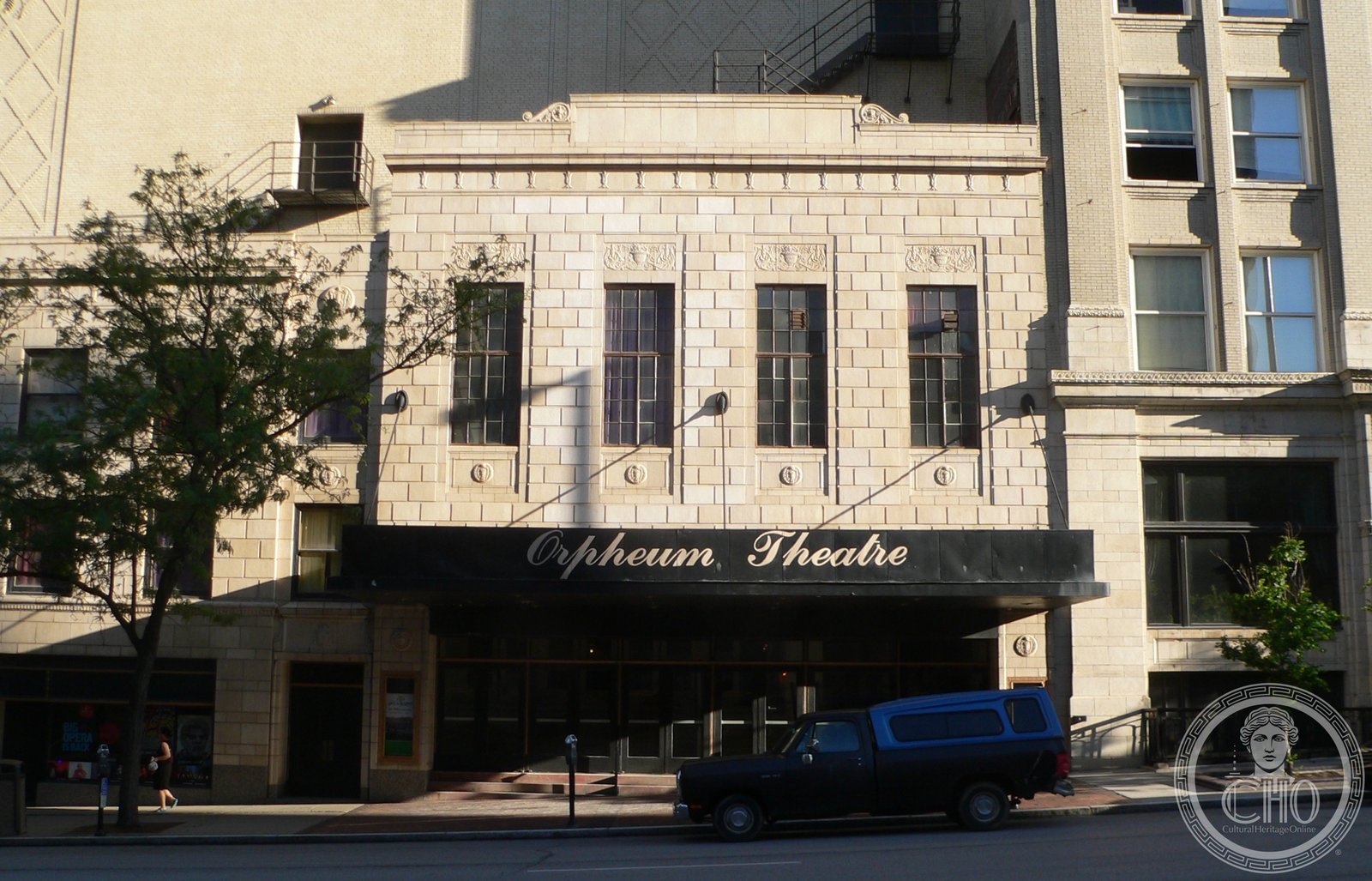
Omaha’s premier performing arts venue since 1927 — a Spanish Baroque theatrical interior on South 16th Street that has outlasted the vaudeville era, the movie palace era and multiple rounds of urban renewal to anchor the city’s cultural life into the 21st century.
At a glance
The Orpheum Theatre opened in 1927 as part of the national Orpheum vaudeville and theatrical circuit, bringing to Omaha a building scaled for the ambitions of a city that was then one of the largest meatpacking and rail-freight hubs in the world. The Spanish Baroque auditorium — with its painted ceiling, elaborate plasterwork and multi-storey side boxes — was designed to impress audiences arriving from the cattle yards and grain elevators that defined the city’s economy. Today the Orpheum is managed by Omaha Performing Arts and hosts Broadway touring productions, orchestral concerts and major pop and rock events.
Key facts
- Address: 409 S 16th St, Omaha, NE 68102
- Opened: 1927
- Style: Spanish Baroque
- Capacity: approximately 2,600 seats
- Circuit: Orpheum vaudeville and theatrical chain
- Status: National Register of Historic Places
- Current operator: Omaha Performing Arts
- GPS: 41.2543°N, 95.9354°W
History
Omaha in 1927 was a city of commercial confidence. The Union Pacific had its headquarters here; the South Omaha stockyards were among the largest in the world; and the city sat at the geographic centre of a transcontinental rail network that moved cattle, grain and manufactured goods in volumes that still defined the American economy. Against this backdrop the Orpheum Theatre arrived as a deliberate contrast — a space built for beauty rather than commerce, where the same audiences who spent their working days in offices and warehouses could spend their evenings in an interior that referenced the pleasure palaces of Baroque Spain.
Vaudeville was the dominant entertainment form when the building opened, but the Orpheum’s programme adapted quickly through the late 1920s and 1930s as talking pictures displaced the variety format. The theatre operated as a movie house through the mid-century decades, then went through a period of underuse as suburban multiplexes drew audiences away from downtown. A major restoration in the 1970s and subsequent upgrades by Omaha Performing Arts returned the building to full theatrical use.
The Orpheum’s position at the centre of Omaha’s performing arts infrastructure became more important as the city invested in a broader arts district around the CenturyLink Center and the Holland Performing Arts Center. The historic theatre now plays a complementary role alongside newer venues, offering a theatrical intimacy and acoustic character that modern multipurpose halls cannot replicate.
What you see
The street facade on South 16th Street is formal and vertical — a composition of arched windows, terracotta ornament and a prominent marquee that has been updated several times but retains its basic proportions. The entrance sequence prepares you for the auditorium by moving through a lobby of painted and gilded plasterwork before releasing you into the full volume of the house.
The auditorium is the building’s centrepiece. The ceiling is painted with clouds, architectural ornament and figural motifs; the side walls carry carved plasterwork in a Spanish Baroque idiom that includes pilasters, cartouches and painted panels. The side boxes at multiple levels give the space a layered vertical quality unusual in movie-era theatres, and the proscenium arch is heavily ornamented in the manner of a formal operatic stage.
Practical information
- Events: Broadway touring shows, Omaha Symphony, touring concerts; check Omaha Performing Arts website for schedule
- Lobby access: open on event days; tours may be available through Omaha Performing Arts
- Time needed: 30 minutes for the lobby and public areas; a full evening for a performance
Getting there
The Orpheum Theatre stands at 409 S 16th St in downtown Omaha, between Farnam and Douglas Streets. Eppley Airfield (OMA) is approximately 5 miles northeast via I-480. Omaha Metro bus routes serve the downtown core; the theatre is within easy walking distance of the Old Market historic district and the Holland Performing Arts Center.
Nearby
- Old Market Historic District — Omaha’s 19th-century warehouse and market neighbourhood, now a pedestrian district of restaurants and galleries, six blocks west of the Orpheum toward 10th–13th Street.
- Joslyn Art Museum (1931) — Nebraska’s premier art museum two miles north, in an Art Deco building of pink Georgia marble with a notable collection of 19th- and 20th-century works.
- Durham Museum / Omaha Union Station (1931) — The Art Deco train station on South 10th Street, housing the history museum of the city; a 10-minute walk southwest of the Orpheum.
- Holland Performing Arts Center (2005) — The Omaha Symphony’s primary home, adjacent to the Orpheum on South 17th Street; the two venues together form the core of downtown Omaha’s live arts infrastructure.
Sources
- National Register of Historic Places nomination, Orpheum Theatre, Douglas County, Nebraska
- Omaha Performing Arts, venue historical notes
- Nebraska State Historical Society, performing arts surveys
- Cinema Treasures database, Omaha Orpheum entry
- Omaha World-Herald historical archive
Find it on the map
See this place and what’s around it →Record researched and written by Luigi De Marchi for Cultural Heritage Online, 2026.
📷 Become a Cultural Heritage Online photographer
Share your photos of places: they stay published under your name as the author. The more they're seen, the more you get noticed — and soon a contest will reward the most appreciated photos.
Log in or sign up free to add a photoIs this page about you?
This page is read by travellers and heritage enthusiasts who find it on Google. Tell us how you are connected to this place and we will take it from there.