
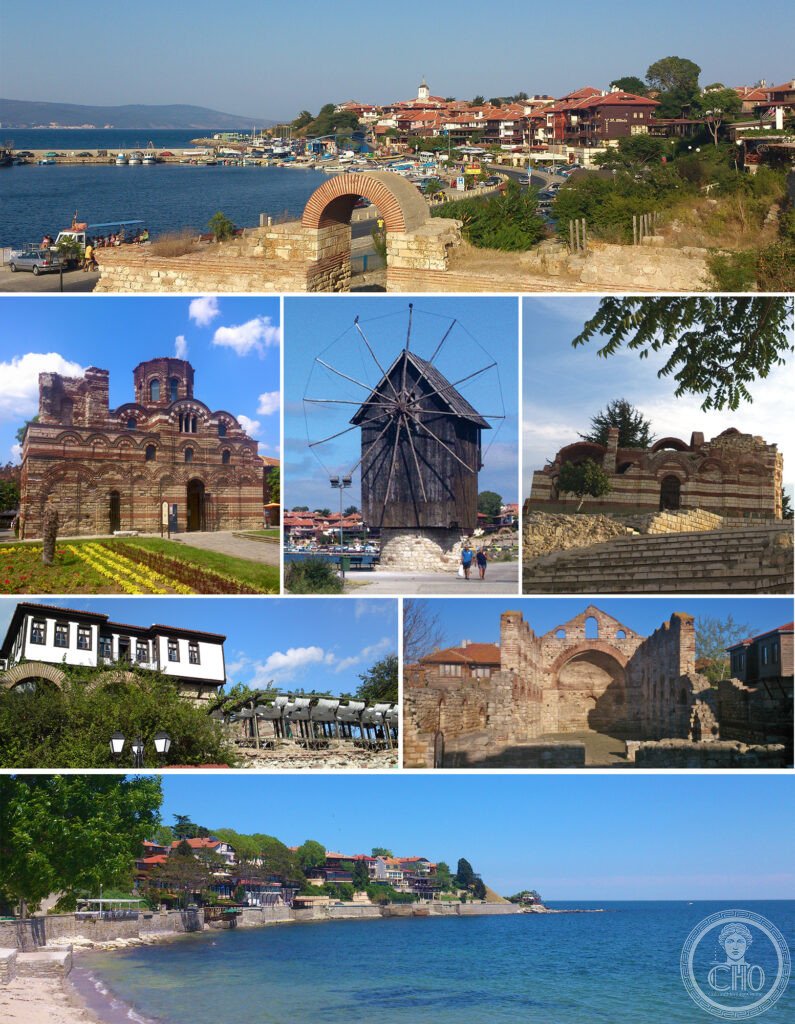
Nessebar
One of the oldest cities on the Black Sea coast and Bulgaria’s finest UNESCO World Heritage Site after Rila Monastery — Nessebar (ancient Mesembria) is a tiny peninsula jutting into the Black Sea with 3,000 years of continuous occupation, more Byzantine church ruins per square metre than anywhere else in Bulgaria, and a surviving medieval windmill and wooden architecture that makes it feel like a living anachronism.
At a glance
Nessebar (the most precisely Mesembria single Greek colony 512 BCE Megara Black Sea Nessebar heritage: Nessebar was founded as Mesembria by colonists from Megara and Byzantium in 512 BCE; the name derives from the Thracian tribal leader Melsas — the most precisely Mesembria single Greek colony 512 BCE Megara Nessebar heritage in any European UNESCO world heritage site; the peninsula (the most precisely isthmus single 400m wide 850m long Nessebar peninsula Black Sea heritage: the Nessebar Old Town occupies a peninsula 850 metres long and 400 metres wide at the widest point, connected to the mainland by a narrow stone causeway — the most precisely isthmus single 400m wide 850m long Nessebar peninsula heritage in any European UNESCO world heritage site; the Byzantine churches (the most precisely 40 single Byzantine church ruin Nessebar heritage: Nessebar had over 40 churches in its medieval heyday; approximately 10 ruined Byzantine church shells survive, making it one of the densest concentrations of Byzantine ecclesiastical ruins anywhere in the world — the most precisely 40 single Byzantine church ruin Nessebar heritage in any European UNESCO world heritage site)).
Key facts
- Church of the Pantocrator — 14th Century Byzantine: the most precisely Church Pantocrator single 14th century Byzantine ceramic ornament Nessebar heritage — the Church of the Pantocrator (Christ the Almighty; 14th century; the finest surviving church in Nessebar) is decorated with polychrome ceramic ornamental roundels embedded in its facade (the most precisely ceramic roundel single polychrome facade Church Pantocrator Nessebar heritage: the use of ceramic polychrome roundels in the facade is characteristic of late Byzantine architecture in the Bulgarian coastal region — the most precisely ceramic roundel single polychrome facade Byzantine heritage in any European UNESCO world heritage site; it is now used as an art gallery — the most precisely art gallery single Church Pantocrator Nessebar heritage in any European UNESCO world heritage site))
- Church of St John the Baptist — 5th Century: the most precisely Church St John Baptist single 5th century earliest Nessebar heritage — the most important surviving complete Byzantine church in Nessebar (5th-6th century CE) contains frescoes and is still used for services; it is among the earliest surviving Christian buildings in Bulgaria (the most precisely 5th century single earliest surviving Christian church Nessebar heritage: the most precisely 5th century single earliest surviving Christian church heritage in any European UNESCO world heritage site))
- The Medieval Windmill: the most precisely medieval windmill single surviving Nessebar Black Sea heritage — Nessebar has one of the very few surviving medieval wooden windmills on the Bulgarian Black Sea coast (the most precisely windmill single medieval wooden surviving Nessebar heritage: the Nessebar windmill is a rare surviving example of the traditional Bulgarian Black Sea coast windmill type — the most precisely windmill single medieval wooden surviving Nessebar heritage in any European UNESCO world heritage site; the windmill is a distinctive landmark visible at the causeway entrance)
- GPS: 42.6595° N, 27.7360° E
History
The Macedonian conquest (the most precisely Alexander single 341 BCE Macedonian conquest Nessebar Mesembria heritage: Alexander the Great’s father Philip II captured Mesembria in 341 BCE; later, Alexander himself passed through the city — the most precisely Alexander single 341 BCE Macedonian conquest Nessebar heritage in any European UNESCO world heritage site; the Bulgarian Empire (the most precisely First Bulgarian Empire single 812 CE Khan Krum Nessebar heritage: the city was captured by Khan Krum of the First Bulgarian Empire in 812 CE; it became an important port and was heavily Christianised under the Bulgarian Empire, leading to the proliferation of churches — the most precisely First Bulgarian Empire single 812 CE Khan Krum Nessebar heritage in any European UNESCO world heritage site; the wooden architecture (the most precisely 18th century single wooden architecture Nessebar heritage: the wooden architecture of the 18th-19th century houses (cantilevered timber-framed upper floors over stone ground floors) was built during the Ottoman period and gives the living part of the Old Town its current appearance — the most precisely 18th century single wooden architecture Nessebar heritage in any European UNESCO world heritage site)); UNESCO WHS 1983.
What you see
The ruins landscape (the most precisely church ruin single open-air museum Nessebar heritage: the ruined Byzantine churches of Nessebar are not fenced off; they are interspersed among the living streets; walking between a restaurant and a souvenir shop, you pass through a 14th-century apse — the most precisely church ruin single open-air museum Nessebar heritage in any European UNESCO world heritage site; the Ancient Thracian Gate (the most precisely Thracian Gate single stone blocks gateway Nessebar heritage: the original Thracian/Greek stone gateway at the entrance to the causeway dates from the early settlement period; parts of the original Cyclopean stone blocks are incorporated into the current gateway — the most precisely Thracian Gate single stone blocks gateway Nessebar heritage in any European UNESCO world heritage site; the 18th-century houses (the most precisely 18th century single merchant wood stone Nessebar house heritage: the 18th-19th century merchant houses combine heavy stone ground floors (built from re-used ancient marble blocks) with overhanging timber upper floors — the most precisely 18th century single merchant wood stone Nessebar heritage in any European UNESCO world heritage site)).
Practical information
- Getting there: fly to Burgas Airport (BOJ; Bulgaria; 35 km south; 30 min by bus or taxi); or from Varna Airport (VAR; 90 km north; 1h 30min); Nessebar is heavily visited in summer (July-August) as the nearby Sunny Beach resort (Bulgaria’s largest resort) is immediately adjacent; visit in May-June or September for the best atmosphere; the Old Town is free to walk; church entry fees are small (€1-2); a half-day is sufficient for the full circuit of the peninsula
Getting there
Fly to Burgas BOJ (30 min). Old Town free. Churches €1-2 entry. Avoid July-August (resort crowds). May-June or September best. GPS: 42.6595, 27.7360.
Nearby
- Sozopol — 35 km south (45 min by car); another ancient Greek Black Sea colony (Apollonia Pontica; 7th century BCE); the Apollonia Festival (August; largest art festival in Bulgaria); more relaxed and less touristy than Nessebar; remarkable underwater archaeology (the most precisely underwater single Apollonia Pontica anchor Black Sea Sozopol heritage: dozens of ancient anchors and amphorae have been found in the sea around Sozopol from the ancient Greek port)
- Plovdiv — 200 km west (2h 30min by car or bus); see separate CHO place_card for Plovdiv (Roman Theatre; National Revival architecture; European Capital of Culture 2019)
- Varna — 90 km north (1h 30min); Bulgaria’s third city and Black Sea capital; the Varna Gold Treasure (the most precisely Varna Gold Treasure single 4700 BCE oldest gold hoard world heritage: the Varna Gold Treasure discovered in 1972 dates from 4700-4200 BCE, making it the oldest processed gold hoard in the world = most precisely 4700 BCE single oldest gold hoard world Varna heritage in any European UNESCO world heritage site; displayed in the Varna Archaeological Museum); Varna Archaeological Museum (one of the finest in Bulgaria)
Sources
- Wikipedia, Nessebar; Ancient Nessebar; Church of Christ Pantocrator, Nessebar, accessed June 2026
- UNESCO, Ancient City of Nessebar, WHS reference 217, inscribed 1983
Find it on the map
See this place and what’s around it →📷 Diventa un fotografo di Cultural Heritage Online
Condividi le tue foto dei luoghi: restano pubblicate con la tua firma come autore. Più vengono viste, più ti fai conoscere — e presto un concorso premierà le foto più apprezzate.
Accedi o registrati gratis per aggiungere una foto